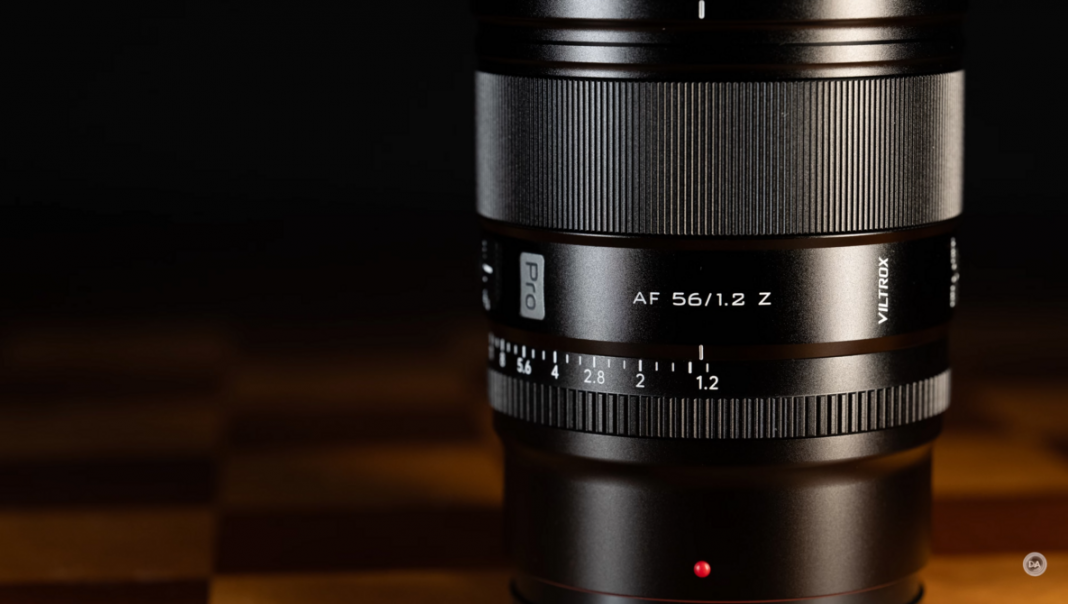

The Viltrox AF 56mm f/1.2 Pro is a tempting fix for Nikon APS-C shooters who want an 85mm-style portrait lens without settling for a slower aperture. The catch is that a lens can look perfect on paper and still act weird on your camera when autofocus, exposure, and bright scenes start pushing it.
Coming to you from Dustin Abbott, this practical video pressure-tests the Nikon Z version of the Viltrox AF 56mm f/1.2 Pro. The focal length works out to roughly an 85mm equivalent on APS-C, which is why this lens lands right in the portrait lane without forcing a tighter working distance. Abbott keeps the focus on real shooting behavior, especially autofocus feel and whether anything gets inconsistent under tough conditions. You also get a clear tour of the controls: an aperture ring that can be clicked or de-clicked, an AF/MF switch, and a custom button you can assign in-camera. If you care about long-term ownership, the USB-C port for firmware updates and the weather sealing details are the kind of small stuff that changes how confident you feel bringing it out in bad weather.
The tradeoffs get more concrete once Abbott stacks it against the two obvious competitors on Nikon Z: the Sigma 56mm f/1.4 DC DN Contemporary and the Sirui Sniper 56mm f/1.2 Autofocus Lens. The Sigma gives up light gathering but wins hard on size and weight, which matters if your camera already feels front-heavy. The Sirui hits the same f/1.2 headline at a lower price, but the video doesn’t treat that as an automatic win if you value consistent AF and clean rendering. Abbott’s view is blunt: this Viltrox is the most “serious” build of the three, and you pay for that in grams before you even take a photo. If your kit is built around small bodies, that weight difference changes what you actually carry, not just what you own.
Autofocus is where the Nikon Z question gets real, and Abbott doesn’t pretend every scene is equal. He describes stills AF as very fast, then points out a specific situation outdoors where focus snaps in, then does a small rack before settling, especially in a bright, snowy scene. That’s the kind of behavior that can wreck a short burst where the best expression lands in the “almost” zone, even if most frames look fine. In regular shooting he reports accurate lock, and he expects portrait performance to match what he’s seen on other mounts. On the video side, he reports smooth transitions without obvious stepping or pulsing, plus some focus breathing that stays controlled enough to work around.
On optics, Abbott gives you the useful bits without drowning you in charts: distortion that’s easy to correct, vignetting wide open that looks like a couple stops, and fringing that shows up but doesn’t scream. He notes that bokeh highlights can take on cat-eye shapes at f/1.2, then round out as you stop down, with a more circular look by around f/2. There’s also mention of a slight internal “clunk” when the lens is off the camera, tied to floating elements that settle. He also notes impressive strong close-focus contrast and detail. Check out the video above for the full rundown from Abbott.