


You know the feeling. You’re scrolling through reviews at 11 PM, convincing yourself that the new 85mm f/1.2 will finally unlock your creative potential. Your current 85mm is perfectly functional, but this one has slightly better autofocus tracking and a new nano-coating that promises reduced flare in situations you encounter maybe twice a year. Before you know it, you’re checking your credit card balance and calculating how many sessions it would take to justify the purchase.
I get it. Lenses and camera bodies are exciting because they directly touch your images. Every photographer can immediately see the difference between f/1.4 and f/2.8, between 24 megapixels and 61 megapixels, between a kit lens and L-glass. These purchases feel like investments in quality because, well, they are. But here’s the uncomfortable truth that nobody talks about at the gear counter: professional photography is maybe 10% shooting and 90% everything else. Workflow, logistics, file management, color accuracy, backup systems, and keeping your equipment functional long enough to actually use it. The most expensive lens in the world does you absolutely no good if your hard drive fails the night before a client deadline or if your camera’s USB port gets ripped off during a tethered session.
The gear I want to discuss today won’t make your bokeh creamier or your autofocus faster. None of these items will show up in your EXIF data or impress anyone at a camera club meeting. What they will do is ensure that you actually have photos to deliver, that those photos look the way you intended, and that your equipment survives long enough to pay for itself. Think of these as insurance policies for your electricity, your data, and your physical connections. They’re the infrastructure that keeps your business running while everyone else is arguing about sensor size.
Uninterruptible Power Supply
Let me paint a scenario that will sound familiar to anyone who edits on a desktop workstation. You’re three hours deep into retouching a complex composite. The Photoshop file has ballooned to 4 GB with dozens of layers, smart objects, and adjustment masks. You’ve been so focused on the work that you forgot to hit Ctrl+S for the past forty minutes. Then the lights flicker. Maybe it’s a summer thunderstorm rolling through. Maybe it’s just your building’s aging electrical system hiccupping for no apparent reason. Either way, your monitor goes black, your workstation fans spin down, and that sinking feeling hits your stomach.
When power gets cut to a computer without warning, the consequences range from annoying to catastrophic. On the mild end, you lose whatever work wasn’t saved and waste time recreating it. In the middle, you end up with corrupted catalog files or documents that won’t open properly. At the extreme end, a voltage spike during that flicker can fry components on your motherboard or damage your drives.
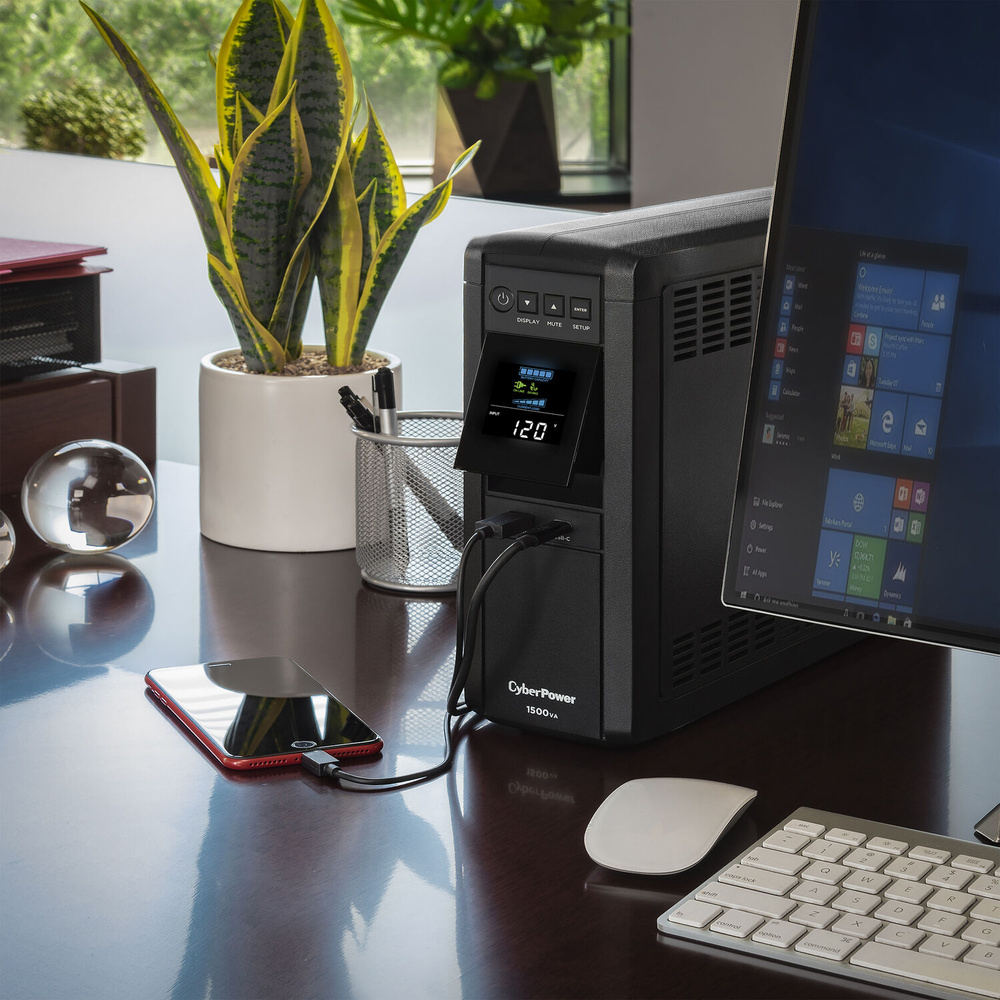 An uninterruptible power supply solves this problem so completely that it feels almost anticlimactic. The device sits between your wall outlet and your computer, and it contains a battery that’s constantly charging. When power cuts out, the battery instantly takes over. You won’t even notice the transition. Your workstation keeps running, giving you anywhere from 10 to 30 minutes (depending on the UPS capacity and your power draw) to save your work and shut down properly. Beyond the battery backup, a quality UPS also conditions your power, smoothing out the minor fluctuations and surges that happen constantly on most electrical grids. Your computer receives clean, consistent voltage instead of the electrical noise that slowly degrades components over time.
If you own a desktop computer and you don’t own a UPS, you’re gambling every single day. This isn’t optional equipment for professionals; it’s mandatory infrastructure. A decent unit from APC or CyberPower runs between $100 and $200, and it protects thousands of dollars worth of equipment plus countless hours of irreplaceable work. I cannot think of a better return on investment in this entire hobby.
Portable Power Station
The UPS protects your studio, but what happens when the job takes you somewhere without outlets? Location work used to mean a logistical nightmare of battery management. Every device needed its own collection of spares: camera batteries, laptop batteries, drone batteries, strobe batteries, and batteries for the batteries. You’d spend the morning before a shoot playing Tetris with chargers, hoping you’d juiced everything up enough to survive the day. Miss one item in the rotation and you might find yourself with a dead laptop at the critical moment when a client wants to review images on set.
Portable power stations, sometimes marketed as solar generators, have completely changed this equation. Companies like Jackery, EcoFlow, Anker, Bluetti, and others now make compact units that essentially function as a wall outlet you can carry into the wilderness. They use battery technology similar to what’s in your phone, but scaled up dramatically. A mid-size unit might offer 500 to 1,000 watt-hours of capacity, enough to charge a laptop multiple times, run continuous LED lights for hours, and top off every camera battery you own without breaking a sweat.
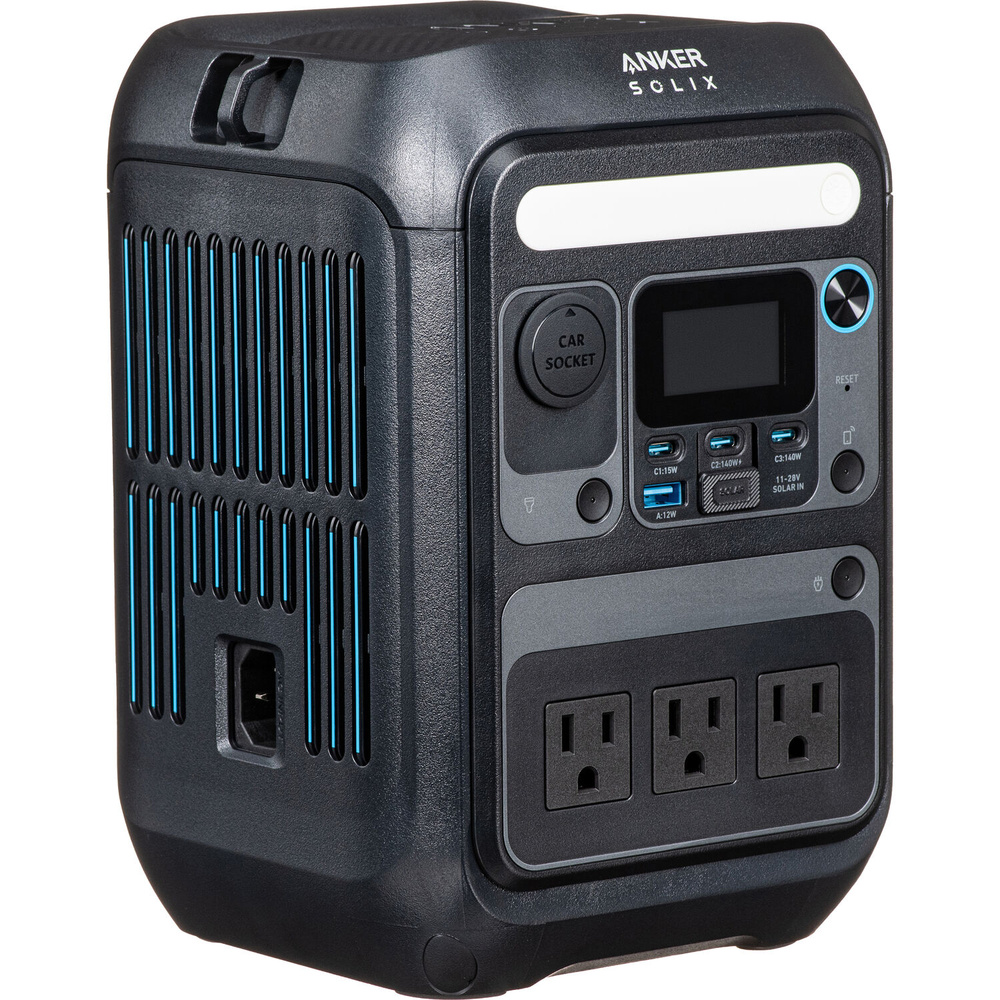 The practical applications extend beyond just emergency charging. I’ve run my laptop continuously during all-day event coverage without hunting for outlets. On video shoots, these stations can power monitors, audio recorders, and even small cinema cameras through their full shooting days. Some photographers doing real estate work use them to power lighting setups in vacant properties where the electricity hasn’t been turned on yet. Once you have the capability to bring power anywhere, you start finding uses you never anticipated. If you’re looking to expand into that space, Mike Kelley’s How to Photograph Real Estate and Vacation Rentals tutorial covers the full workflow from gear to delivery.
The investment here is larger than a standard UPS, typically $200 to $400 for a unit with enough capacity to be genuinely useful, but the flexibility it provides is transformative. You stop making location decisions based on outlet availability and start making them based purely on creative considerations. That’s worth something.
Monitor Calibrator
Here’s a question that reveals whether someone is truly working professionally: when was the last time you calibrated your monitor? If the answer is “never” or “I can’t remember,” we need to fix that immediately because you’ve been editing blind this entire time. The photos you’ve been delivering almost certainly don’t look the way you think they look.
The problem is biological as much as technical. Human eyes adapt to color casts automatically and unconsciously. If you work in a room with warm tungsten lighting, your brain adjusts and you stop noticing the orange tint on everything. If your monitor runs slightly blue (and many do out of the box, because manufacturers think it looks “crisp”), your brain compensates and you perceive the colors as neutral. You make editing decisions based on this false perception, pushing the image to look correct on your miscalibrated display. Then the client views it on their properly calibrated phone and asks why all the skin tones look greenish. Or you send files to print and they come back two stops darker than expected because your monitor was running too bright.
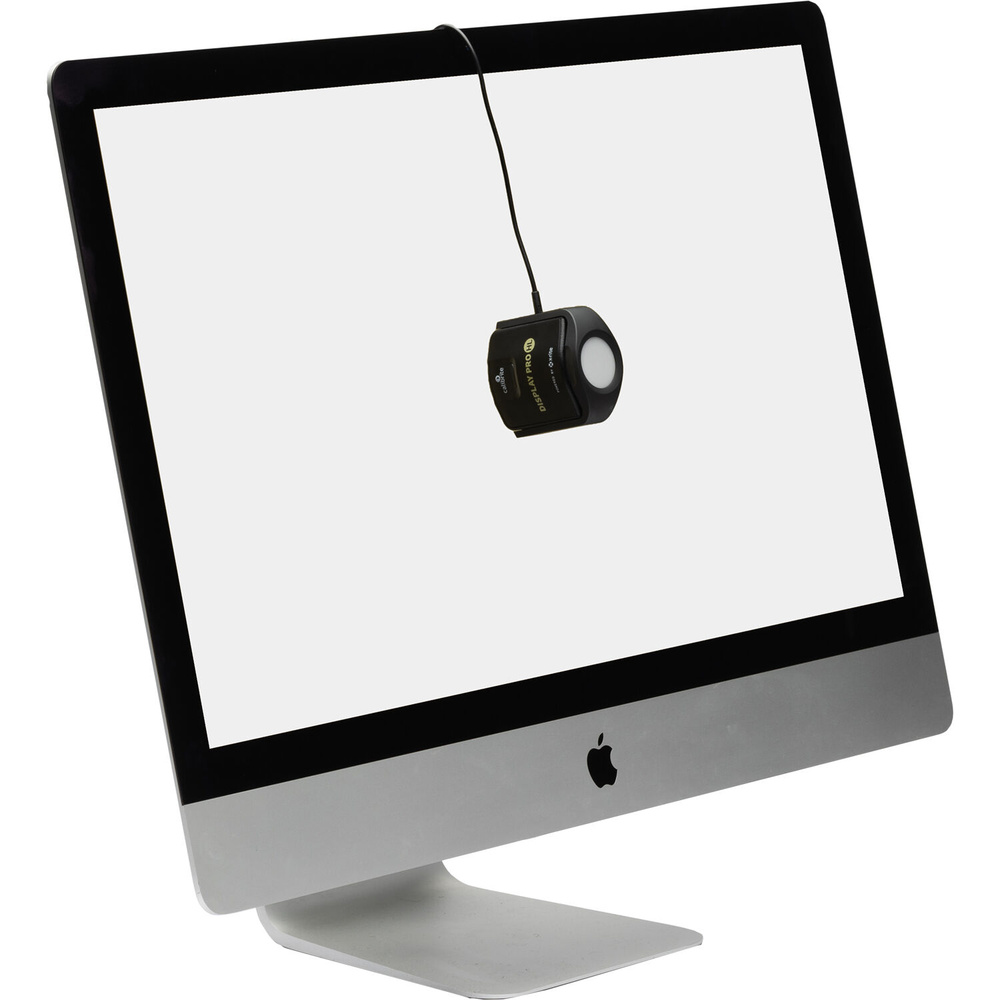 A hardware colorimeter is a small device that attaches to your screen and measures exactly what colors and brightness levels it’s actually producing. Software then builds a correction profile that forces the monitor to display accurate, neutral colors. The Calibrite ColorChecker Display (formerly X-Rite) and Datacolor SpyderX lines are the main options, ranging from about $100 to $300 depending on features. You run the calibration process once a month (it takes about five minutes) and then work with confidence that what you’re seeing is what actually exists in the file.
This matters even more in the age of wide-gamut displays. Modern monitors can display colors far outside the standard sRGB space that most of the internet uses. Without proper calibration and profile management, you might be editing in a color space your clients literally cannot see, making adjustments that look beautiful on your display but clip or shift weirdly everywhere else. A colorimeter doesn’t just make your monitor accurate; it makes your entire color workflow coherent and predictable.
Off-Site Cloud Backup
Hard drives fail. This is not pessimism or paranoia; it’s physics. Spinning platters, read heads, controller chips, and firmware all have finite lifespans. The statistics vary by manufacturer and model, but most studies suggest that roughly 5% of drives fail within the first year, and annual failure rates increase significantly after year three or four. If you have ten drives and keep them for five years, the odds are quite good that you’ll experience at least one failure. The question is never whether your drives will eventually die but whether you’ll be prepared when it happens.
Most photographers understand this at some level, which is why RAID arrays and local backups are relatively common. Having two copies of your data protects against hardware failure. But local backups, no matter how redundant, share a critical vulnerability: they exist in the same physical location as your primary storage. If your studio floods, both copies are underwater. If there’s a fire, both copies burn. If someone breaks in and steals your gear, they’re taking the backup drives too. You can have 17 copies of your data and lose everything in a single disaster.
The 3-2-1 backup rule addresses this by requiring three copies of your data, on two different types of media, with one copy stored off-site. That off-site copy is what saves you from the catastrophic scenarios. Cloud backup services like Backblaze, Carbonite, and CrashPlan offer essentially unlimited storage for a small monthly fee (Backblaze is currently around $9/month for unlimited backup from a single computer). You install their software, point it at the folders you want protected, and it quietly uploads everything in the background. When new files appear, they get uploaded automatically. You don’t have to think about it, remember to do it, or manage it in any way. It’s saved me more than once.
The psychological benefit is almost as valuable as the practical protection. Knowing that your client files exist in a data center across the country, safe from anything that could happen to your local environment, removes an enormous source of low-grade anxiety. Your studio could burn to the ground tomorrow and, once the shock wore off, you could restore your entire archive from anywhere with an internet connection. That peace of mind is worth far more than nine dollars a month.
The Simple Part That Saves $500: Tether Port Protectors
This last item is so inexpensive and so simple that it almost feels silly to include alongside UPS systems and backup infrastructure.
Here’s the problem. The USB and HDMI ports on your camera are typically soldered directly to the main circuit board. They’re designed for occasional use, plugging in a cable to transfer files or connect a monitor, not for the constant tension and movement that comes with tethered shooting. When you’re working tethered in a studio, that cable is running from your camera to a laptop or capture station, often crossing the floor where people walk. All it takes is one person catching a toe on that cable, one moment of inattention, and the sudden yank transfers directly through the connector into the port on your camera body. This has happened to me plenty of times. The force is enough to physically break the USB port loose from the motherboard inside the camera.
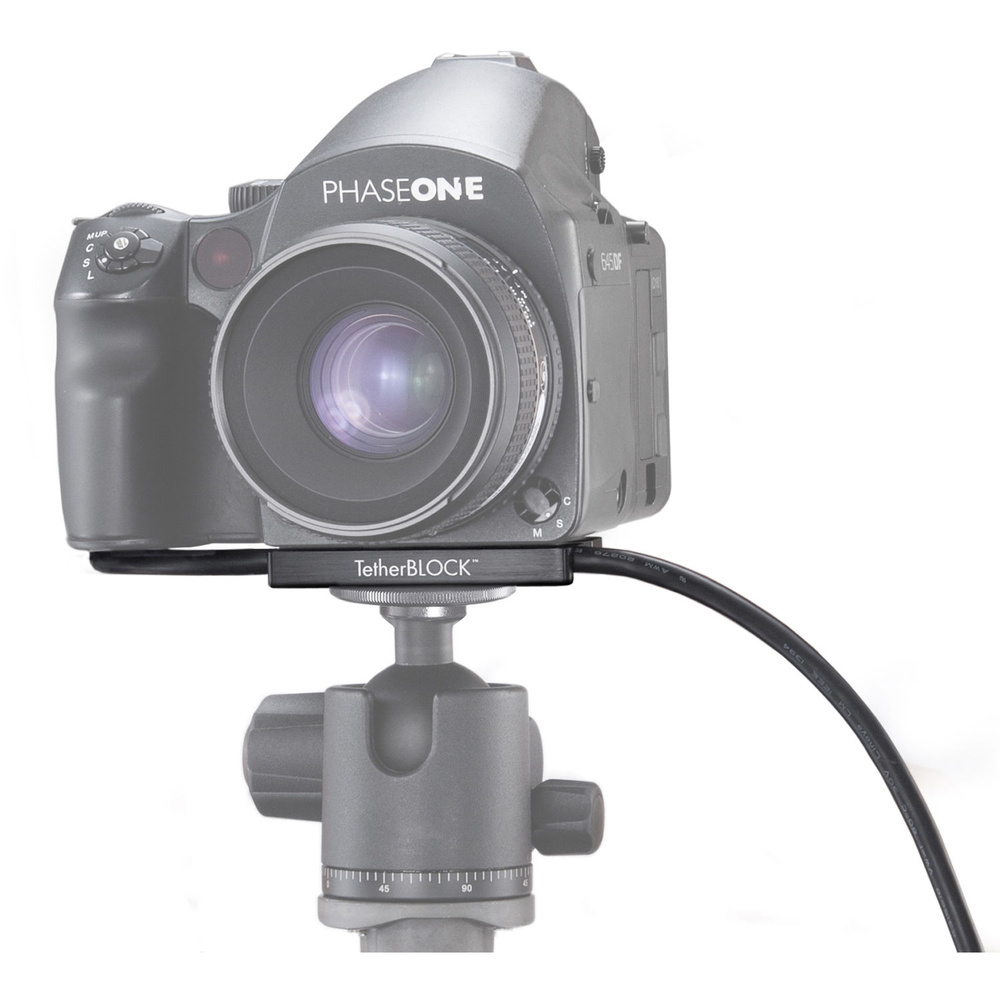 Tether tools from companies like Tether Tools (the TetherBlock) or similar cable management systems work on a simple principle. They route the cable through a housing that attaches to your camera’s tripod mount. If someone yanks the cable, the tension is absorbed by the mounting plate and the tripod, not by the fragile port inside your camera. The connection stays secure, the port stays intact, and the worst-case scenario is that your camera moves on the tripod rather than suffering internal damage.
If you shoot tethered with any regularity, whether for studio portraits, product photography, or any scenario where immediate image review matters, this is non-negotiable protection. The price is trivial. The protection is substantial.
The Unglamorous Truth
None of the items on this list will make your Instagram feed more impressive. Nobody has ever looked at a photographer’s UPS and said “wow, that’s why your work is so incredible.” But every working professional eventually learns, usually through painful experience, that the business of photography depends on infrastructure just as much as it depends on artistic skill. You can have the most beautiful vision in the world, but if you can’t deliver files on deadline because your workstation died, or if your colors are off because you never calibrated, or if your camera is in the repair shop because you skipped the $15 cable protector, none of that vision matters.
Before you buy that next prime lens or camera body, take an honest inventory of your infrastructure. Is your workstation protected from power events? Can you bring electricity to location shoots? Is your monitor showing you accurate colors? Would your archive survive a house fire? Are your ports protected during tethered sessions? If the answer to any of these is “no” or “I’m not sure,” you know where your next gear budget needs to go.