
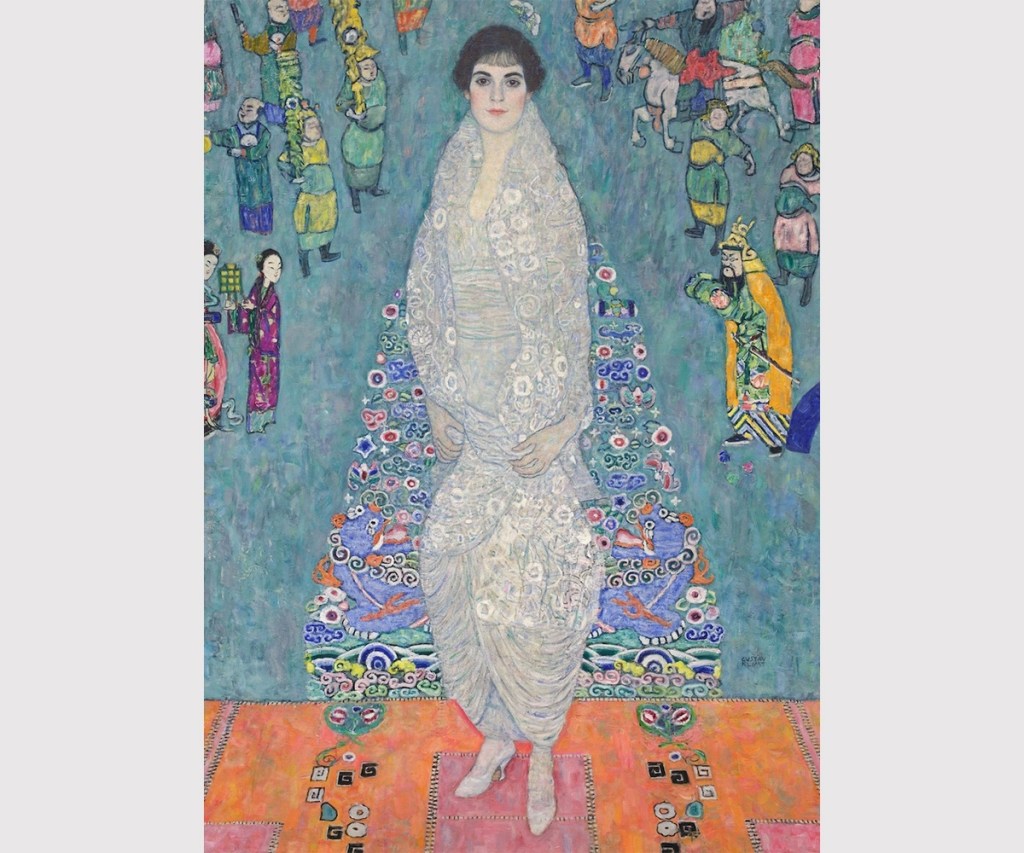

Klimt’s Vienna was the seat of the dual-state domain of Austria-Hungary led by Franz Joseph I, the superannuated Hapsburg emperor who presided over a polyglot patchwork of ethnic groups (Czechs, Slovaks, Croats, Serbs, Bosnians, and Slovenes, among others) clamoring for independence—an unsustainable situation that ultimately led to the Great War and the end of the empire.
This same turmoil made Vienna a hothouse of radical cultural trends reflecting a nation roiled by anxieties both sexual and political. Klimt cofounded a breakaway movement, the Vienna Secession, and, along with his compatriots Egon Schiele and Oscar Kokoschka, revolutionized figurative painting. The composers Gustav Mahler and Arnold Schoenberg did the same for classical music, and Sigmund Freud upended the field of medicine with his introduction of psychoanalysis and its notion that the subconscious unlocked the secrets of human behavior.
Vienna also seethed with resentments, including those of one man that would lead to one of the greatest calamities in history. Contemporaneously with Klimt, a young Adolf Hitler was kicking around the city as a failed, and occasionally homeless, artist. It was there, by his own account in Mein Kampf, that Hitler developed his eliminationist loathing of Jews, making Vienna, arguably, the birthplace of the Holocaust.
Indeed, antisemitism was rife in the imperial capital, though Jews made up only a small slice of the population. They were, however, disproportionally represented within the ranks of the moneyed and cultivated elites, some of whom were Klimt’s patrons. Elisabeth Lederer, for example, was the daughter of a prominent Jewish industrialist, while Klimt’s Portrait of Adele Bloch-Bauer I (1907) was commissioned by the subject’s husband, a banker and sugar producer who was likewise a Jew. Thanks to Klimt’s paintings entering so many Jewish holdings, his work became a ripe target for Nazi looting after Hitler’s Anschluss of Austria in 1938.