
Writer/director Ryan Coogler could have called his latest film any number of things. “The Smoke Stack Twins.” “Sundown in Clarkesdale.” “Panic! At the Juke Joint.” But he chose “Sinners,” a title which directly ties to the movie’s most provocative storytelling decision.
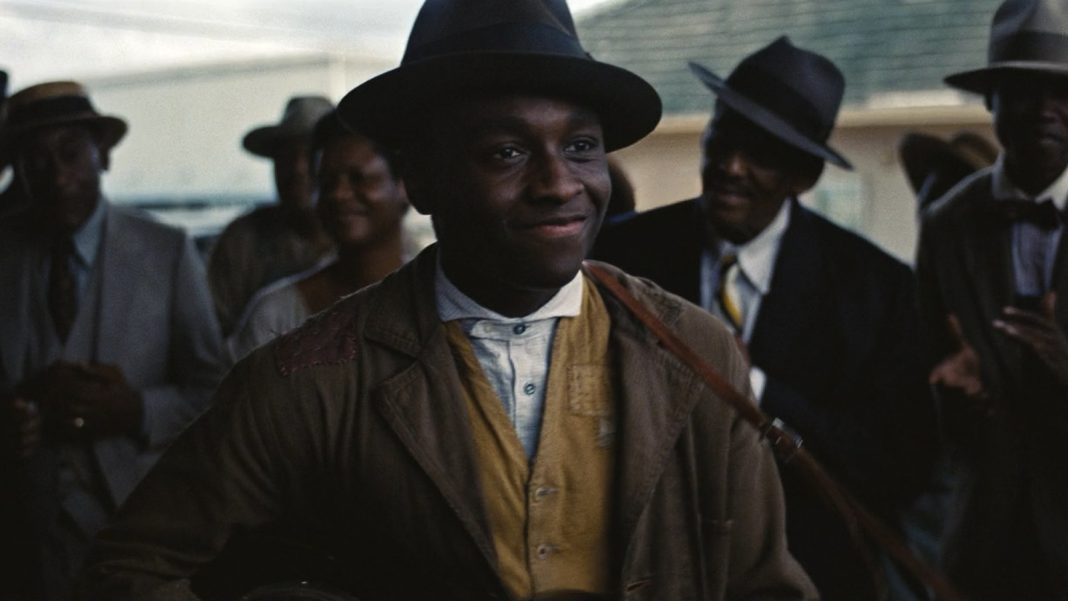
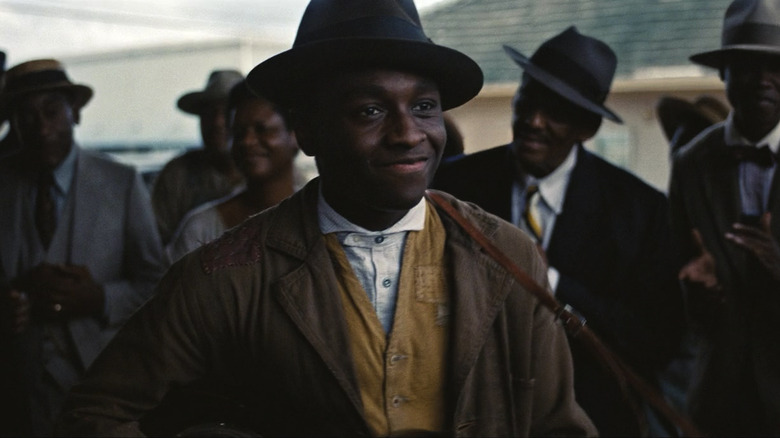
The most subversive choice in this film is not that vampires suddenly intrude on an otherwise grounded story, or even the frank depiction of oral sex. Instead, it’s that Preacher Boy Sammie (Miles Caton), the son of a Deep South pastor, chooses to reject the church as the source of his salvation.
In the Western world, Christianity and its associated virtues have historically represented all that is right and decent for movie characters, many of whom have been tempted away from purity by various vices in a variety of cinematic circumstances. Think of the nuns in “Black Narcissus,” Charlton Heston’s revenge-seeking title character in “Ben-Hur,” or even Michael Douglas in “Fatal Attraction.” In classical storytelling, “sinners” are punished for straying outside the strict bounds of the church and its teachings (or societal lines that adhere to those morals), and by the end, these characters find themselves adopting a way of life that aligns with that comparatively traditional approach, which is almost always accepted as the “correct” decision. This structure applies to a ton of films; to continue with the examples from earlier, the nuns move on from their windswept convent, Ben-Hur realizes revenge isn’t the way forward, and Michael Douglas’s character’s wife takes him back after he cheats on her.
But the bravest choice Coogler makes in “Sinners” is for the movie to buck this trend.
A lesser filmmaker would have given Sammie’s character arc a more mundane conclusion
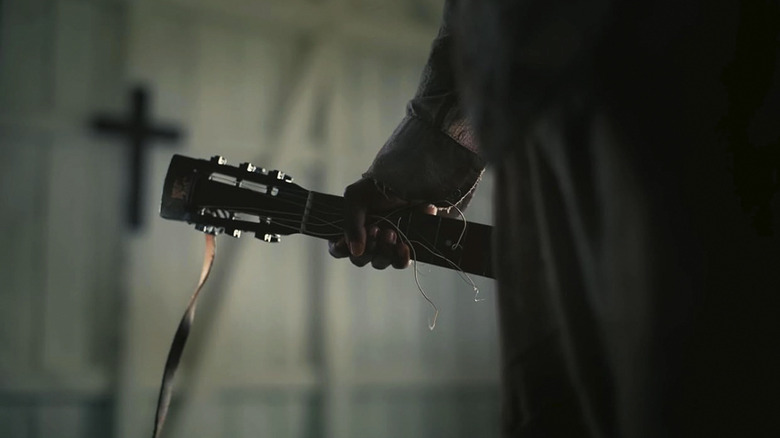
One of the first things we see in “Sinners” is a bloody Sammie driving up to his father’s church, shattered guitar in hand. “I want you to swear to me, and before this congregation, to leave those sinnin’ ways where they lie,” his father pleads with him. “I want you to promise right now. Drop the guitar, Samuel. In the name of God, let it go, Samuel. Put it down.”
When the film catches back up to that moment after an extended flashback in which a majority of its story takes place, we’ve seen Sammie experience the best and worst night of his life, full of transcendent highs and devastating lows. A lesser writer/director might have this character, who’s just witnessed what are effectively demons in his real world, be so shaken by what he’s seen that he steps back into the safety of this small-town church, almost grateful to return to “normal” and accept his future as the heir to his father’s pulpit.
But not Ryan Coogler.
Sammie refuses to answer his father’s pleas and instead drives away, clinging the instrument’s broken neck tightly to his chest like some kind of holy relic; it was the guitar, after all, not the word of God, that helped save him when he slammed its silver into the vampire Remmick’s (Jack O’Connell) head during their fight outside his cousins’ juke joint.
In Sinners, Sammie rejects the church in favor of his actual passion

In a mid-credits flash forward to the 1990s, we learn that old Sammie — now a successful musician played, in a brilliant piece of casting, by real-life blues legend Buddy Guy — has indeed rejected the church’s salvation in favor of following his true passion.
It’s unclear what percentage of this idea might be applicable to Coogler’s own life. He was raised Baptist and attended Catholic schools as a kid, and he told The New Yorker, “This concept of my relationship with the afterlife, with my own mortality and how that looks through a Catholic lens or a Baptist lens, it’s something that I’ve been reckoning with forever […] for me this film is about a lot of things, man. But it is also about the act of coping.” It doesn’t ultimately matter if there’s an intentional one-to-one representation happening here, but a boy fighting back against the constraints of a traditional life to achieve an unlikely dream in the arts maps onto Coogler’s journey as a filmmaker in a fascinating way.
To continue that metaphor, when the now-vampiric Stack comments on the breadth of Sammie’s career and says he doesn’t like “that electric sh*t as much as the real,” it could be read as someone telling Coogler they don’t care for the director’s franchise work (“Creed,” the “Black Panther” movies) as much as his originals. “You still got the real in you?” Stack asks. That question serves as a challenge, a throwing of the gauntlet, and “Sinners” is Coogler’s answer. The film we’ve just seen proves he still has “the real,” and his unconventional storytelling choices are like sweet music to our ears.