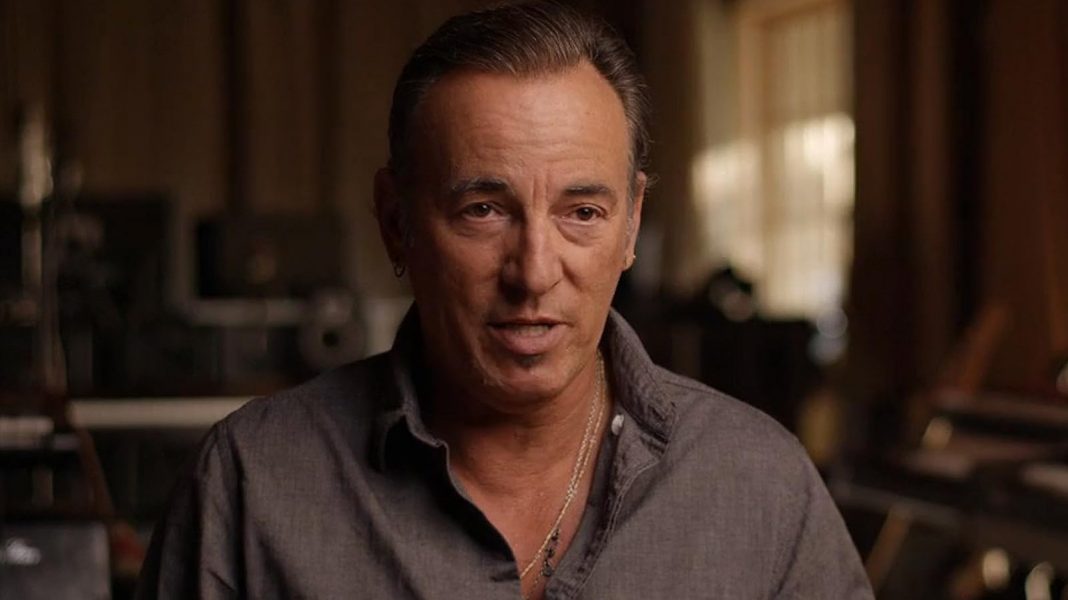

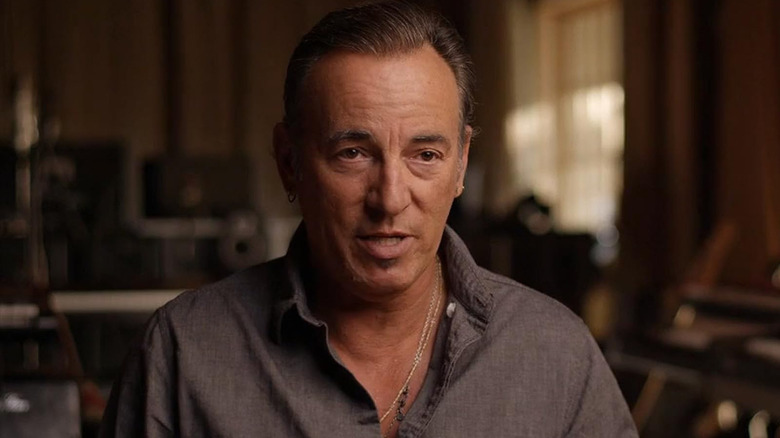
Bruce Springsteen’s “Nebraska” opens with the eerie siren whine of a harmonica, setting the stage for what’s to be an unsettlingly terse first-person account of Charles Starkweather’s 1958 murder spree across Nebraska and Wyoming. If you’ve seen the cinematic memoir “Springsteen: Deliver Me from Nowhere,” you know this was one of many songs the artist recorded in the bedroom of a rental house while working dealing with the onrush of stardom and a brutal bout of depression. What began as an instrumentally spare demo captured via a four-track recorder was ultimately released, after attempts to broaden the sound and make it more of a conventional sounding LP, as that instrumentally spare demo. It was a bold decision by an artist who’d firmly established himself as a rocker backed by the big, muscular E Street Band, but it paid off in critical acclaim. And for fans who were left cold by the downbeat songs on “Nebraska,” they got a classic of E Street bombast two years later with “Born in the U.S.A.”
While the entirety of “Nebraska” is masterful, it’s the title track that sets the despairing tone and looms over the rest of the songs. There’s a pronounced Flannery O’Connor influence here (Springsteen comes close to directly quoting her short story “A Good Man Is Hard to Find” with the lyric “I guess there’s just a meanness in this world”), but the opening verse draws from a cinematic source. It’s very possible we wouldn’t have “Nebraska,” the song or the album, had Springsteen not run across Terrence Malick’s brilliant 1973 directorial debut feature “Badlands” (which currently holds a 97% fresh rating on Rotten Tomatoes).
Badlands’ influence can be felt in the lyrics and composition of Nebraska
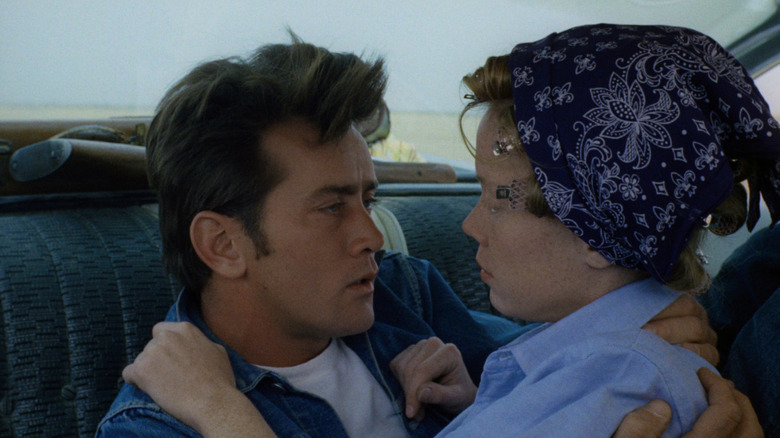
“Badlands” is a poet’s riff on “Bonnie and Clyde.” It’s a film about two restless people eager to escape a lifeless South Dakota town. Holly (Sissy Spacek) is a shy, curious 15-year-old who can’t stand to live another second with her cruel father (Warren Oates). Kit (Martin Sheen), a 25-year-old Korean War veteran who’s eking it out as a garbage man, is her ticket to ride. When Holly’s father attempts to end the relationship, Kit shoots him. Ready or not, it’s time for the pair to hit the road.
After that siren-like harmonica opening to “Nebraska” the song, Bruce Springsteen sings the following:
“I saw her standin’ on her front lawn
Just a-twirlin’ her baton
Me and her went for a ride, sir
And 10 innocent people died”
Those first two lines describe the initial encounter between Holly and Kit in “Badlands,” and the film’s influence can be felt throughout the rest of the tune. It’s especially apparent in the way Springsteen incorporates a glockenspiel midway through the song, a clear nod to Terrence Malick’s use of Carl Orff’s “Gassenhauer” over the opening and closing credits of his movie.
“Badlands” has inspired countless artists over time (legendary director Tony Scott, in particular, used “Gassenhauer” in his Quentin Tarantino-penned lovers-on-the-run masterpiece “True Romance”), but above all else, Malick’s movie palpably transformed Springsteen as a songwriter and a thinker in general. What a gift to the world.