
Horror has many subgenres, but the most fascinating just might be slashers. Unlike creature features, or anything to do with zombies, vampires, or the supernatural, a slasher often exists in a reality close to our own. In these worlds, a human killer is on the loose, stalking their unsuspecting prey. Their victims could be us, and when we look outside on a dark night, horror fans wonder if one of those movie madmen could be lurking around a corner. Slashers had their heyday in the 80s, then again in the late 90s, both times petering out before making a comeback the past few years. And none of it would be possible without these classics. They make up the Mount Rushmore of slasher films.
‘Psycho’ (1960)

While maybe not the first slasher (1932’s 13 Women arguably gets the credit), Alfred Hitchcock‘s Psycho was the first to become a pop culture sensation. Before Psycho, horror on screen existed in the gothic, with the impossible being the source of fear. What made Psycho so terrifying was that it seemed like it could really happen. Based on Robert Bloch‘s novel of the same name, the film begins with Marion Crane (Jennifer Leigh), a thief on the lam who decides to spend the night at the Bates Motel, run by a seemingly harmless Norman Bates (Anthony Perkins). As Marion and so many others will soon find out, there is a lot more going on at this motel than meets the eye.
Psycho isn’t a high body count movie with buckets of blood. The early 60s weren’t ready for that yet. In fact, Psycho was the first movie to ever show a flushing toilet! The kill count is low in this one. It’s the slow build and the unwinding tension that makes it so good. The shower scene is filmed and scored masterfully, and the mystery surrounding Norman’s mother has a terrifying ending. Perkins is such a talented actor that a simple shy smile will have you doubting his intentions. If you think Psycho isn’t a slasher, we dare you to watch it, then try to take a shower afterward.
‘The Texas Chain Saw Massacre’ (1974)

October 11, 1974 was a monumental day for horror. On this day, both Bob Clark‘s Black Christmas and Tobe Hooper‘s The Texas Chain Saw Massacre were released. It’s tempting to put Clark’s film on this list because of how it influenced Halloween, but the saw can’t be denied. The Texas Chain Saw Massacre begins with a group of friends who stop for help at a seemingly abandoned house in Texas, only to encounter an imaginable terror. Inside waits Leatherface (Gunnar Hansen), a chainsaw-wielding cannibal who wears the faces of his victims. For Leatherface and his family, these kids are now on the menu.
If Psycho is nearly bloodless, The Texas Chain Saw Massacre is filled with it… at least that’s what your mind tricks you into believing. In reality, there is very little of the red stuff. The violence is so intense and non-stop that our imagination lies to us. It’s a hot, sticky, uncomfortable movie, with a captivating final girl in Sally Hardesty (Marilyn Burns), a fighter who never stops screaming in terror. Hooper brilliantly disturbs the viewer in every scene and keeps you on edge for the entire runtime. Its success led to a franchise. Those are hit-and-miss. This perfect film is where it all begins, complete with a smart message about the failures of industrialization. Are we supposed to feel sorry for Leatherface as much as we fear him?
‘Halloween’ (1978)

Perhaps the most famous slasher of them all is John Carptenter‘s Halloween. Without it, not only would a thirteen-film franchise not exist, but neither would Friday the 13th and Jason Voorhees, nor the last name on this list. Halloween has a bare bones, simplistic plot. In Haddonfied, Illinois, the sister killing Michael Myers (Nick Castle) has escaped from a psychiatric hospital. On Halloween night, now wearing a chilling white mask, the silent Shape looks to relive his past crime when he spots a trio of high school girls, led by babysitter Laurie Strode (Jamie Lee Curtis).
If you watch slashers from the 80s and 90s before Halloween, finally getting around to Carpenter’s masterpiece hits differently. It feels like a trope-heavy slasher just like all the others. There’s a reason for this though. Halloween is what perfected all of those plot beats the subgenre would come to rely on. The minimalism of the low budget makes the film lifelike rather than a slick Hollywood creation. Laurie is the perfect final girl as a shy young woman forced to fight for her life. And, oh, that score. No matter how many times you hear it with the Boogeyman lurking in the shadows, it’ll never fail to send a shiver down your spine. Halloween is a suburban nightmare like no other. If you’ve never seen a slasher before, start here.
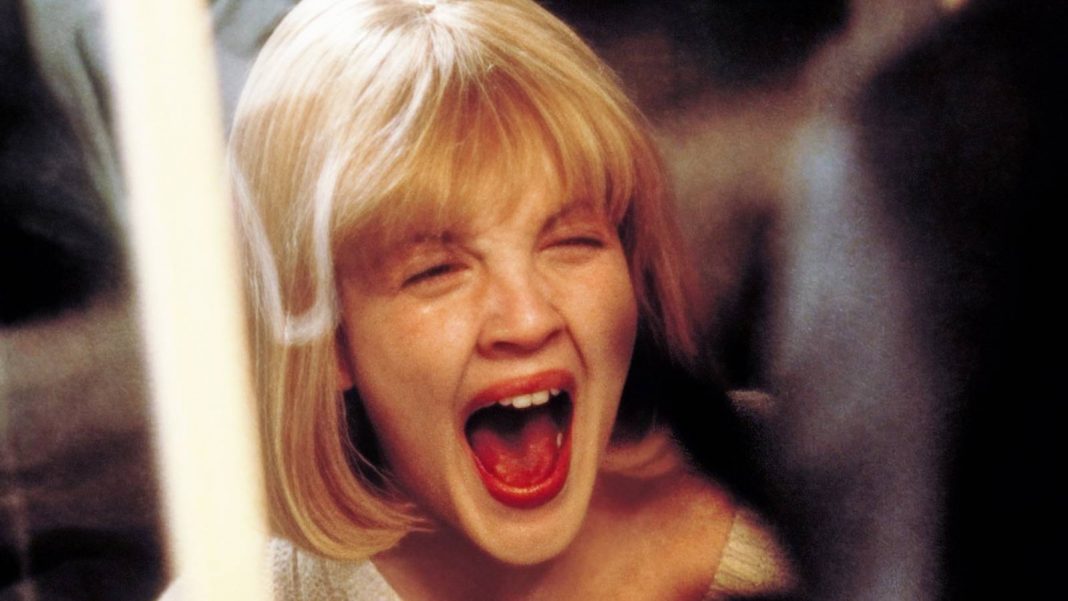
‘Scream’ (1996)

The slasher fad died out in the late 80s, and for much of the 90s, horror lost its identity. It was saved by one of its best filmmakers when Wes Craven, the man behind A Nightmare on Elm Street, directed Scream. A brief synopsis hints at a movie just like everything that came before it. High school students in California are stalked by a killer in a mask who picks them off one by one, as final girl Sidney Precott (Neve Campbell), the object of their terror, struggles to bring them down. Yes, this is another masked psychopath, but this time, rather than being silent, they prefer to terrorize with phone calls. The history of scary movies is their favorite subject, and the only way to make it out is to maneuver through slasher stereotypes.
Kevin Williamson‘s clever meta horror script is a love letter to the past, and it’s all done so well that it created a new chapter for slashers. Forget being a slow-moving stalker, Ghostface is fast. What makes him really stand out is that he doesn’t have an established backstory. Rather than being a known entity like Michael Myers of Jason Voorhees, the villain in Scream is unknown. On top of the horror, viewers also have to figure out the mystery. While other movies in the franchise dropped the ball in the third act reveal, Scream teases us with both the obvious and the unpredictable, leading to a spot-on final act.