
[Editor’s Note: The following story contains spoilers for Season 4 of “Industry.”]
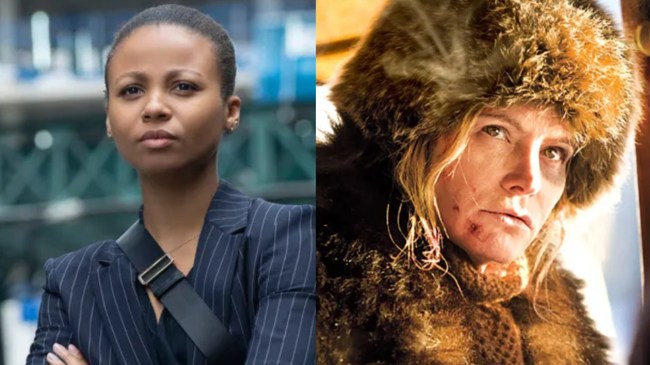
Harper Stern’s (Myha’la) childhood casts a dark shadow over the “Industry” lead character. Although off-screen, her abusive mother has a palpable hold over her. Over the course of writing the series, one question the creators Mickey Down and Konrad Kay grappled with was who to cast when Harper’s mom eventually made an appearance.
“We were really worried about casting the actress, [and] what it would mean to put them on screen together. It would almost be you’re filling in too many gaps,” Kay said while a guest on this week’s episode of IndieWire’s Filmmaker Toolkit podcast.


On the podcast, the “Industry” creators admitted that at one point they had thought Jennifer Jason Leigh would be the right actress for the role, before realizing that the best casting decision was never to show the character at all.
Kay explained, “You’d be filling in too many gaps, whereas I think the actual haziness of [not showing Harper’s mom] gave Myha’la more to play. It makes it more universal.”
Allowing the effect the relationship has on Harper to play out in Myha’la’s performance pays off in Season 4, when Harper learns of her mother’s unexpected death. Myha’la goes noticeably inward as her character continues her battle to bring down Tender, never stopping to make plans to return home for the funeral. It’s not a coincidence that Harper’s breakthrough attempt at her first real relationship comes when she tells Kwabena Bannerman (Toheeb Jimoh) that her mother died. According to Down, it’s a power the mother character would never have had if they put a face to her.
“It allows the audience to project whatever she was like onto the character,” said Down. “I don’t think, honestly, we would be able to cast it in a way — it is a weird thing to say — that would do the character justice, because she’s such a huge presence in Harper’s life without ever seeing her. I think it would just undercut the power of it.”
During the interview, Kay and Down referred to themselves as acolytes of “Mad Men,” and the grip Harper’s upbringing has on her drive and steely outer shell is not unlike Don Draper’s (Jon Hamm). In Season 2, like in “Mad Men,” the creators explored the past when Harper searches for and finds her estranged twin brother (Adain Bradley), a former tennis star who flamed out from anxiety, which he associates with Harper and his childhood trauma. It was a detour away from the world of “Industry” that was likely a mistake, and one that the creators drew a broader lesson from.
“Me and Mickey have found in writing the show, and I think this is true of actually even great shows like ‘Mad Men,’ the moment you start going backwards, narratively, even if you handle it really well, I think the viewer sort of turns their brain off a little bit and you’re often doing stuff that isn’t pushing story,” said Kay. “There’s a slight tendency towards indulgence because you feel like you’re filling the character in, but actually the audience doesn’t actually need it as much as you think they do.”
To hear Kay and Down’s full interview, subscribe to the Filmmaker Toolkit podcast on Apple, Spotify, or your favorite podcast platform.