
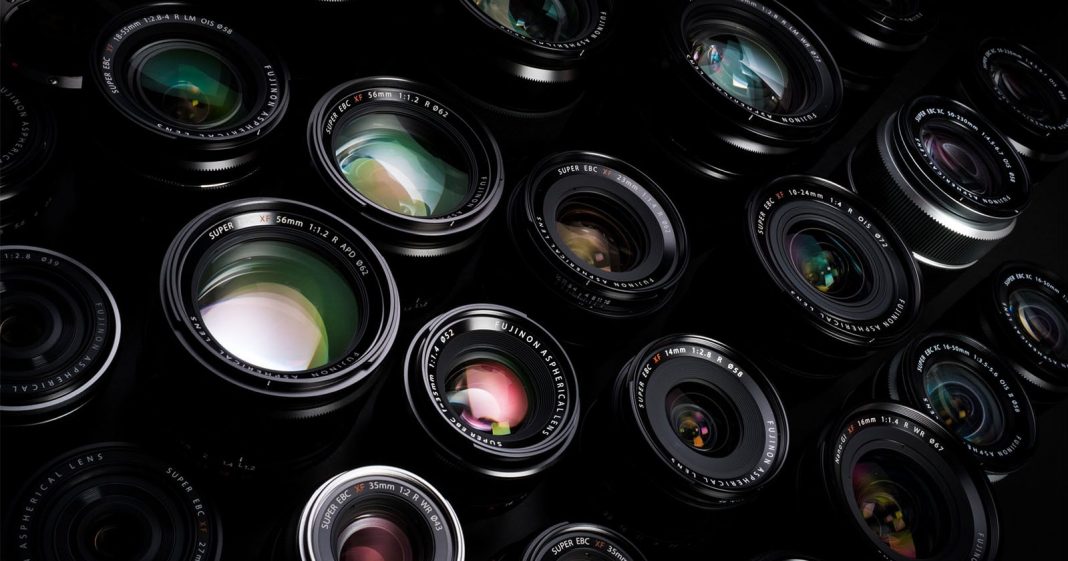

Fujifilm hosted its promised “Focus on Glass: Untold Stories” event this morning, sharing new details on its existing X Mount lenses and offering a peek behind the curtain at the lens concepts the company would like to consider. Photographers can vote for their favorite lens ideas right now.
While none of the featured lens ideas are currently under development, Fujifilm’s Yuji Igarashi, Divisional Manager of Fujifilm’s Professional Imaging Group, says that the discussion surrounding the lens concepts will indicate “what the future may hold for X Mount lenses.”
Although the lenses below are not in active development, these are not just vague ideas. These are realistic, plausible X Mount lens types, and Fujifilm is genuinely considering them.
To that end, the company wants to hear from photographers about which ideas interest them most. Voting is open now, and so far, clear favorites are pulling away at the polls. Each user can cast votes for three lenses. This is the chance for photographers to help shape the future of the Fujifilm X Series.
The lens ideas below are all presented by Fujifilm’s Yukitaka Takeshita, who has been working on X Mount lenses since the very first ones and works in product planning, and Yuma Miyauchi, who works on Fujifilm lens development and planning.
XF 18mm / 30mm ‘Travel Mini’
Inspired by compact, travel-friendly primes in Fujifilm’s XF lineup, the company is considering a new lens that is not quite a prime and not quite a zoom. This lens would let photographers swap between 18mm and 30mm focal lengths, with no coverage in between. Photographers would get 24mm and 45mm equivalent focal lengths at faster apertures than they would if the lens was a traditional zoom, and in a smaller, lighter design.
Fujifilm has experience with this idea. As Takeshita notes, when he joined Fujiflim, the company made a Fujifilm “Travel Mini” film camera. This camera let photographers swap between 28mm and 45mm focal lengths, and it was a huge hit.
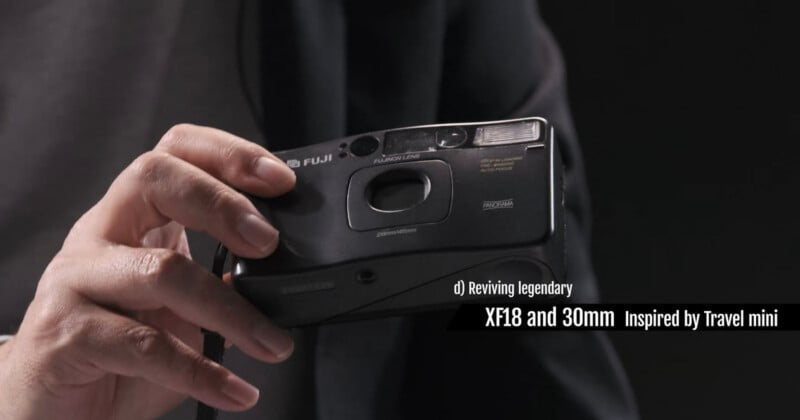
As Takeshita explains, while Fujifilm made zoom lenses at the time, they were big and bulky and the Travel Mini needed to be small. As he notes, while zoom lenses are much smaller now, and they are very popular, most photographers still use just the two extreme ends of a zoom lens. So why not cut out the middle and make a really compact, lightweight dual focal length lens?
“Instead of zooming, you just switch between [the focal lengths],” Takeshita says. “Which lets us keep the size very small.”
A Trio of XF 35mm f/1.4 II Ideas
This is an interesting one because the idea is not a single lens but three. Each approaches how to succeed the original XF 35mm f/1.4 R lens announced way back in 2012 in different ways. Replacing a legendary lens like this, which is no longer up to the standards of Fujifilm’s 40-megapixel X-Trans cameras, is no easy task.
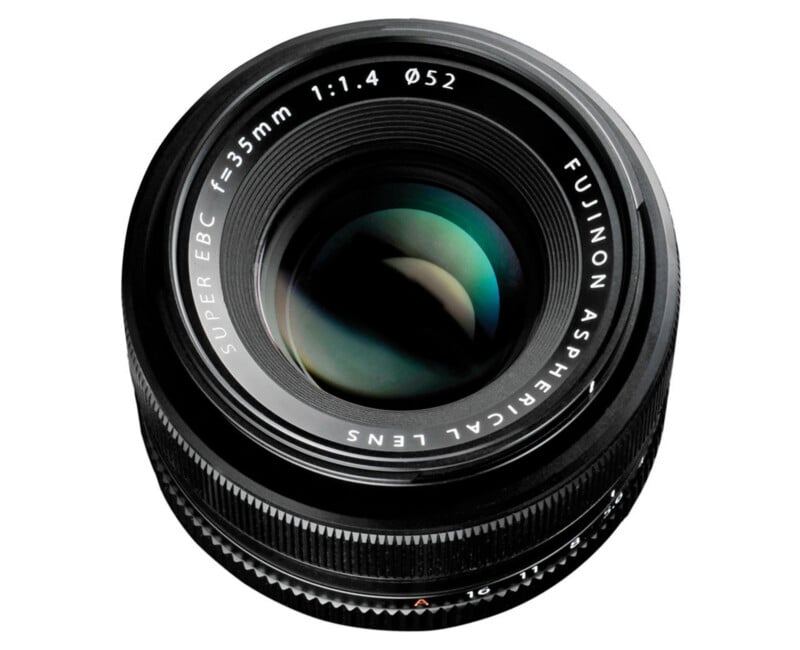
Fujifilm offers three different ways it could deliver a worthy sequel to the original 35mm f/1.4 prime. One option is an XF 35mm f/1.4 II with a new optical design that basically does the same thing as the original, but better. It would be up to 70 millimeters (2.8 inches) long and weigh up to 300 grams (10.6 ounces), a fair bit bigger and heavier than the original but suitable for modern image sensors and use cases.
Another idea is to make a new XF 35mm f/1.4 WR II lens that is smaller and lighter than the original. The third idea is making a lens that splits the size and weight difference while offering silent, super-fast autofocus.
In this case, Fujifilm wants to know what people prioritize when it comes to a potential XF 35mm f/1.4 Mark II. Do photographers care most about image quality, size and weight, or autofocus speed? While any XF 35mm f/1.4 II will surely be sharp and fast, it is not possible to do everything to the highest possible degree.
Soft Focus Lens With a Porous Aperture
This is a crazy one. Way back when, Fujifilm made an 85mm f/4 lens with a porous aperture design. Rather than a solid aperture, it had a bunch of holes in it, akin to a lotus root, as Fujifilm puts it. The resulting images have a very soft, hazy appearance, which is currently trendy.

Fujifilm knows full well this would be a weird lens that photographers would only use in certain situations, but it would also “expand the range of expression” in the X Mount lineup.
“It would probably be a truly one-of-a-kind look,” Fujifilm says.
XF 90mm f/2 APD
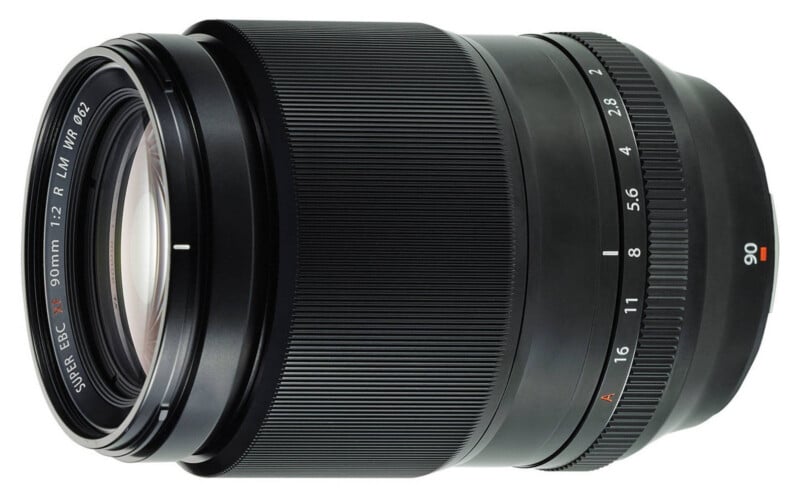
A similar lens, insofar as it also offers a distinct look, is the XF 90mm f/2 APD. Fujifilm has already made an APD lens before, the XF 56mm f/1.2 R APD. It has unfortunately since been discontinued, replaced by the admittedly technically superior XF 56mm f/1.2 R WR in 2022. However, the APD, or “apodization,” in the original delivered really stunning bokeh. Fujifilm is open to revisiting this technology and delivering an even longer prime lens that promises ultra-smooth bokeh. This would not be a massive lift, either, as Fujifilm notes it could build this concept from its existing XF 90mm f/2 R LM WR lens.
XF 16-50mm f/2.8-4.8 — Ghost Control
Continuing with the idea of “character-rich” lens concepts is the XF 16-50mm f/2.8-4.8 Ghost Control With Hood lens. Optical engineers spend considerable time and effort removing ghosting and flare from lenses, but some photographers, including Miyauchi, love the flare and ghosting on older, technically inferior lenses. What if a lens could feature modern design and performance, while also enabling photographers to get a lot of character-rich ghosting and flare when they wanted it?
That’s where this lens concept comes in. The included lens hood could control the ghosting performance. With the hood on, the lens is super clean. But once the hood is removed, it’s a ghost bonanza.
XF 23mm, 35mm, 50mm f/2 Lenses With Brass Exterior
This concept is about character, too, but rather than focusing on how images look, it focuses on the appearance of the lenses themselves. As Fujifilm says, while lenses are obviously creative tools for taking photos, many photographers also care deeply about how a lens feels to touch, use, and hold. Photographers want to love their lenses.
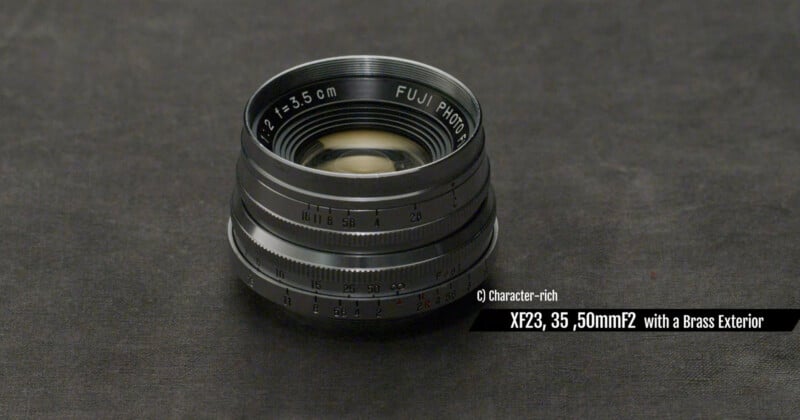
To that end, using brass for the exterior of a lens could “really enhance those feelings.” Fujifilm used to make brass lenses, and the company brought one out from 1954 to show off this idea.
Fujifilm’s trio of f/2 XF primes, the 23mm f/2, 35mm f/2, and 50mm f/2, already have metal exteriors, so as Fujifilm says, converting them to a brass design would actually be pretty simple.
Manual Focus Prime Lens
Building on the idea of a lens photographers love to use, Fujifilm’s next idea is an XF 23mm, 35mm, or 50mm prime lens that is manual focus only. The company knows how popular third-party manual X Mount lenses are and is considering making some of its own.
As Takeshita explains, one of the advantages of a manual focus lens is that it can be extremely small and lightweight in addition to being a fun way to take photos.
Cinema Prime T1.2 Lenses
Rounding out the “character-rich” concepts is a series of cinema prime lenses with fast T1.2 apertures. Fujifilm floats the idea of a set of 16mm, 23mm, 33mm, and 56mm T1.2 cinema prime lenses that build upon Fujifilm’s existing cinema zoom lenses, which it makes for other mounts, like E and RF.
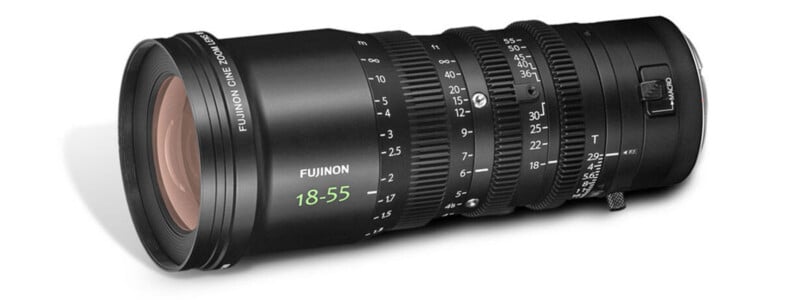
“But when I’m filming personally, I really find myself wanting prime cine lenses,” Miyauchi explains. The Fujifilm lens designer shoots music videos in his personal time and is very passionate about videography and filmmaking.
“If we’re going to make [cine] primes, I’d love them to be fast enough to give that T1.2 level of bokeh,” he adds.
XF 16-80mm f/2.8
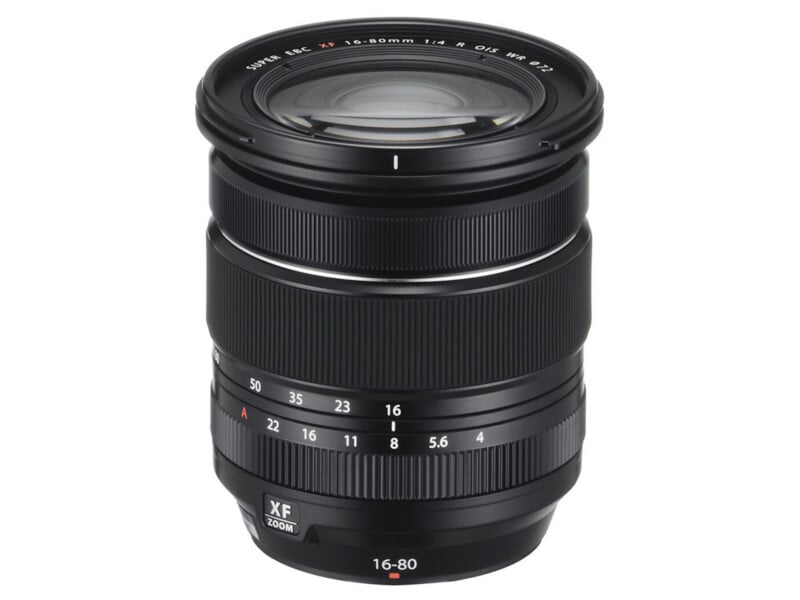
Next up is a series of wide aperture lens ideas, starting with the XF 16-80mm f/2.8, which would be equivalent to a 24-120mm f/2.8 zoom, unlike anything on the market. This could be a very impressive professional-grade fast zoom lens.
XF 18-50mm f/1.4
This lens idea, essentially a 24-75mm f/1.4 zoom, is perhaps even more ambitious. A 5x f/2.8 zoom is bold enough, but an f/1.4 zoom lens? That would really be something. Fujifilm envisions a lens like this weighing up to 800 grams (28.2 ounces) and being 130 millimeters (5.1 inches) long.
“One direction for the evolution of zoom lenses is toward wider apertures,” says Miyauchi. “There are already f/1.8 zooms on the market.”
“If we could make a zoom lens even faster than f/1.8, at f/1.4, I think that would be a truly dream-like lens.”
At the time of writing, this is the most popular lens idea, followed closely by the XF 16-80mm f/2.8 above.
XF 33mm f/1
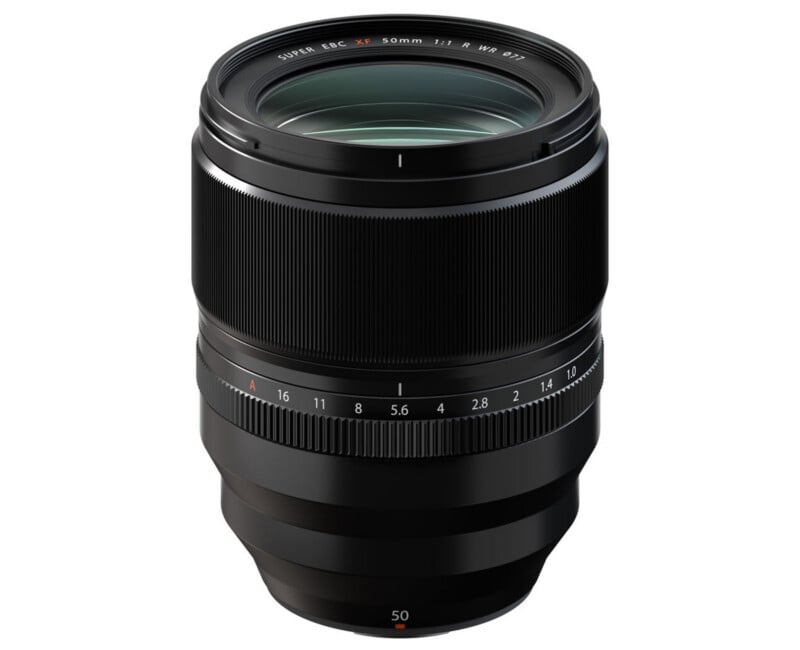
The final fast-aperture concept is for a prime lens, the XF 33mm f/1. This is not a far-fetched idea. Fujifilm already makes the XF 50mm f/1, so a slightly wider XF 33mm f/1 (50mm equivalent) seems like a natural next step.
XF 14-140mm f/3.5-6.3
Fujifilm has one “high-magnification zoom” idea on offer, and it’s pretty interesting. An XF 14-140mm f/3.5-6.3 lens, which is equivalent to a 21-210mm zoom in full-frame terms, doesn’t seem outlandish.
“Some of you may be thinking, ‘What’s dream-like about this?’” Takeshita remarks. “But what we want is to make this a super high-image quality lens.”
As Takeshita explains, most high-magnification zoom lenses of this type compromise when it comes to image quality, but what if they didn’t have to? The typical tradeoff is giving up quality for versatility, but a lens that offers both with no compromise? That does sound more like a dream. As Takeshita admits, this would cost more, but perhaps enough photographers are willing to spend money on it.
Vote Now
All of these lens concepts are extremely interesting, and in many cases, completely realistic. Fujifilm is unlikely to make them all, and may ultimately make none of them (although some feel nearly inevitable, like a new XF 35mm f/1.4 lens), so photographers should take the chance to voice their opinion. While all photo companies consider user feedback when planning future products, the ability to vote on concepts like this is unprecedented. This is a very rare opportunity for photographers to help shape the future of the Fujifilm X Series.
• Vote for Your Favorite Fujifilm X Series Lens Ideas •
Image credits: Fujifilm