
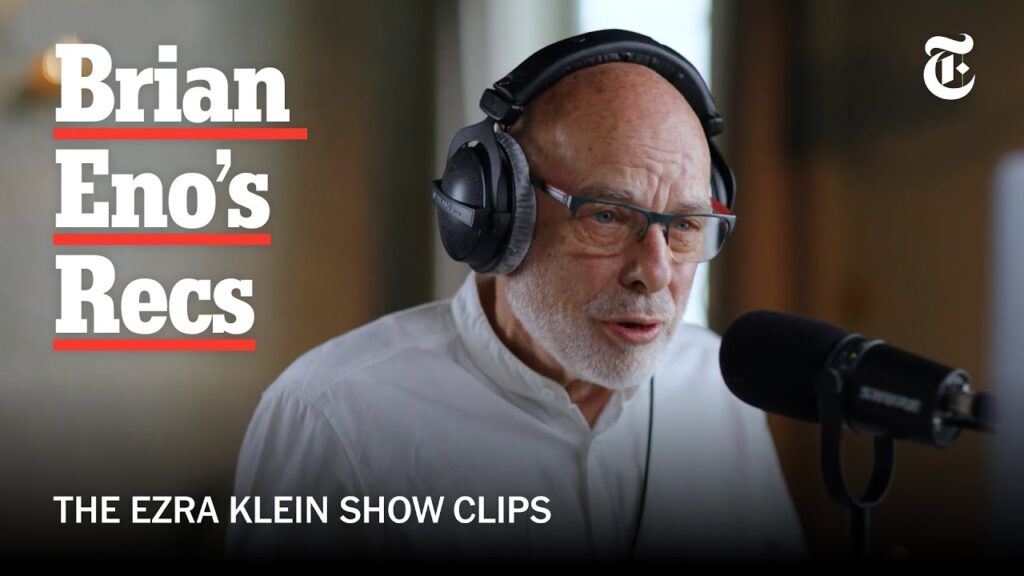

If you’re a regular listener, you know that Ezra Klein wraps up his podcast interviews with a familiar question: what three books would you recommend to the audience? When Klein interviewed Brian Eno in October, the producer had these three books to offer.
First up was Printing and the Mind of Man, a catalog from an exhibition held at the British Museum in 1963. “It was about the history of printing, but actually, the book is about the most important books in the Western canon and the impact that they had when they were released.” “It’s such a fascinating book because you really start to understand where the big, fundamental ideas that made Western culture came from.”
Next came A Pattern Language by the architect Christopher Alexander. “It’s really a book about habitat, about what makes spaces welcoming and fruitful, or hostile and barren.” Eno has returned to the book again and again over the years. “Over the course of my life, I’ve bought, I would say, 60 copies of that book because I always give it to anyone who is about to renovate a house or about to build a house. It’s a great read, and you would love it.”
His third recommendation was Naples ’44, a war diary kept by Norman Lewis, a British intelligence officer sent to Naples during World War II. “He kept a diary, and this is the most fabulous diary you’ll ever read. It’s just hilariously funny, deeply moving, and totally confusing—and you realize that Naples was, like, another planet.”
Understandably, Klein couldn’t let the interview end without also asking what albums influenced Eno most. In response, Eno offered The Rural Blues, a series of recordings of Black American music from the 1920s, 30s, and 40s. It’s the same music that later inspired pop and rock musicians in England when Eno came of age. He also pointed to the Velvet Underground’s self-titled third album, calling it a “beautiful, beautiful record, beautifully controversial in many ways.” He then added: “In fact, probably without that record, I wouldn’t have been a pop musician.” Many other musicians have said the same.
And finally, despite being an atheist, Eno selected a gospel recording act known as The Consolers, best known for their 1955 track “Give Me My Flowers.” You can listen to more of their greatest hits here.
Alongside his musical and literary influences, Eno recently shared his own ideas in the book What Art Does: An Unfinished Theory.
Related Content
Brian Eno on the Loss of Humanity in Modern Music
A 6‑Hour Time-Stretched Version of Brian Eno’s Music For Airports: Meditate, Relax, Study
Brian Eno Creates a List of 20 Books That Could Rebuild Civilization
Jump Start Your Creative Process with Brian Eno’s “Oblique Strategies” Deck of Cards (1975)
Brian Eno Lists the Benefits of Singing: A Long Life, Increased Intelligence, and a Sound Civilization