

There are certain years that go down in history as being particularly influential when it comes to the celebration of film. While there’s likely a number of great films available every year, at least for those willing to seek them out, there are some moments where the yearly calendar matches up with a broader trend about the direction that the industry is going.
1977 was at the height of the “New Hollywood” era, in which studios were giving young filmmakers the opportunity to pursue their most ambitious projects with the full backing of a reasonable budget. However, it also saw the dawning of the blockbuster era thanks to the release of a certain science fiction classic, which started a franchise that is still releasing new installments to this day. Here are ten films from 1977 that are now considered classics.
10
‘Suspria’ (1977)

Suspiria is one of the great giallo films ever made, and perhaps the most influential entry in Dario Argento’s impressive catalog of classics. While these types of supernatural Italian horror films were known for their stylized direction, sharp colors, and graphic violence, Suspiria had real substance to it that has allowed it to stand the test of time; most critically, the film featured incredible recreations of ballet performances that were impressive in their own right.
Suspiria holds up incredibly well as a product of its time, and is even more interesting due to the historical context. It also inspired a remake from Luca Guadagnino in 2018 that starred Dakota Johnson and Tilda Swinton, which inverted the approach that Argento took by vastly extending the running time, muting the color pallet, and adding historical context about the influence of the Soviet Union on dancers in 1977.
9
‘Saturday Night Fever’ (1977)

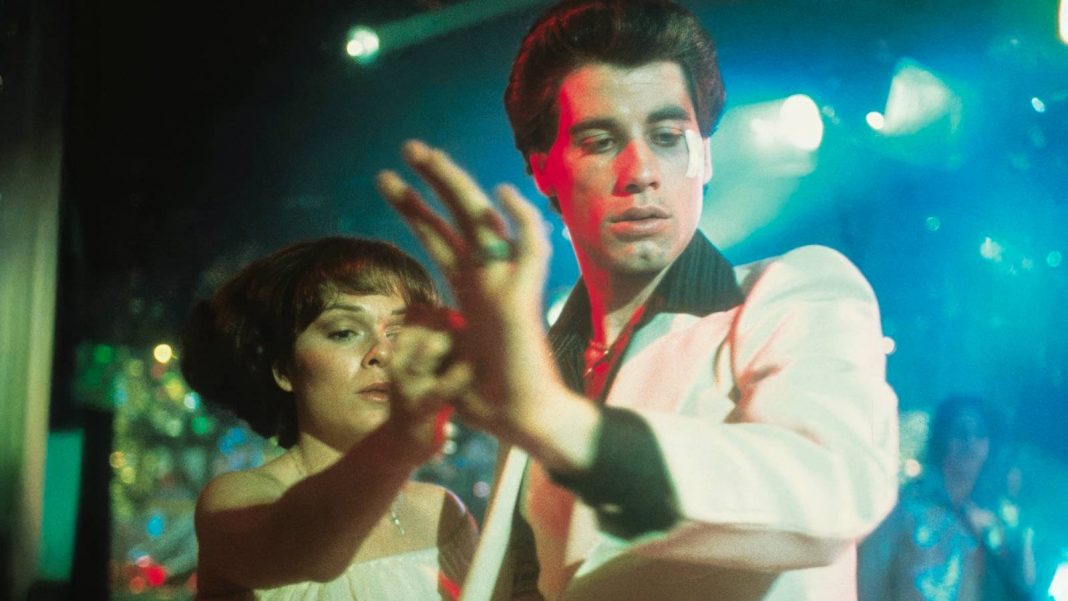
Saturday Night Fever is one of the greatest breakout star vehicles in film history because of what it did for John Travolta, who was only in his early 20s when he earned the role of his career. While Saturday Night Fever is now more fondly remembered for its amazing soundtrack by the Bee Gees, which included all-time great tracks like “Night Fever” and “Stayin’ Alive,” it’s also a much darker, disturbing look at class relations that was unafraid to look at the grittier side of American cities.
Saturday Night Fever instantly turned Travolta into one of the biggest stars in the world, and inspired an entire decade of imitators. The fact that it is still one of the most parodied films of all-time indicates that Saturday Night Fever has a lasting impact on popular culture that will never be eroded.
8
‘Opening Night’ (1977)

Opening Night is one of the many great films from director John Cassavetes that starred his wife, Gena Rowlands, as they were able to create immersive stories that were almost painfully authentic in their realism. The arthouse classics that Cassavetes made often dug into uncomfortable aspects of the human experience that proved difficult to reckon with, and Opening Night may have been the most personal film that they ever worked on together because of how authentic it was as representation of the anxieties that come with giving a performance.
Opening Night explores how an artist might become so involved with their performance that they become lost and lose all sense of self-actualization, which is a theme that can be relevant to those in any type of performing arts. While often a painful film to watch, Opening Night is as enlightening as it is rewarding.
7
‘Rolling Thunder’ (1977)

Rolling Thunder is the definitive ‘70s revenge thriller because it combined the pulpy exploitation aspects of Death Wish with the deeper societal themes of Taxi Driver, for which it shared a screenwriter in Paul Schrader. The brutal film wasn’t just an exploration of the turmoil faced by Vietnam War veterans who returned home to find their home country torn apart, but a justification for vigilantism when law enforcement is too corrupt and incompetent to intervene.
William Devane gives an incredible, physically involved performance that is also surprisingly vulnerable, but the film also featured an early key role from Tommy Lee Jones, who steals every single scene that he is in. Rolling Thunder may have kickstarted some complex conversations on what the narrative purpose was and what the film was trying to say, but when it comes to pure entertainment, the final shootout is as exciting as any third act could ask to be.
6
‘Eraserhead’ (1977)

Eraserhead was the feature film debut of David Lynch, who would establish himself as both one of the greatest filmmakers of all-time and the most important figure within the American surrealism movement.
Eraserhead in many ways feel like the most personal of Lynch’s films because it examines the anxieties felt by the character Henry (Jack Nance) upon realizing that he is going to be a father, and shows the horror of his wife giving birth to a unsightly child who provides him with nothing but torment. Although the black-and-white imagery is stark and often terrifying, Eraserhead was also a key to unlocking Lynch’s very strange sense-of-humor, particularly in depicting hapless characters who seem to have their luck turned worse at every possible instance. It was the first of many collaborations he had with Nance, who would go on to play a very important role as Pete in Twin Peaks.
5
‘Slap Shot’ (1977)

Slap Shot is simply one of the funniest films ever made, and marked a change of pace for Paul Newman during an interesting period in his career. Although Newman was a beloved dramatic actor best known for his searing roles in classics like Cool Hand Luke and The Hustler, Slap Shot showed that he could perform wild acts of physical comedy, and wasn’t afraid to get goofy.
Slap Shot was the perfect underdog sports story, as many of the best films of the ‘70s centered on outsiders who are forced to prove themselves against a more well-equipped and powerful force of authority. Although there’s a style of offensive humor in Slap Shot that suggests it would be hard to make it today, it hasn’t stopped the film from being completely hilarious, and a true time capsule of the era in which it was made.
4
‘Close Encounters of the Third Kind’ (1977)

Close Encounters of the Third Kind is one of the greatest films that Steven Spielberg has ever made, which is no small statement considering that he is the best director to have ever lived. It wouldn’t be the last time that Spielberg worked within the science fiction genre, but Close Encounters of the Third Kind was a deeply expressive, atmospheric film that explored what it would actually look like if humanity came into contact with creatures from another planet.
Close Encounters of the Third Kind is the rare Spielberg film that looks at an extraordinary event through the eyes of both children and adults, and satisfies both perspectives by saying something profound about memory. It also featured an all-time great score by John Williams that was so whimsical and moving that it is easily among his very best collaborations with Spielberg.
3
‘The Goodbye Girl’ (1977)

The Goodbye Girl is a pretty old-fashioned romantic comedy that nonetheless became a major contender at the Academy Awards because it simply hit all the notes right. Although the story of two struggling people forced to live with one another out of convenience may now seem like a cliche, that’s not considering the countless modern date night films that have drawn direct inspiration from The Goodbye Girl.
The Goodbye Girl set a record at the Academy Awards because Richard Dreyfuss became the youngest actor to ever win the Oscar for Best Actor, a record that he would keep up until Adrien Brody’s shocking win for The Pianist. Although Dreyfuss would play more insular, temperamental characters later on in his career (and earned a reputation for being difficult to work with), The Goodbye Girl showed him at his most charming and sincere.
2
‘Annie Hall’ (1977)

Annie Hall took home the Academy Award for Best Picture, which is fairly surprising when considering how different it is from some of the other winners in the decade. However, it’s hard to think of many other ‘70s films that have been quite as influential as Annie Hall, as it created a format of a modern romantic comedy that would be iterated on countless times within the next few decades.
Annie Hall was the peak of Woody Allen’s career, and not just because it was the most involved and complex work he did as a director; it also featured his best acting performance, even though he tends to be overshadowed by his co-stars. That being said, the true legacy of Annie Hall belongs to the late great Diane Keaton, who brought the titular character to life with no shortage of charm and imagination.
1
‘Star Wars’ (1977)

Star Wars: Episode IV- A New Hope is one of the most important films ever made, regardless of whether it’s considered to be a blockbuster, a work of science fiction, an achievement in modern mythology, the start of a franchise, or a tremendous leap forward in the development of special effects.
George Lucas went through hell to get the first Star Wars film made, and earned a genius deal in which he would take full creative ownership of the franchise that would change the course of movies forever. Although it was packed with amazing designs and worldbuilding that attracted the interest of younger fans, the original Star Wars told a deeply relatable story in that of Luke Skywalker (Mark Hamill), a young person interested in a life of adventure who wants to escape the confinements of a small town. It was a character Lucas related to, and one that in turn inspired the world.