![An Oral History Of One Battle After Another's Best Scene [Exclusive]](https://smsamagazine.com/wp-content/uploads/2026/01/An-Oral-History-Of-One-Battle-After-Anothers-Best-Scene-1068x601.jpg "An Oral History Of One Battle After Another's Best Scene")

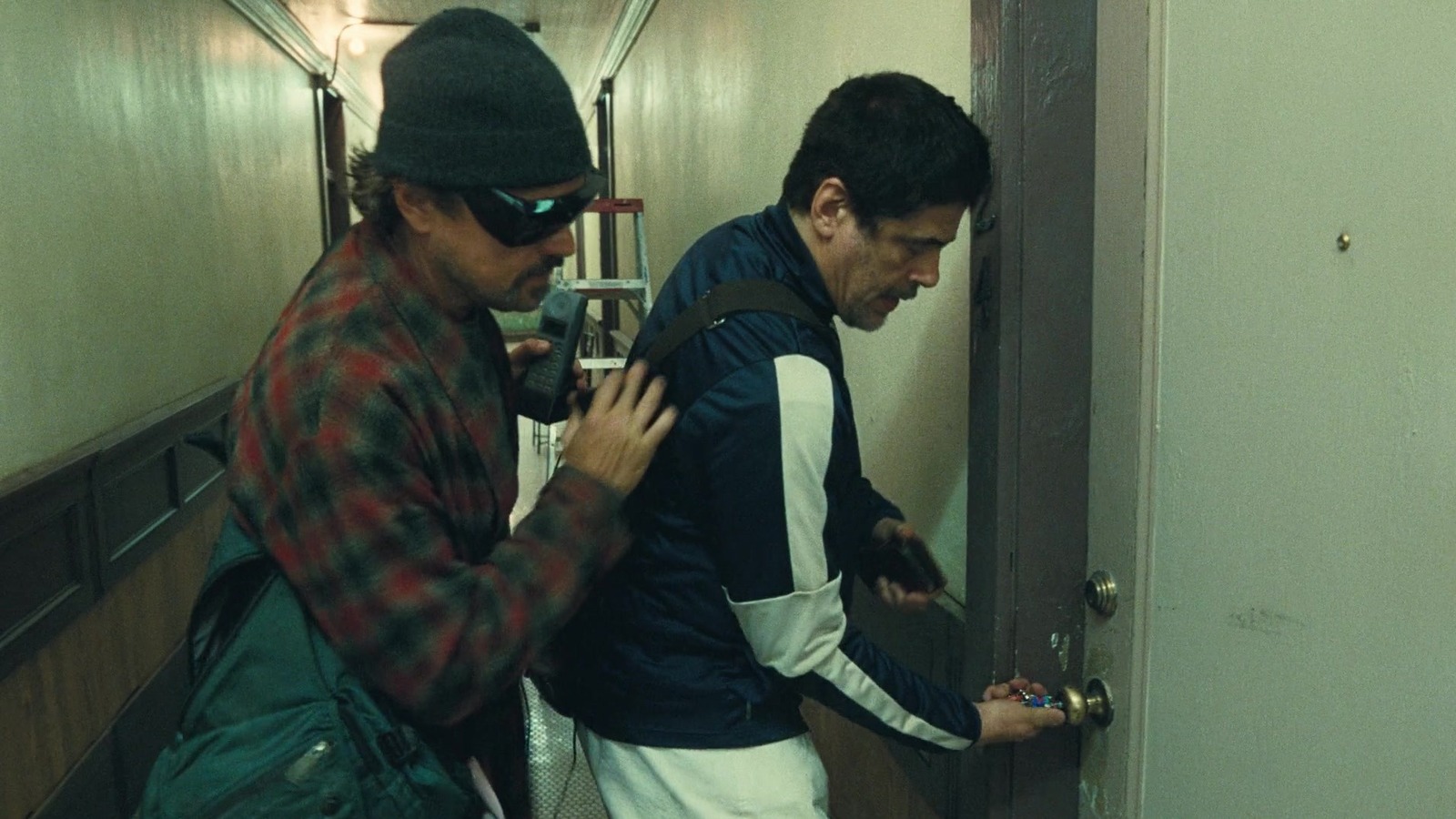
Meanwhile, a protest is brewing in the streets of the fictional Baktan Cross. Lockjaw has concocted a pretext for his forces to be in the city, and after shutting down a local restaurant and arresting innocent employees, the people of this community rally to stand against the overstepping militarized police. Lockjaw quietly sends in an agitator dressed as a protestor to provide a spark that gives his soldiers an excuse to fire tear gas at the crowd.
Andy Jurgensen (editor): It really was just keeping the momentum up the entire time. We were always trying to figure out where we were going to be doing the crosscutting between all the different characters. There’s obviously Bob and Sensei, and then there’s the [protest] that’s happening. Then there’s the soldiers trying to find Bob or trying to find Sensei, trying to get in.
Florencia Martin (production designer): We studied a lot of footage of the way people quickly react to things and how banal it can be sometimes. It starts with Bob running across that bridge with the redwoods behind him. And there’s some activity happening at a taco stand and how people just take their phones out and start to congregate and how this can escalate so quickly. That was the progression of that action, where you see that first activity and then you start to feel it behind Sensei when he’s at the dojo. So the glass window was really important to us, police sirens coming through, and adding to the tension of that scene of the fear that Bob has for his daughter, and all that unrest that’s happening.
Michael Bauman (cinematographer): The unsung hero of the whole [protest sequence] is the sound design. I just want to shout out to that, and the score that Jonny [Greenwood] did, because those are two things that just add so many tension elements to it. But I think for that particular sequence, Flo and I had walked through and talked about practicals, talked about where light sources would come from, how to integrate as much as possible so we could just be shooting it. We’d light some buildings, we’d bring in movie lights for that, we’d do a few things, but also talking to the special effects, because they were going to have a car on fire, burning, which is awesome. As soon as you get that, that means you get smoke, you get cool lighting going on. There’s a lot of things that add to the visual “wow” real quick.
Andy Jurgensen (editor): I think the way they shot [the protest] was interesting because it was, especially when we’re looking at Lockjaw, there’s moments where it’s almost zoomed in, so you see, out of focus, soldiers and fire and things like that. It focuses on him, but you realize that there’s this activity around him. I think the biggest thing was just getting the sound right there, because we had the chance from production, we had some good stuff, but it had to be augmented. And it wasn’t just like the yelling and the fire sounds, but it was also all the, just the rustling of the soldiers, with all of their body gear and the armor and all that kind of stuff. Those were the layers of things we were adding to that to get that feeling.
Florencia Martin (production designer): Back to how accommodating El Paso was, because their downtown is basically a shuttered preservation of historic buildings, there’s no longer any commerce really there. So for me, it’s a dream, because you’re not hiding a Starbucks or fast food restaurant. It’s just a clean canvas. And throughout the film, we wanted everything to be practical in 360 [degrees]. So we did all of the lighting and camera with Anthony, our set decorator. So that was really fun to restore these streets and storefronts and what they would look like at night. And then El Paso was an incredible accommodating city because basically they gave us complete lockdown for these four city blocks in a circle. So all the driving sequences and then those scenes, we were able to completely lock down and close down and create fire and atmosphere. So it’s the most blessed way to work.
Michael Bauman (cinematographer): You’ve got the cops on one end and the people on one end and [Lockjaw sends] in the guy they planted in there to throw the [molotov cocktail] — “Send in Eddie Van Halen” — and we had this long dolly track that just went down the whole block. A lot of these [background actors] were local talent that hadn’t acted before, but they were certainly getting fired up on this. We could just go down the line and just photograph them and just catch all that raw energy. There was no wrong in it. People are dark, light, whatever. The energy of it was so overpowering. And then we did the one shot where we looked down the way and the car actually exploded. Something heated up in the car and it blew up. Not blew up massively, but it had some sort of thing going off, and that’s in the film. Justin and the gaffer put some lights way down at the end of the street so you could see the silhouettes and the shadows of the people as they’re in the smoke, as they’re getting all mad and you’re pulling back, and there’s the whole line of cops and all that stuff. It was really just — that, coupled with the sound design and that energy, your mind just puts it all together in a really unique way.
Andy Jurgensen (editor): There’s a balance. You don’t want it to look too small, but I feel like if we had made such a big deal about the protest, then you’re losing the story, which is more about Bob and Sensei, so we didn’t want to overstay our welcome in the protest. That’s just one element of what’s happening right now. There’s this whole other thing with Bob and trying to find his daughter. That’s what we’re really focused on, so it just was just one element of it.
Michael Bauman (cinematographer): One of my favorite shots in the film is that one where the skateboarders come up next to [Bob and Sensei] in the car and he’s like, “What’s up?” They say, “It’s World War III out there, man.” And then [Sensei]’s like, “All right, meet me at Genesis,” and they drive and you get the shot of all the skateboarders panning with them as they all go around the corner. It’s silhouettes and texture, and that was the whole key to the thing.