
This article appeared in the January 16, 2026 edition of The Film Comment Letter, our free weekly newsletter featuring original film criticism and writing. Sign up for the Letter here.
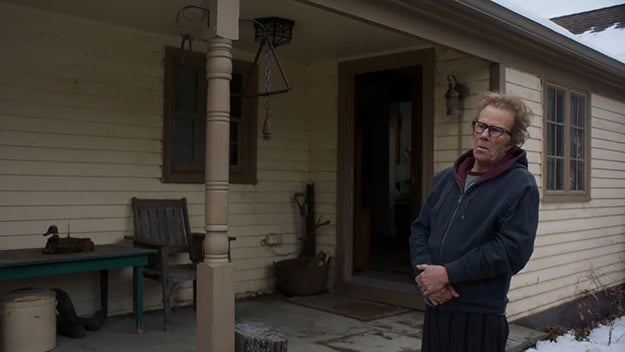
Father Mother Sister Brother (Jim Jarmusch, 2025)
One would have to go back to 1984’s Stranger than Paradise to find in Jim Jarmusch’s work an episodic film as funny, sad, and haunting as Father Mother Sister Brother, which won the Golden Lion at this year’s Venice Film Festival—an unusual achievement for such an understated family picture.
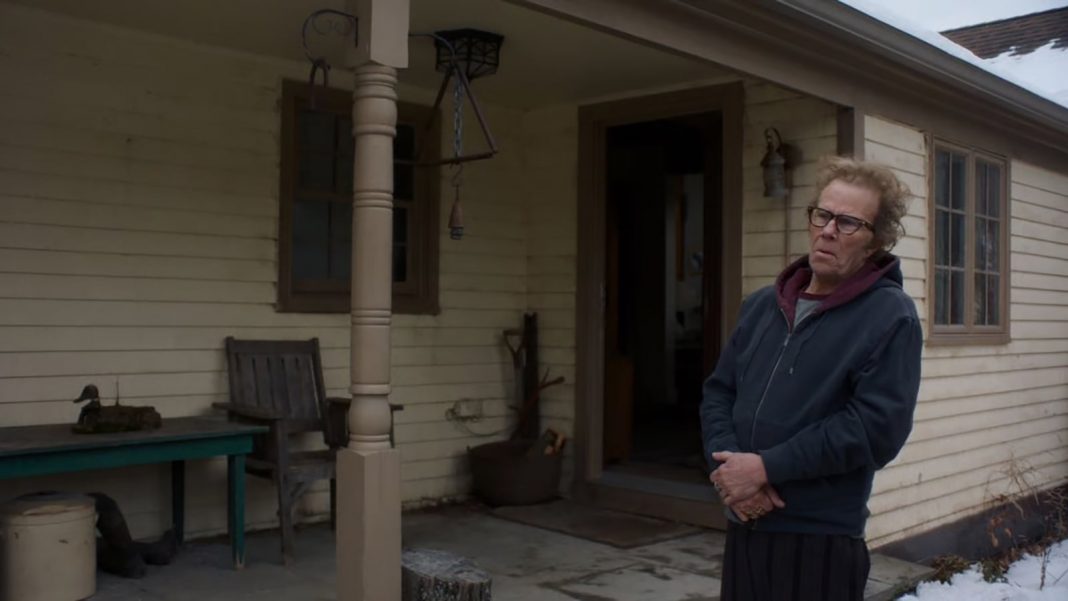
Father Mother Sister Brother has the delicacy and intricacy of a Mozart chamber work. Three stories, each located in a separate country, each with its own arrangement of parents and children, are connected in a large sense by the mostly ineffable complexity of filial relationships. The film opens in rural New Jersey, where a brother and sister played by Adam Driver and Mayim Bialik are visiting their loner dad—a trickster, played with barely hidden glee by Tom Waits. In the second episode, Charlotte Rampling, a Dublin-based author of popular novels prepares a very sugary high tea for her daughters—Cate Blanchett and Vicky Krieps, who are only allowed to visit her once a year. It is only in the final episode, set in Paris, that the emotions which have been dammed up to this point, break out when a pair of twentysomething twins—played by Luka Sabbat and Indya Moore—pack up childhood mementos and photographs in the apartment where they lived with their parents, who died in a mysterious plane crash.
With both metaphoric and formal connections between the three movements that delight the mind and the eye, Father Mother Sister Brother is a kind of puzzle film, where fitting the pieces together reveals a longing for a deeper resolution that may be out of reach for the characters, and is at least an open question for us.
I always think of you as making two different kinds of films: the films that have characters, relationships, and plot, and the multipart films that have just characters and relationships.
I see why you would think that. But for me, literary forms are plots. Episodic things run through literature, from The Decameron to The Canterbury Tales. [The episodic form] is used a lot in films. For me, it’s a structure that tells stories. I wrote the script for Father Mother Sister Brother in three weeks, but like with all my scripts, I had been gathering random things that just come to me with no structure. I did that for eight or nine months. With some films, it was years of gathering. And I always start with characters and write for specific actors. I write just one script and use it to get financing. But I don’t like scripts, so I don’t labor over draft after draft. The second draft of the script is what we shoot, and the next draft is what we edit. The final cut is just the final draft. With Father Mother, the first draft was just about writing dialogue for the actors I’d chosen. It’s quite a minimal thing—just sort of intimate, quiet interactions. The film has no drama, really. It has no action, it has no violence, it has no sex, it’s got nothing.
You could never separate the stories in this film, because they accumulate. And for me, the Paris one, “Sister Brother,” is a bit emotional, but it would not be if you just looked at it alone. Father Mother Sister Brother is very minimal and very observational, but it would destroy the [overall] work to show the parts separately as short films. I used flower arrangements as a metaphor in all three sections. It’s very delicate, and it required a lot of focus in shooting it, believe it or not. It’s a lot easier to shoot zombies coming out of the ground and running after people than to be aware of someone’s eyelids and the gestures of their finger and the tone of their voice and when they look away—all of that was very, very careful. It was very focused.
There are many repetitions from section to section: the flowers, something maroon, and toward the end of each section, a character looks out of a window or a door. And in the last section, the brother and sister walk into the light.
And there are car drives in each. And skateboarders. And references to toasting with various drinks—tea, water. There are water references in my last few films. There are little jokes that kind of recur as well. I was trying to build another kind of accumulation emotionally. My films are not supposed to say anything, and there’s no message. I’m not trying to make an emotional film, but, you know, it involves delicate relationships between people, and so the idea of feelings exchanged and observed is the heart of the whole film. For me.
Have you ever had parent-and-children relationships in any of your films before this?
In my first film, Permanent Vacation (1980), [the protagonist] goes to visit his mother, who’s institutionalized. Let’s see—Stranger Than Paradise, they’re cousins? Mystery Train (1989), no… I guess not, really. I kind of ran away from home when I was 17, and the family thing hasn’t really been a huge presence in my work—not the parental part, anyway.
But you are a parent. Did being a parent to a child who is now a young adult come into your writing of this?
Not in any conscious way. And again, I try not to be conscious of connections to myself. Obviously, they’re in there, but they’re for someone else to analyze or not.
The parent-child relationships are the center of each episode. And you see that the reason the children are the way they are has to do with the parent, even when the two siblings in each episode are very different from each other.
Yeah, because that’s part of being in a family. You see that the parents affected their children very clearly, but it’s not judgmental. It’s observational. We live in this fucking world now where empathy is supposed to be a weakness, right? So for me, I hope there’s something empathetic in everything I do. And this one is certainly not judging the parents. Charlotte Rampling’s mother has all these deliberate boundaries, one of them suggested by her therapist: that she just see her daughters once a year. And you definitely see the effects. And the third story is about absence and loss. The parents are gone. There’s a kind of grief in that, and that’s something you can’t change when your parents are not there anymore in your life.
Those intimate or familial relationships are almost never believable in movies. But here the relationships feel real in the little things the characters do, the way they look at each other, and the way each seems to know how the other person is going to react.
For example, when the father in the first part fails to remember that his son is divorced, the sister catches him, she cues him, and he picks it up right away. Those are the tiny things. The timing of them is very delicate, but the whole film felt like that for me. I would go back to the hotel or whatever pretty exhausted from focusing on people’s eyelashes.
How many weeks did you shoot? And did the shooting time vary for each section?
We had about 10 days to shoot each section, and some prep time. I had incredible collaborators: Fred Elmes [cinematographer] and Mark Friedberg [production designer] for the first section in New Jersey, and Yorick Le Saux to shoot the second part in Ireland and the third part in Paris. I love working with Yorick. He’s going to shoot my next film, which is all in Paris. And Marco Bittner Rosser production-designed the French and Irish sections. He did Only Lovers Left Alive (2013).
You say you write for specific actors, but how do you rehearse with them? Do you talk to them about their characters first? Because some people in this film are doing really specific character work.
For example, Mayim Bialik—I wrote it for her and Adam to be brother and sister. I didn’t know Mayim, and I do not know the TV shows she’s famous for. But I’m a Jeopardy! fan, and she was my favorite host on the show, so it was while watching her on Jeopardy! that I imagined her as Adam Driver’s sister.
I don’t really rehearse. I never rehearse a scene that will be in the film, because acting is about reacting, and I don’t want to act it out in advance. Sometimes I make up scenes on the spot and have the actors be in character, or I talk with them separately about their characters. I don’t like talking to them as though the scene means the same for everyone. They’re all different. They have different strengths.
After our first day of shooting with Tom, Adam, and Mayim, Tom took me aside and said, “So, Jim, you hired these two professional killers. What am I supposed to do?” And I told him just to do it his way. I know that they prefer to be tighter on the script, but Tom needs a longer leash. I just find the strengths of each actor. Vicky Krieps has a much different procedure than Cate Blanchett. But I love actors, and I love playing with them. They’re like children in a good way, in that they are pretending to be people on command, and their own emotions and experiences are their tools.
You have worked with most of the actors before, but not Charlotte Rampling, who is amazing.
Oh my God. What a human being—smart, beautiful, and a great actor. I’ve just been madly in love with her. Now she calls me her not-so-secret admirer, because I love seeing her in Paris anytime. And I’d never worked with Vicky Krieps before, who’s so playful and fun, or with Mayim Bialik, but the others, yes. Luka Sabbat is an amazing guy. He was in L.A. and getting a lot of roles offered to him, and then he just said, “You know what, I don’t want to be a Black Johnny Depp. I want to DJ in Tokyo. I want to go do a fashion thing in Paris.” And he’s made his life the way he chooses. But he’s a fine actor. And Indya Moore is an actor and social activist. I worked with her in this little film I made for Saint Laurent [2021’s French Water]. She’s a remarkable person. I loved working with her.
One of the things that’s the same in each of these segments is that the children drive to the main location, and in the first two sections, they also drive away. There is a lot of driving in your films.
It just seems like such a common thing in our lives. I like the moments that are not dramatic. When you’re traveling between point A and B, that’s usually removed from a dramatic story. And when you have people in a car, they’re all looking forward, so they’re not noticing every little facial expression or gesture as they do when they sit across a table. Their attention is very different.
A lot of directors say that having people around a table is the hardest thing to do. That happens in the second section.
Well, yeah, you don’t have anywhere to go. I have to tell you, all of these scenes are shot in real locations. We’re not on stages. The house that “Father” is shot in is one very small room. The only thing I have, and it came with the location, is the chair that swivels and looks out onto that lake, which is very important, because it’s like having a time-out. I don’t know about your past, but when one is with one’s family, one needs a fucking break now and then, right?
So the time-out in the second part is the overhead shots of the table?
I go overhead also to elide time, because I can’t cut to another scene specifically. When Affonso Gonçalves, the editor that I love, went through all the footage we shot, he first cut together all the dialogue like for a TV show. And the whole thing only lasted four minutes. But the characters are supposed to be together for two hours, so we needed breaks and pauses. I wanted to change the music of it. The pauses are as important as the dialogue, or even more so for me. That was also a very small room, so I designed it to have singles on each of them and then three different two-shots. The coverage was minimal, but very carefully planned.
Could we talk a bit about deception in the film? The parents aren’t really truthful with their children and vice versa.
Yes, but I don’t think of them as evil deceptions. The Tom Waits character isn’t a nasty person, but probably he’s a terrible father. I’m not judging them. They all act these roles that supply some emotional need. It brings me back to this world we live in where there are people who are evil liars, because they lie to avoid being empathetic and to manipulate other people. But these people, they’re not evil. If they’re deceptive—families are complicated that way.
Amy Taubin lives in New York City, where she writes about movies and art.