
Alan Moore and Dave Gibbons’ seminal 1986 comic book “Watchmen” posits what the world might’ve looked like if superheroes actually came into being in the 1940s. It seems that if individuals with extraordinary, near-supernatural powers actually manifested, their presence would immediately alter the way wars are fought and the way technology evolves. Also, if freelance vigilantes were suddenly free to serve as self-appointed peacemakers, it would swiftly lead to their corruption and abuse of power. As is asked multiple times throughout the story: Who watches the Watchmen?
The world of “Watchmen” is torn apart and corrupted. Unity is needed. So, the comic ends with the superhero Ozymandias secretly manufacturing a massive, destructive global crisis so horrible that all of Earth is forced to unite in its wake. Specifically, Ozymandias drops a giant squid-like monster in New York, killing scads of people. Some of the other Watchmen discover this subterfuge, but they’re forced to capitulate when it appears Ozymandias’ plan has worked, and the world is ready to unite in the wake of the squid incident.
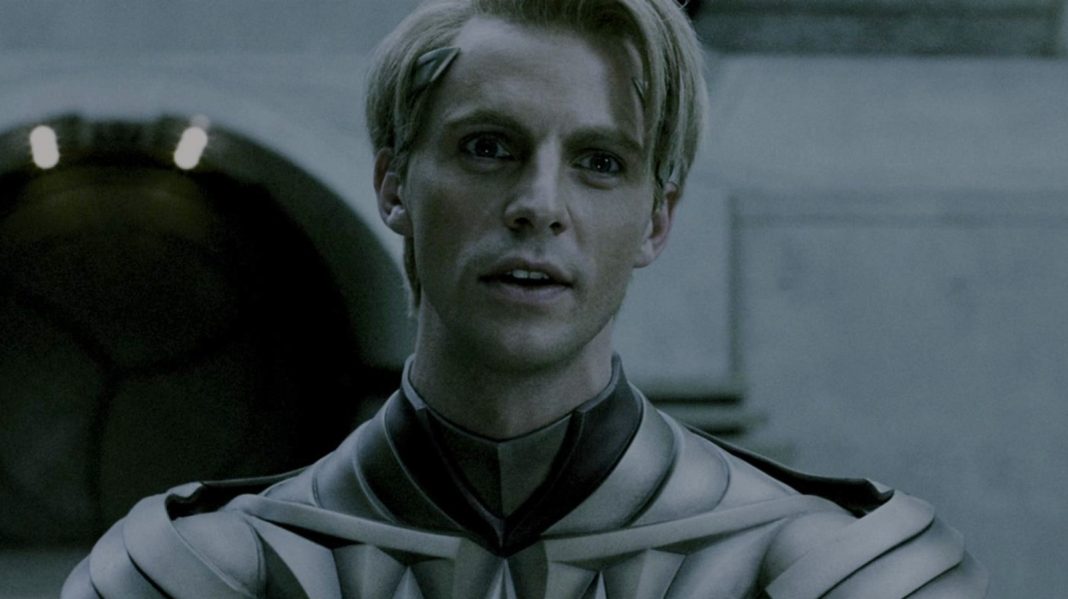
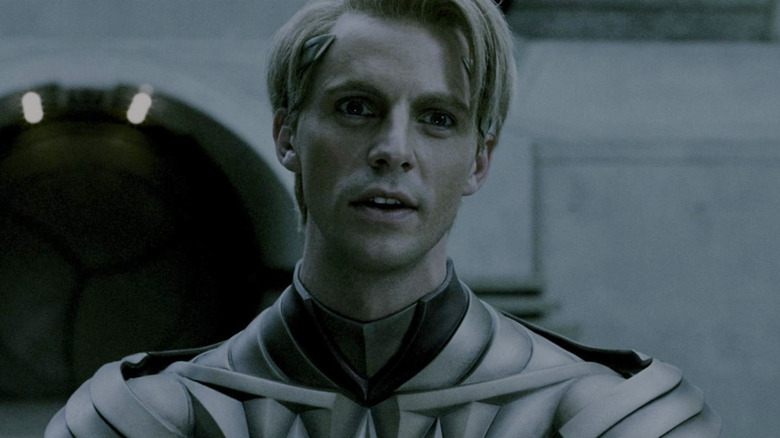
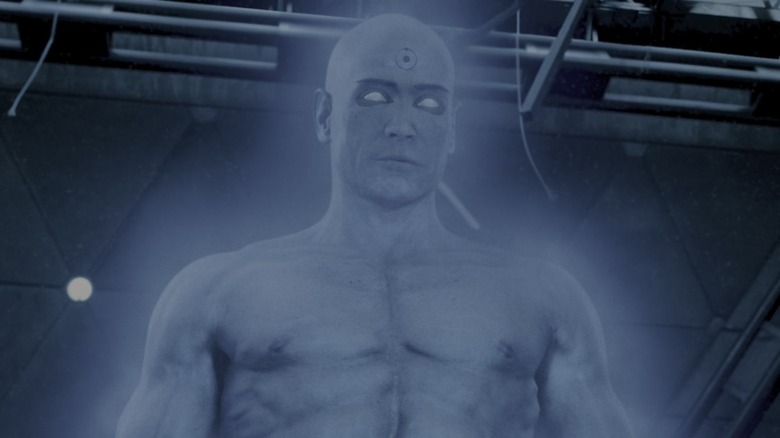
However, in director Zack Snyder’s ultra-slick (and, frankly, not very good) 2009 film adaptation of “Watchmen,” there’s no squid monster (a concept that filmmaker Darren Aronofsky actually pitched). Instead, Ozymandias (Matthew Goode) causes the clean energy reactors designed by his ultra-powerful fellow Watchman, Doctor Manhattan (Billy Crudup), to explode, killing millions and turning humanity against Doctor Manhattan. The effect is the same, though: The world unites against a common enemy.
While many fans of Moore and Gibbons’ comic objected to this change, Snyder defended it when he was interviewed by The New York Times in 2009. As he saw it, the movie’s ending still encompasses the same fundamental idea as the comic’s conclusion despite changing some (apparently, to his eye, inconsequential) details along the way.
Zack Snyder felt his Watchmen movie’s ending was more or less the same as the comic’s
The appeal of the “Watchmen” comic’s ending is that it’s strange, random, and grotesque. It takes the reader by surprise, keeping them entirely off-balance. Dave Gibbons’ drawings of the squid monster are horrifying, showing only the aftermath of the conflagration, with bloodied bodies everywhere. (The squid is already dead.)
By comparison, the “Watchmen” movie’s ending lacks that sudden visual punch. Thematically, some may also find it a bit too tidy. Doctor Manhattan’s existence is what throws the “Watchmen” world out of whack to begin with. By rejecting him and forcing him to move to another planet, humanity is rejecting superheroes and uniting as a people. Rejecting heroes is the best way forward, the film seems to argue.
Zack Snyder wanted it known that he was aware this change would bring about the ire of comic book fans. Nevertheless, he felt that his ending wasn’t all that different thematically, stating:
“I think it keeps the movie on point a little more than it would if we had the squid, then I think we would have had to go explain and talk about. I like the squid in the graphic novel. Everyone thinks I hate the squid, and I don’t get ‘Watchmen.’ ‘Snyder’s crazy, he’s ruining it. He changed the ending’ — which I did not, I will say. Like, if you really talk about, What is the end of ‘Watchmen?’ It’s the exact same ending that there is in the book, there’s no two ways about it.”
There are two ways about it, but Snyder was right in that the basic plot beats of the endings aren’t really different. People are united by a crisis orchestrated by Ozymandias. That much is the same.
Zack Snyder saw the squid as ‘a 30-minute right turn’
Zack Snyder did address the squid directly, declaring that such a twist would have required way too much screen time. As it is, the theatrical cut of “Watchmen” already rums a whopping 163 minutes. An extra several minutes of exposition, especially right at the story’s conclusion, would have mucked with the pacing. It might have even messed with Snyder’s eventual “Watchmen: The Ultimate Cut,” which is 215 minutes. As he put it:
“I think for me, the squid just represents a 30-minute right turn that, in order for it to make any sense at all, you would have to take. What I was concerned with, if I took that 30-minute left turn to explain the squid, you’d be talking about taking 30 minutes of other stuff out of the movie. And right now, I’m on the edge with just how much Rorschach I have, and how much Nite Owl, and how much Doctor Manhattan, just as far as their character stuff. I wouldn’t want to lose a minute of that stuff.”
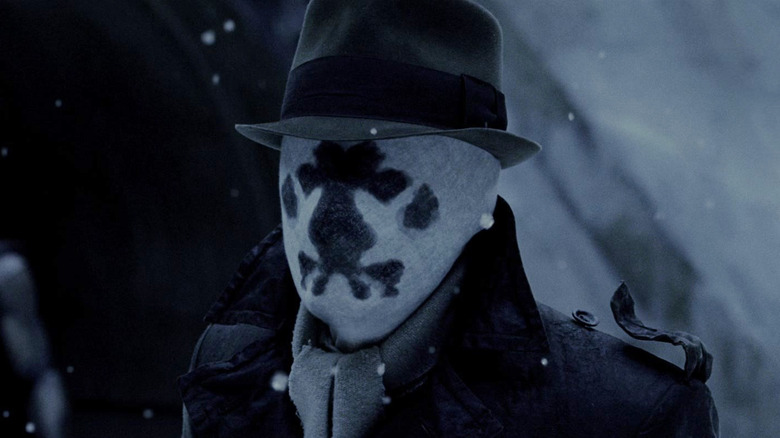
Recall that Rorschach (Jackie Earle Haley) is the mask-wearing tough guy Watchman with a nihilism streak a mile wide, while Nite Owl (Patrick Wilson) is the Watchman struggling with his passage into middle age. Snyder seemed sensitive about giving his characters equal time to speak, and omitting the giant squid monster kept them all at the center of the story. The “Watchmen” movie’s ending also tested well, for whatever that’s worth.
Purists may still object to the omission of the squid, but at least one can at least understand Snyder’s logic. The missing squid isn’t so bad, after all, considering Snyder, more dramatically, altered the tone of “Watchmen.” His film is very unlike the comics in other, notable ways.