
“I’m starting to think I am a really boring artist,” admits Tracey Emin in the catalog accompanying her retrospective at the Tate Modern. It’s quite the reflection from a woman who made her name on shock value. Her 1998 self-portrait-cum-performance-cum-sculpture My Bed—her actual, slept-in bed covered in the detritus of her life—shook the art world with its confronting vulnerability and unspoken violence. Now, Emin’s works are no longer made of discarded tampons and knickers, but of eminently sellable oil paint or bronze.
Her Tate show is titled “Second Life.” Emin faced a near-death battle with bladder cancer in 2020, and in the aftermath, she is reckoning with a sense of having a second lease on life, and with the newfound sense of responsibility that carries. “I never took up the baton,” she says. “Now I’m carrying it.” But she’s doing so not just in her determination to continue making art; her real contribution as elder stateswoman in the British art world is as a caretaker of the next generation. Emin’s efforts to rejuvenate her hometown, the rundown seaside resort town of Margate, and to support the work of emerging artists, is staggering. She helped open Turner Contemporary, a major contemporary art space named after Margate’s other local legend, JMW Turner; and her foundation funds multiple strands of artist residency programs, all of which offer studio space to artists for free. “My heaven is what I’m creating,” she says, “this world of art and art school, in a town that I knew, that I grew up in, that’s completely changed.”
That kind of work is much too expansive to fit inside a museum. The Tate show tells a more structured, contained story. It opens with some of Emin’s earliest work: in My Major Retrospective II 1982-1992, we see tiny little photographs, taken in 2008, of all the work she displayed in her first exhibition, “My Major Retrospective,” which she then destroyed, saving it only in photographs. Then her late 1990s “blankets,” as she calls them: riotous quilted collages, covered in text that shouts things like FUCK SCHOOL WHY GO SOMEWHERE EVERYDAY TO BE TOLD YOU’RE LATE and YEAH ILL HAVE YOUR BABY.

View of Tracey Emin’s 2026 exhibition “A Second Life,” showing My Bed (1998) and It’s Not me That’s Crying its my Soul, 2001.
Photo Jai Monaghan. ©Tate.
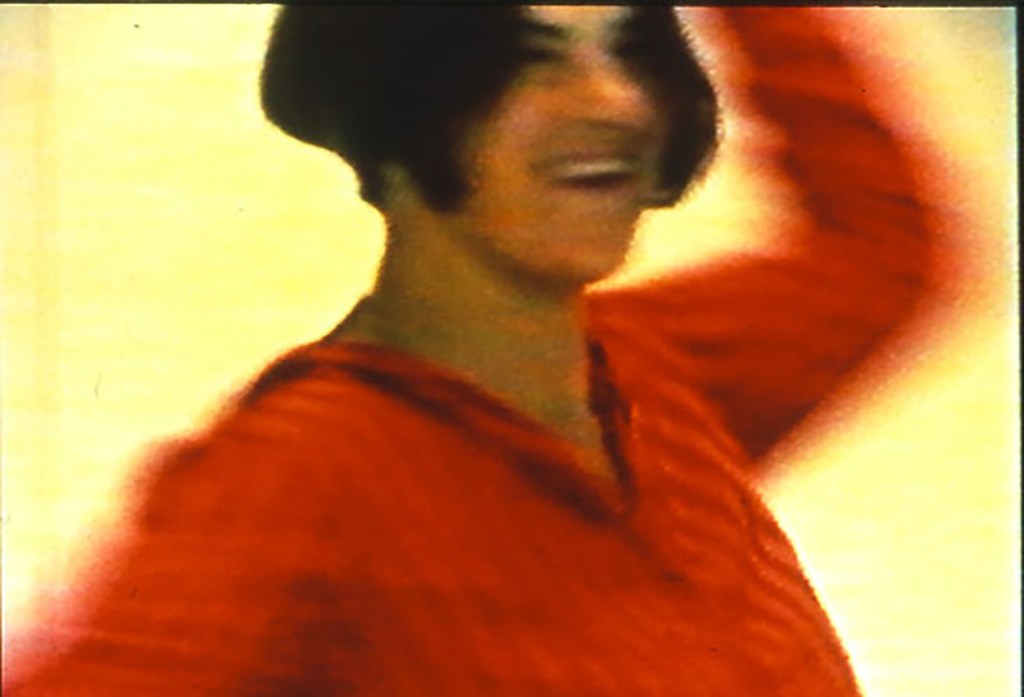
Emin’s starkly embroidered textiles from 2009 are less full, more heartbreaking. Each only has one phrase; things like YOU MADE ME FEEL LIKE NOTHING and IS THIS A JOKE are stitched beneath scenes embroidered in stark black. Two films are absolutely golden: in one, Why I never became a dancer (1995), scenes of Margate at sunset are voiced over by Emin describing the gross men she had sex with as a teenager, men who heckled her at a dance competition. Then, the video cuts to her dancing joyfully on her own as an adult. In the second, Emin & Emin (1996), footage of the artist and her father swimming in the sea offers a portrait of generational love and the inheritance of the ocean. These early works are beautifully authentic, diaristic without being sloppy. It’s hard to go from them to her recent paintings, which are so attractive but seem to be mostly surface (not to mention her neons, which are undeniably decorative).
It is impossible to disentangle Emin’s work from her life, which makes it hard to be critical of either: both are unfalteringly raw. While her life post-cancer has been the dominant narrative Emin has spun in the public eye over the past few years, the exhibition she has crafted spins a tale that focuses on her abortion in the early 1990s as the pivotal event in her life and artistic evolution. In her film How it feels, made in 1996, Emin returns to the sites of her abortion: her GP’s office, the hospital, the park where she walked with her boyfriend at the time. She calls the abortion the “best fucking mistake of my life,” a description whose inherent contradiction points to why Emin has been haunted by it ever since. Emin received appallingly poor medical care throughout her abortion, but what really plagues her is the fact that she wishes she could have had the baby. She describes the abortion as indicative of her failure: as an artist and as a person. It’s “something I’m doing just to preserve myself,” she says in the film, as if that’s a bad thing.
Immediately following the film and other pieces about Emin’s abortion, which span the 1990s to the 2020s, there is a corridor of Polaroids. On one side, the images depict Emin in 2001. They are raunchy and hot, mostly nude or in lingerie. On the other, the images depict her post-surgical, post-cancer body between 2020 and 2025, bleeding and weakened. With Emin’s words from her film still echoing in my ears, it’s hard not to encounter this space as if she feels punished for her own act of destruction. Coming through the other side, her bronze sculpture Ascension (2024) is the first thing I see, a Christ-like figure hanging as if crucified on the wall. It’s undeniably moving, a profound look into Emin’s experience of loss and medical trauma. But the challenge of untangling Emin’s personal trauma and the politics of abortion access is a knotty, perhaps impossible one.

Tracey Emin: I never Asked to Fall in Love — You made me Feel like This, 2018.
©Tracey Emin.
Emin has been viewed as a feminist artist, but she doesn’t want to be. She has consistently rejected identifying as such, despite the clear ways in which her work sits within a conceptual legacy of feminist art, both aesthetically and in its relentless focus on her own subjectivity and embodiment. She rejects the possibility of reading her work through any lens other than realism: there is no sense of analogy, metaphor, symbolism; it’s just her, right in front of us. She relies on language, on the actual physical traces of her body (blood, fingerprints, sweat, dirt), on storytelling. Her work is about her life, which has been punctured by horrific violence: child rape, medical misogyny, abusive relationships, poverty. It cannot not be political. But that sits very uncomfortably with Emin’s resistance to expressing a desire for radical liberation larger than herself.
We expect much more of women artists than men artists. We require them to be activists, pioneers, perfect victims. Emin self-consciously rejects all that baggage, choosing to be outrageous and entirely self-serving in her art. And it is that commitment to herself that has made her a household name, an artist whose originality indelibly marked the art of the 1990s and early 2000s. She is a challenging, paradoxical, inscrutable figure—and shows no signs of becoming any less so in her second life.