

Art Review
Through his fantastical vignettes, Halilaj suggests curiosity about others as a way to neutralize the forces that lead to difference-based violence.

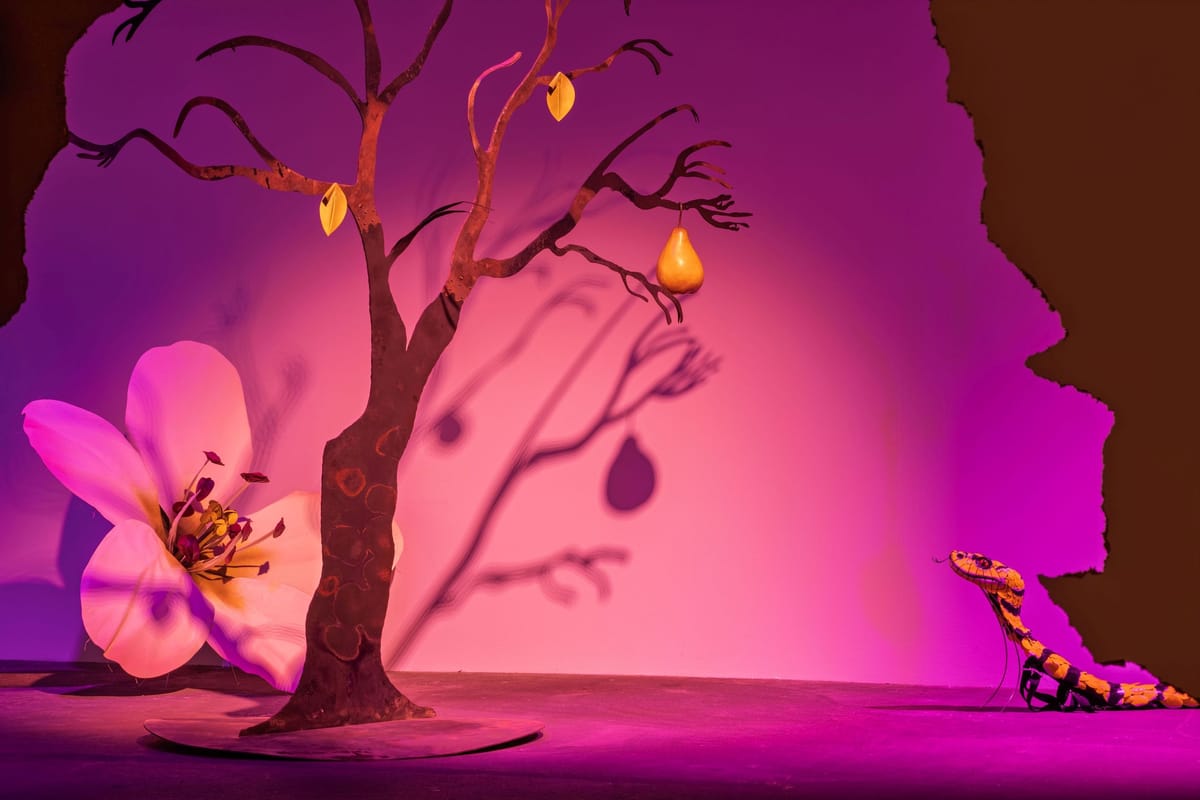
BERLIN — At the center of Petrit Halilaj’s An Opera Out of Time at Hamburger Bahnhof, the artist’s first major institutional presentation, is a re-presentation of his opera Syrigana, first performed with the Kosovo Philharmonic at an outdoor venue near his hometown of Runik, Kosovo, on June 25th, 2025.
A conventional curatorial conceit, restagings of performances without performers often fail when they reach for too much fidelity to the original. With Syrigana, however, the original objects and music are used to create something similar but distinct.
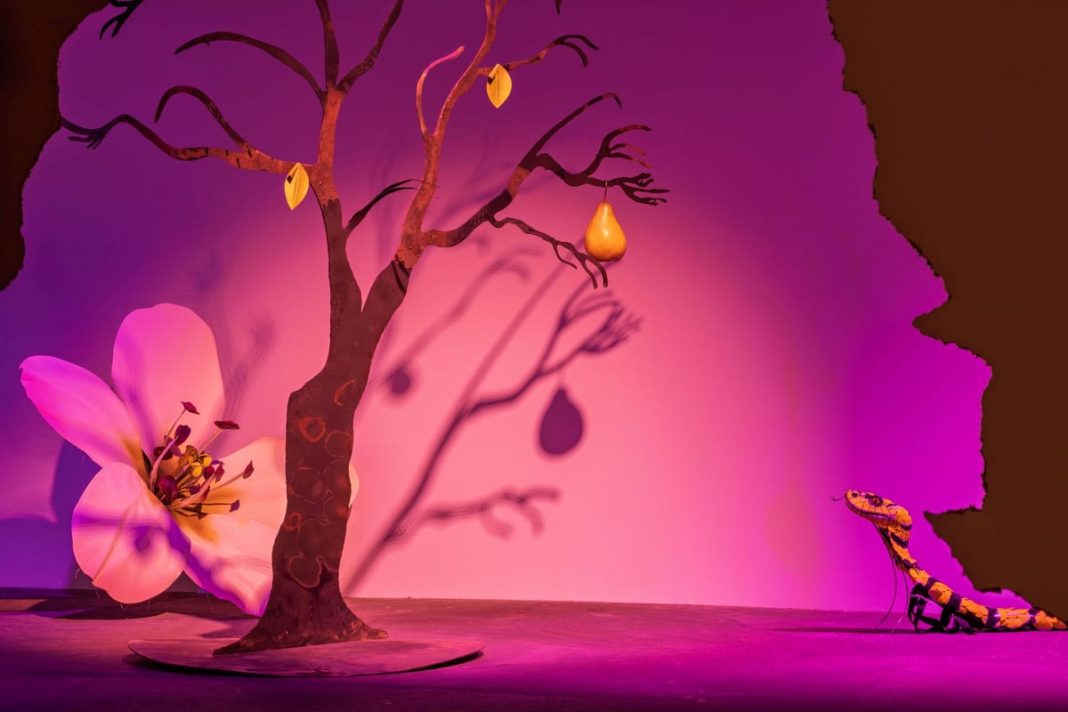
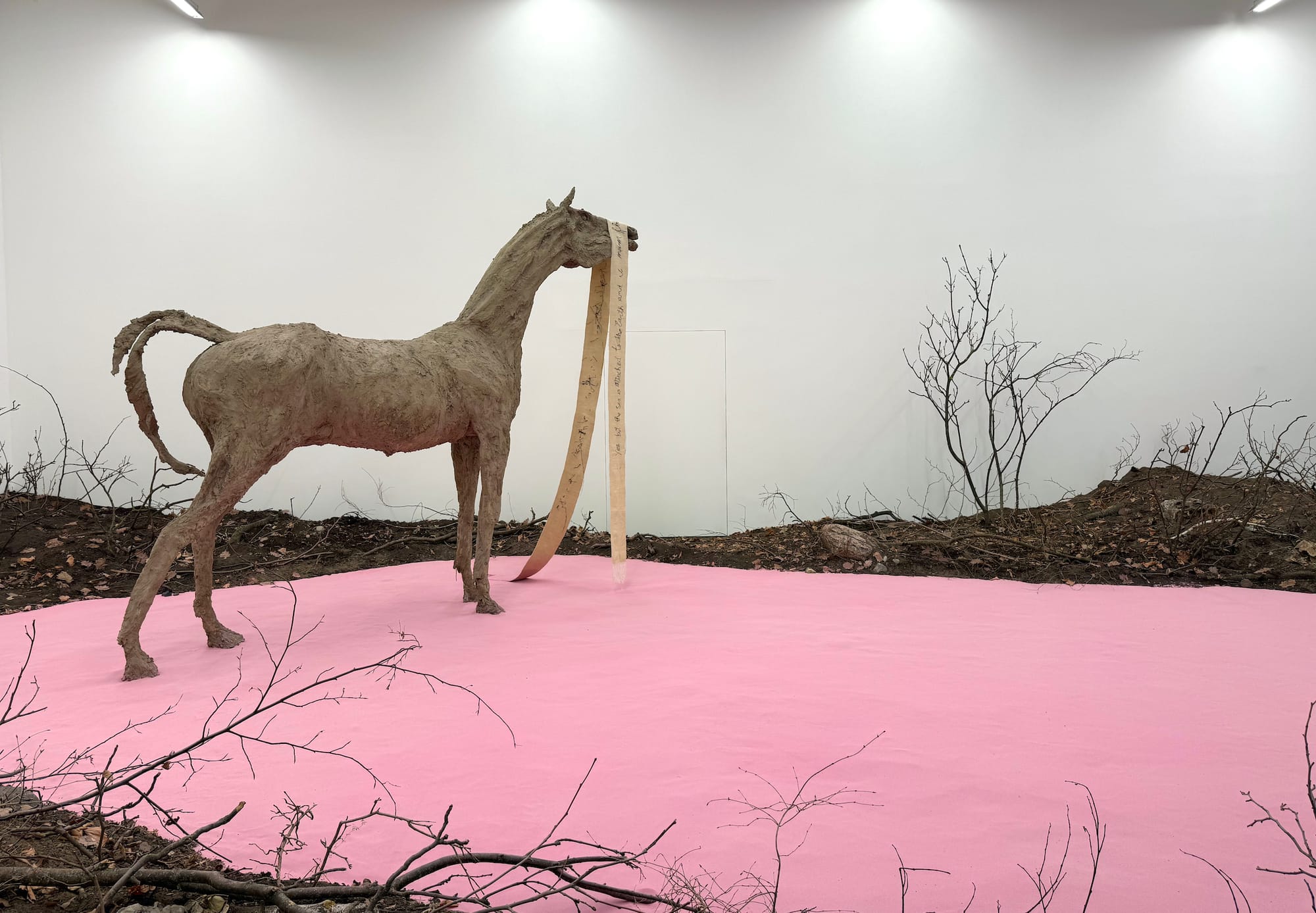
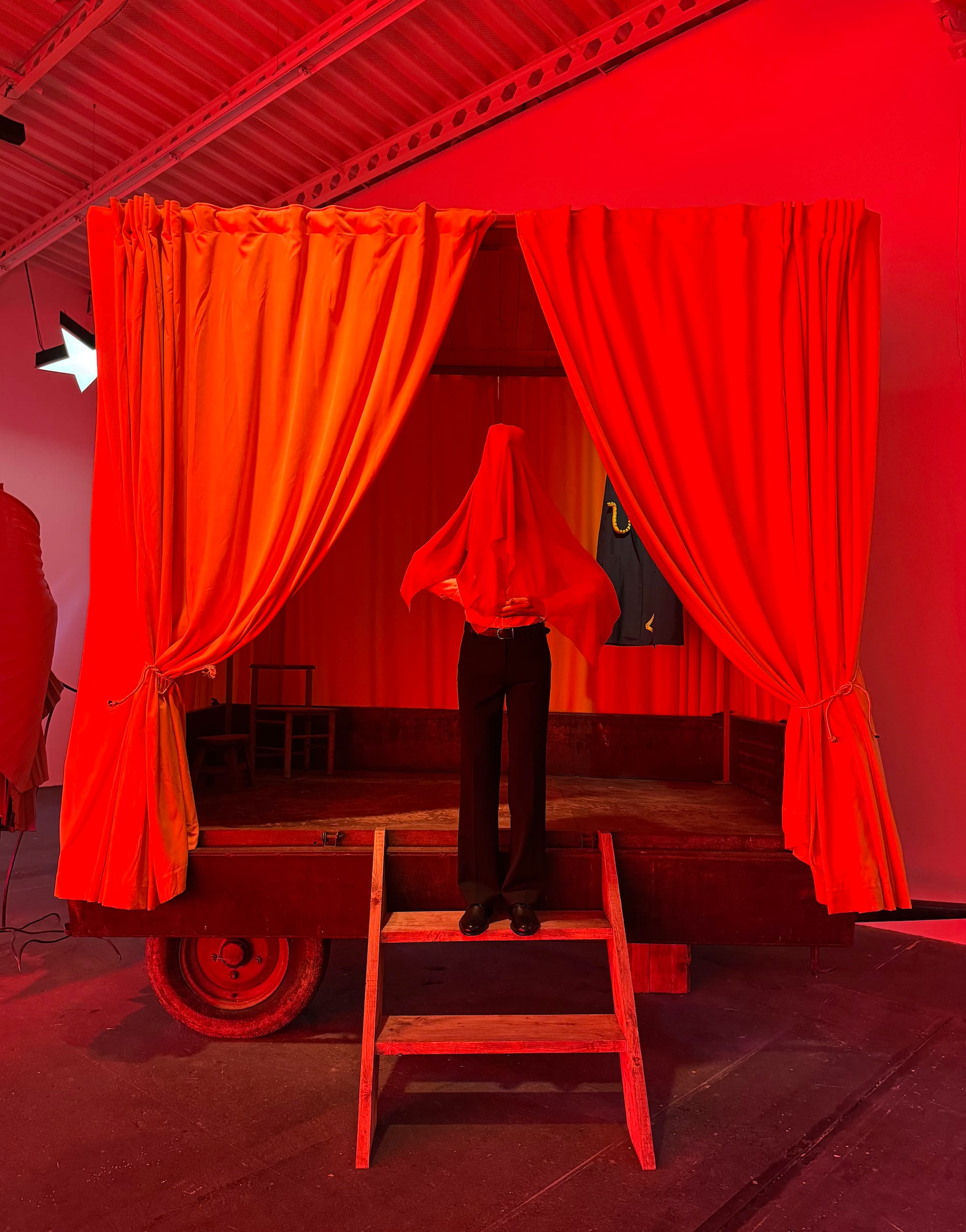
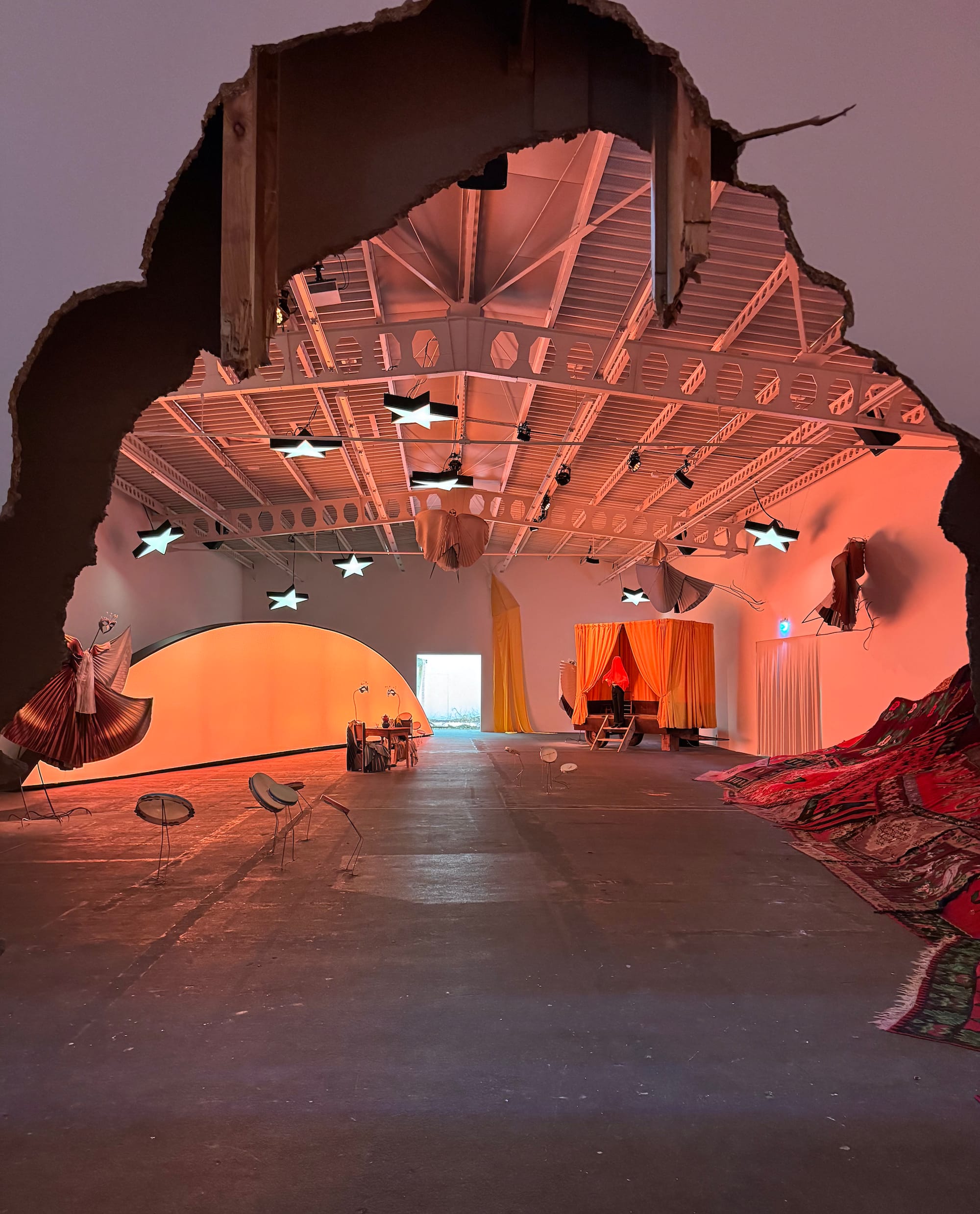
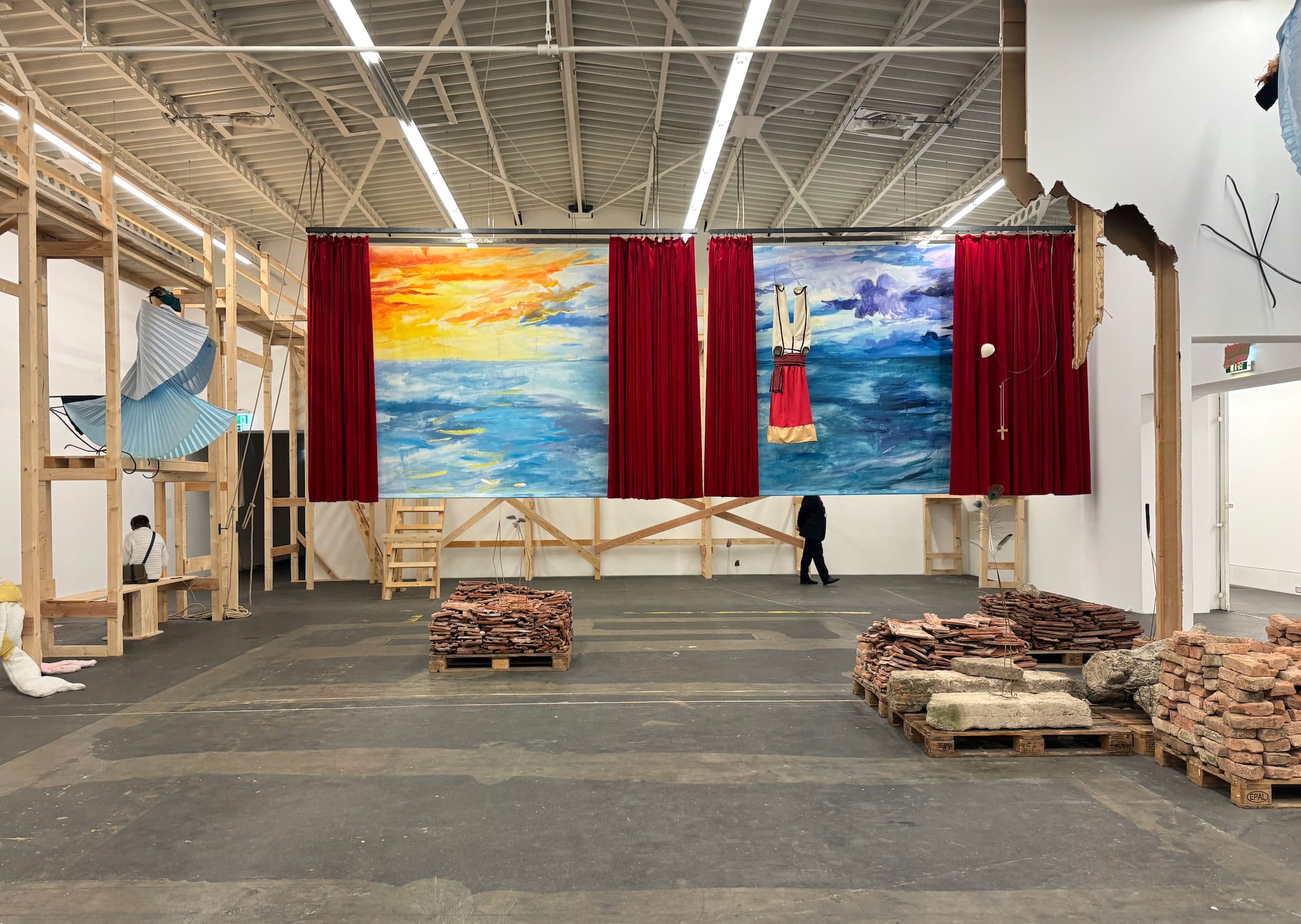
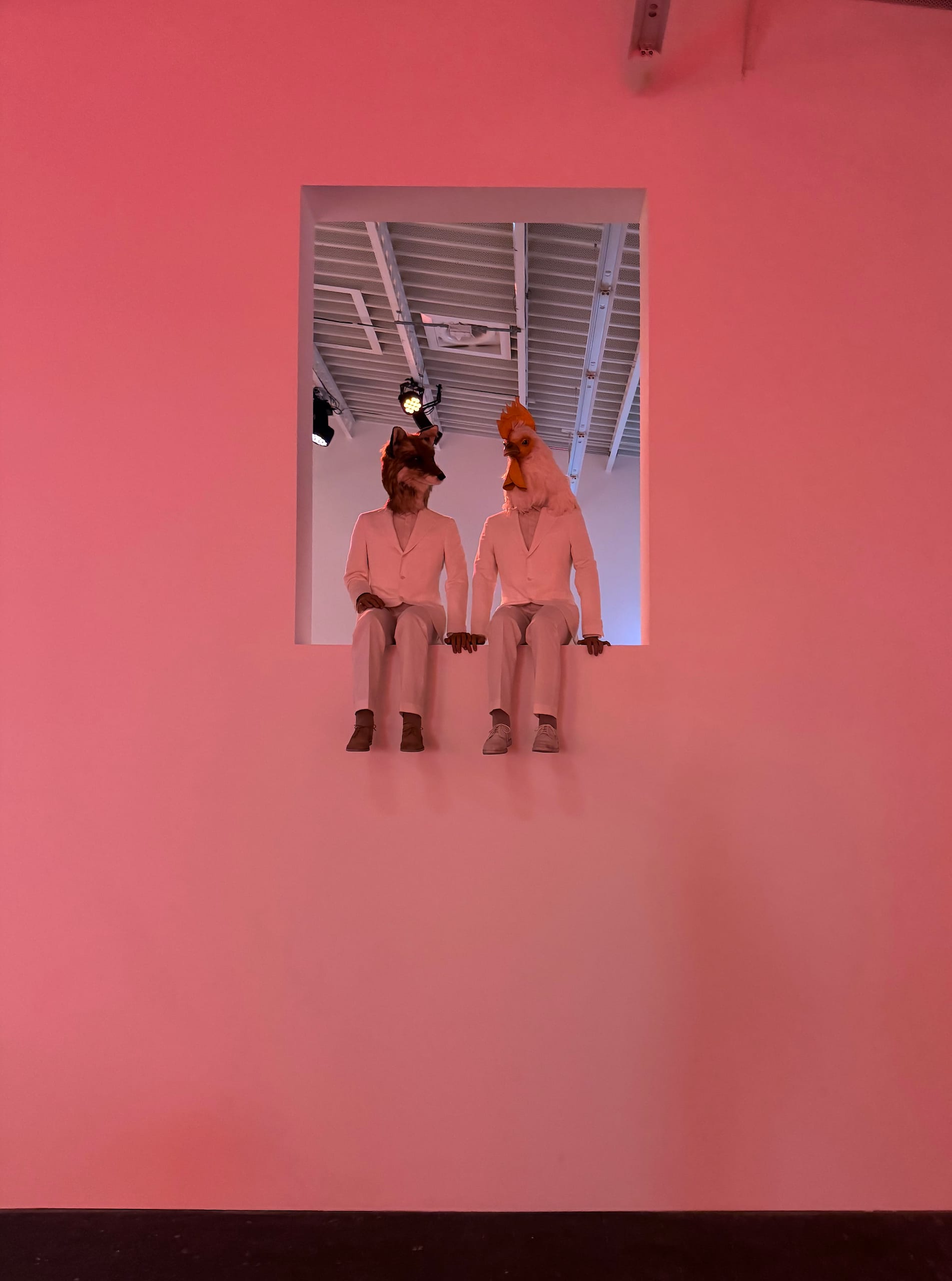
At the Hamburger Bahnhof, the props, costumes, and set pieces of the musical are staged in vignettes throughout a large hall: a life-sized horse sculpture in a pink clearing surrounded by dirt, a curtained cart set up as a stage with a figure on its steps, two life-sized human figures in animal masks perched in a high window, as if observing the events. Accompanying these are an audio recording of the opera and lighting that reacts to musical changes as the narrative progresses. A large, contoured bank covered in the kilim rugs that are everywhere in Balkan domestic life invites visitors to sit and take in this version of the show. The effect is like reading a novel, where the action comes to life in one’s mind, here aided by a few props.
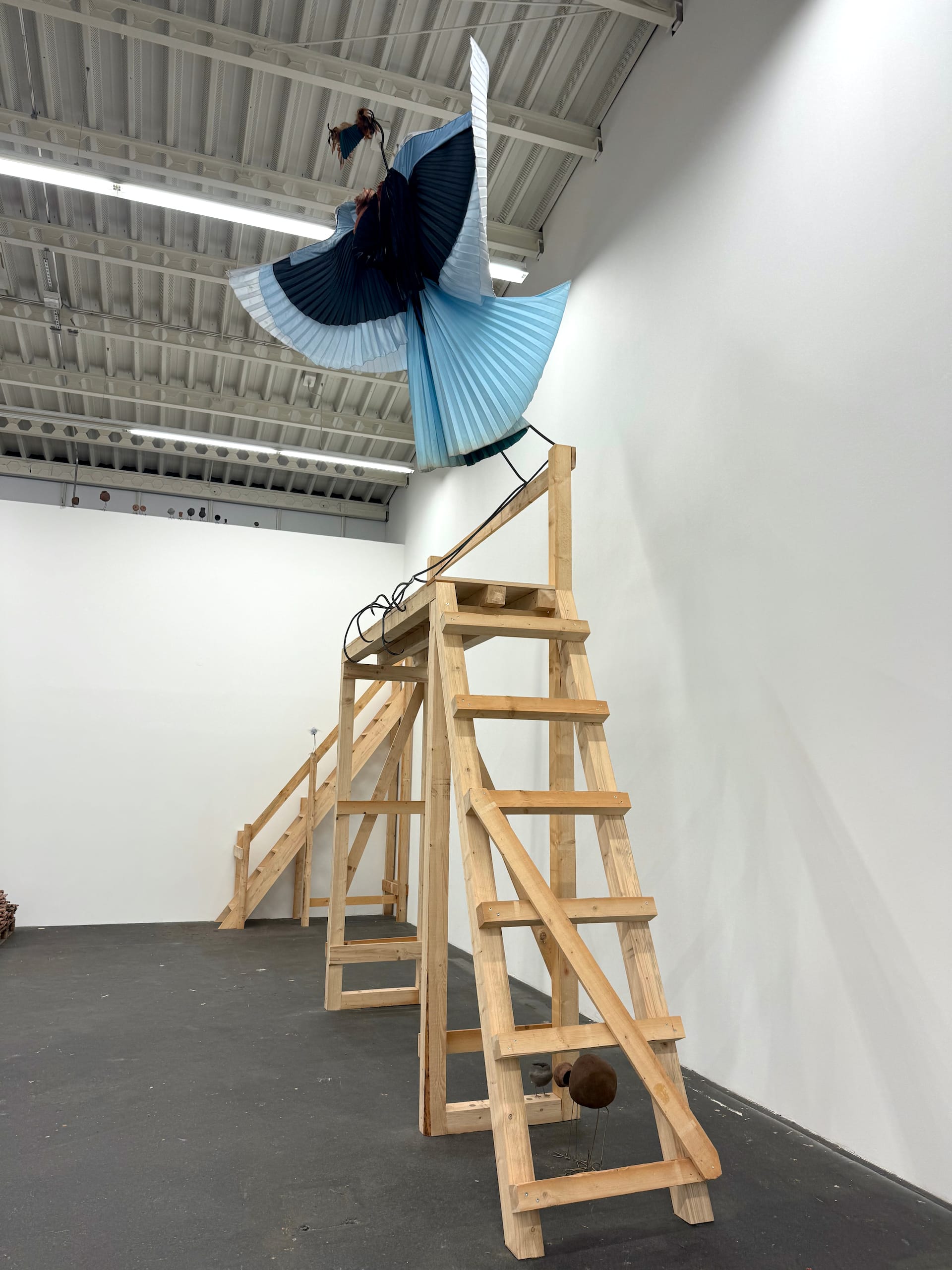
The final work on view, Syrigana is also presented as the culmination of a longer-standing set of thematically similar investigations in Halilaj’s practice that includes wearable sculptures, proscenium-like objects, and a series of little creatures that recur across the show, creating a vocabulary with which the viewer is familiar by the time they reach Syrigana.
Many of the objects, from a yellow taxidermied canary to a large moth made of kilim rugs and installed near a flickering lightbulb, date from the mid-2010s, when Halilaj began pilfering small specimens from the remnants of the now-closed Kosovo Museum of Natural History. Some are one-offs — for instance, a pair made of tambourines, with long, bird-like legs — but the majority are made of clay-pot bodies set on sturdy wire legs, seemingly a nod to Halilaj’s hometown, one of the earliest known neolithic settlements. For centuries its villagers have been stumbling over its high density of ancient and medieval artifacts. Following excavations in 1968 and 1983, over 1,000 Kosovar artifacts, including the 8,000-year-old Runik Ocarina, were expropriated to Serbia and never returned — just one piece of the ethnically motivated struggles in the Balkans in the 20th and early 21st centuries, which also included the 1998–99 Serbia-Kosovo war, whose shelling, executions, and disappearances — including that of his father — Halilaj experienced as a teenager.
The artifacts themselves appear in the video “When They Came Here They Found People (Adam and Eve),” which follows Halilaj as he records oral histories from people in Runik, revealing the degree to which that rural area and others like it throughout the Balkan region are still grappling with the aftereffects of generations of war. By animating the artifacts as creatures, Halilaj emphasizes their cultural importance and offers a fantastical alternative that grapples with the reality that those objects may never be repatriated.
The duality of the fantastic and the realistic is just one among many here — the ethnic and the national, the endemic and the migrated, the healing and trauma that coexist during Kosovo’s official peacetime, resulting from decades of ethnonational wars and strife — manifested as theater sets that need not be activated, creatures that seem resolutely alive without mechanization, a time-based work one need not see in full to experience effectively, and the juxtaposition of a large installation and small creatures.
This structure suggests a way to both take in the big stuff of life and spend time with the small, somatic parts that constitute experience. As the little figures in the vignettes draw us in, close looking and curiosity about others emerge as ways to neutralize the larger forces that lead to difference-based violence — be it ethnic, homophobic, or otherwise xenophobic. In making a path through these dualities, Halilaj invites viewers to reconsider impasses of all kinds.
Petrit Halilaj: An Opera Out of Time continues at Hamburger Bahnhof (Invalidenstraße 50, Berlin, Germany) through May 31. The exhibition was curated by Catherine Nichols with Emily Finkelstein.