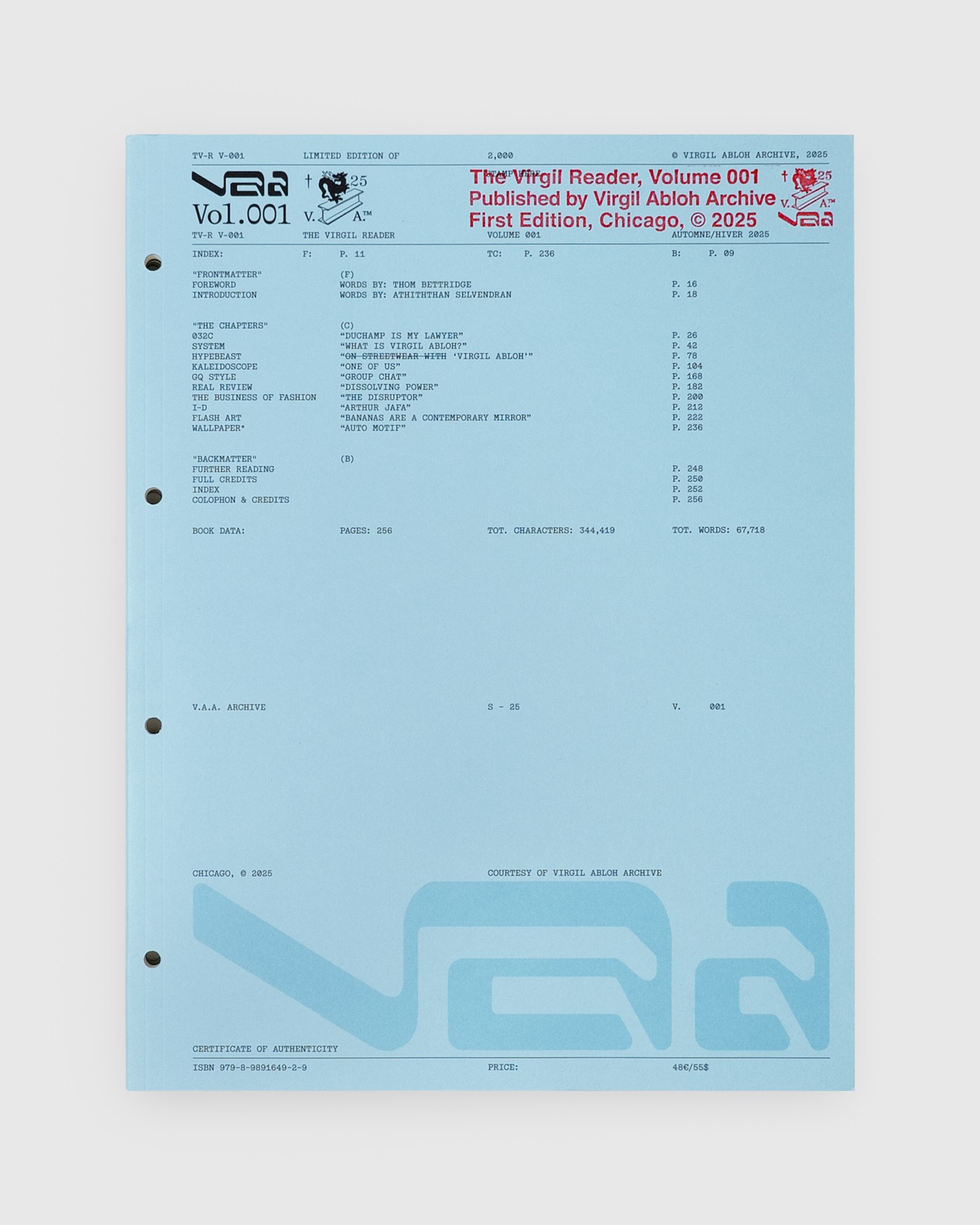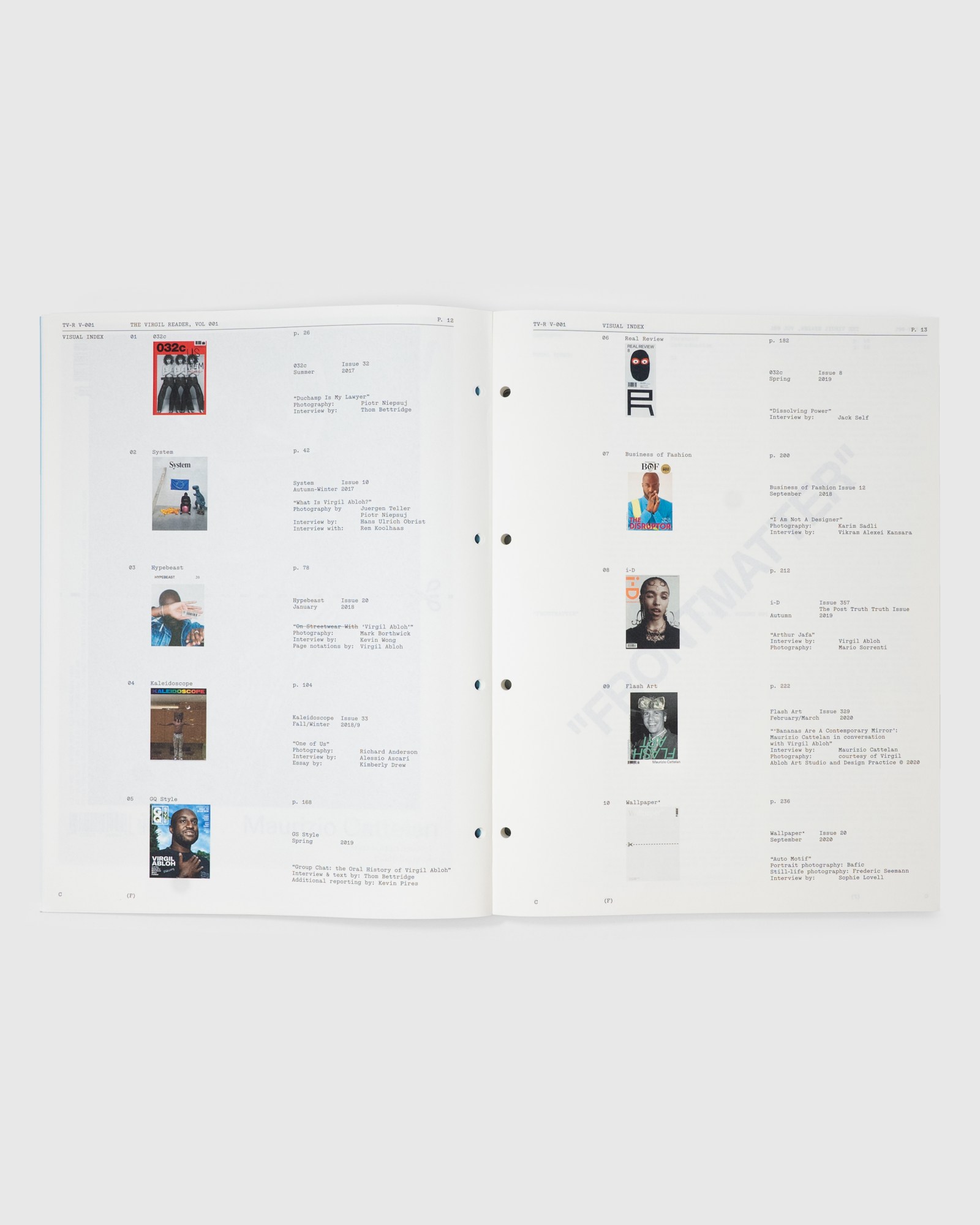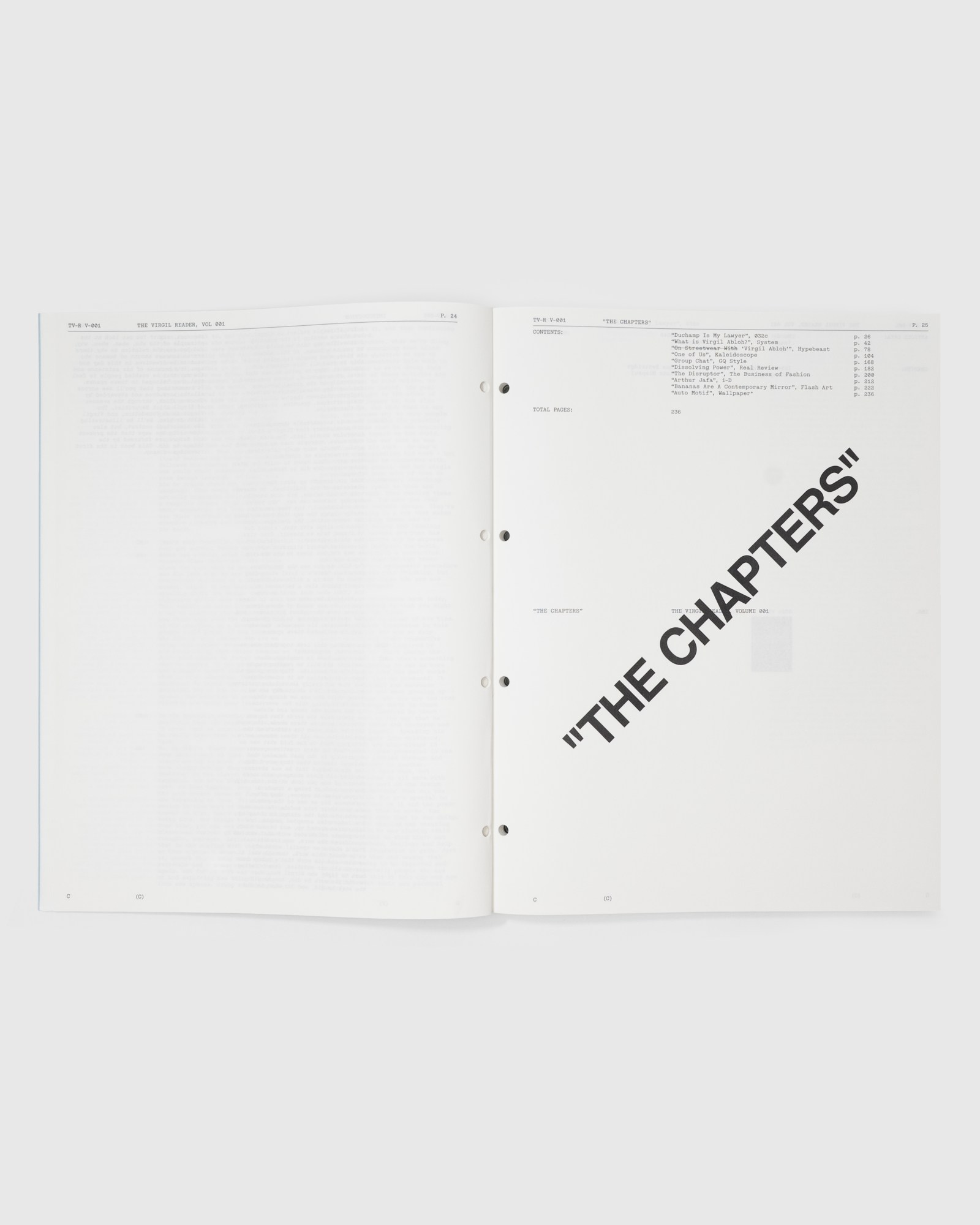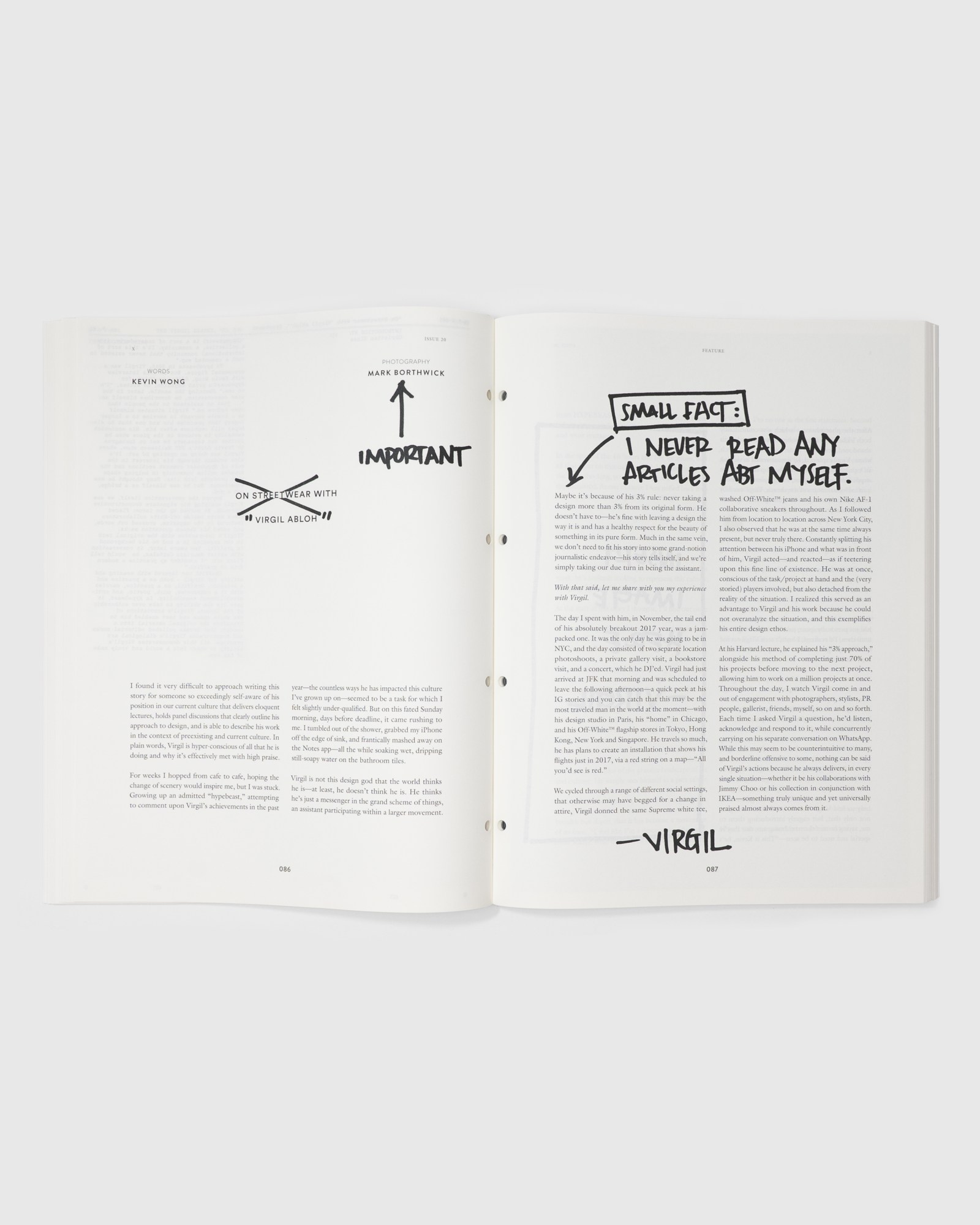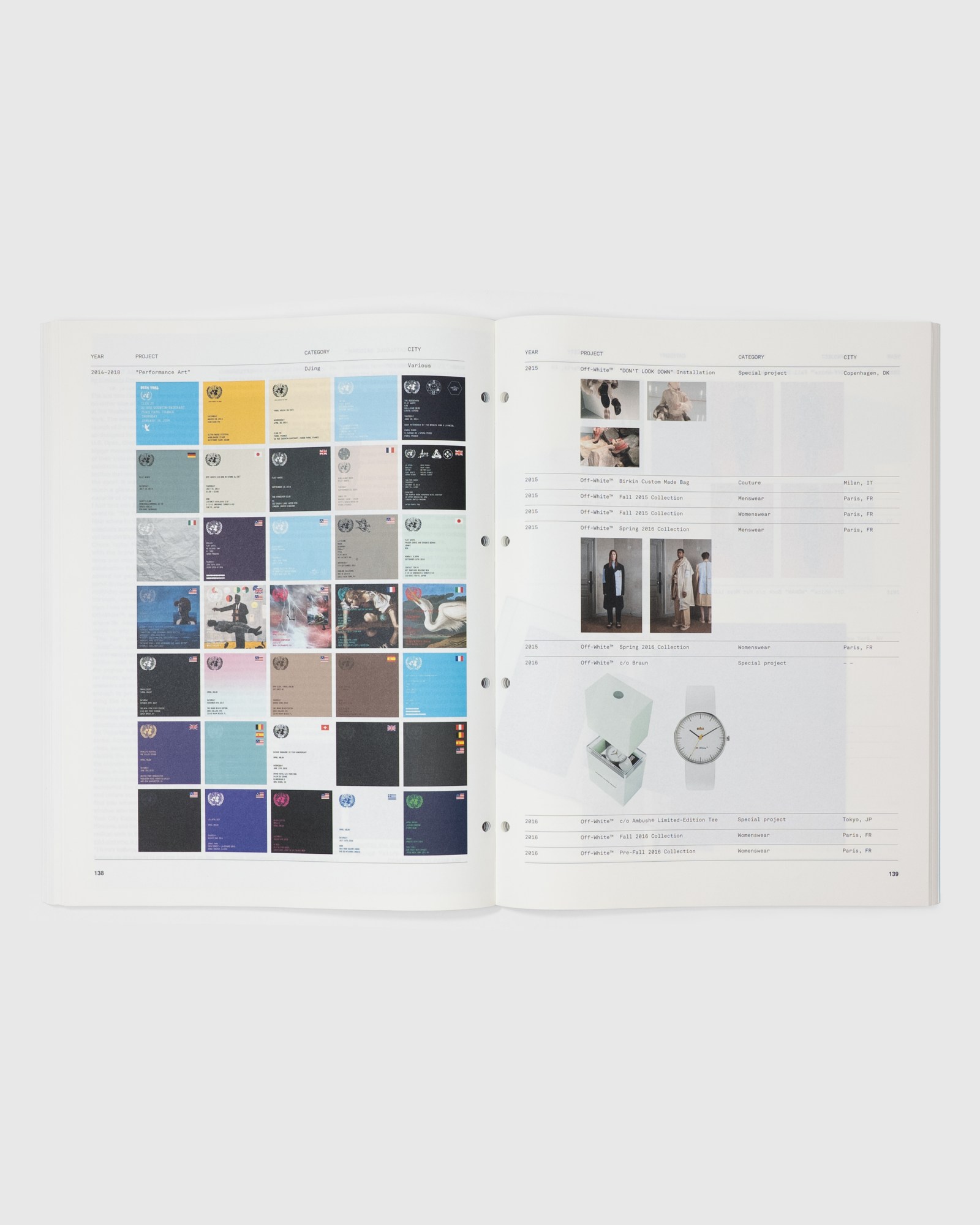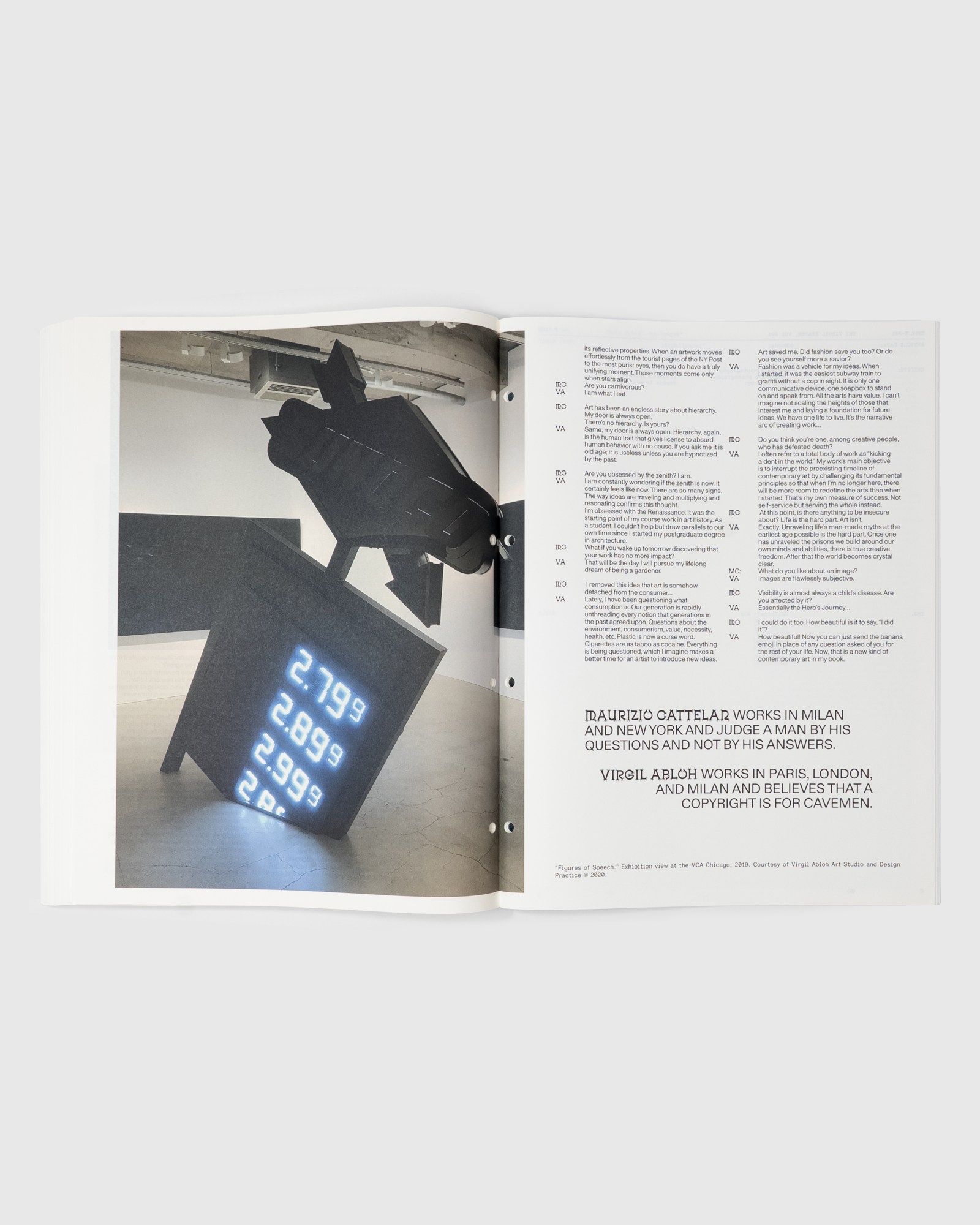
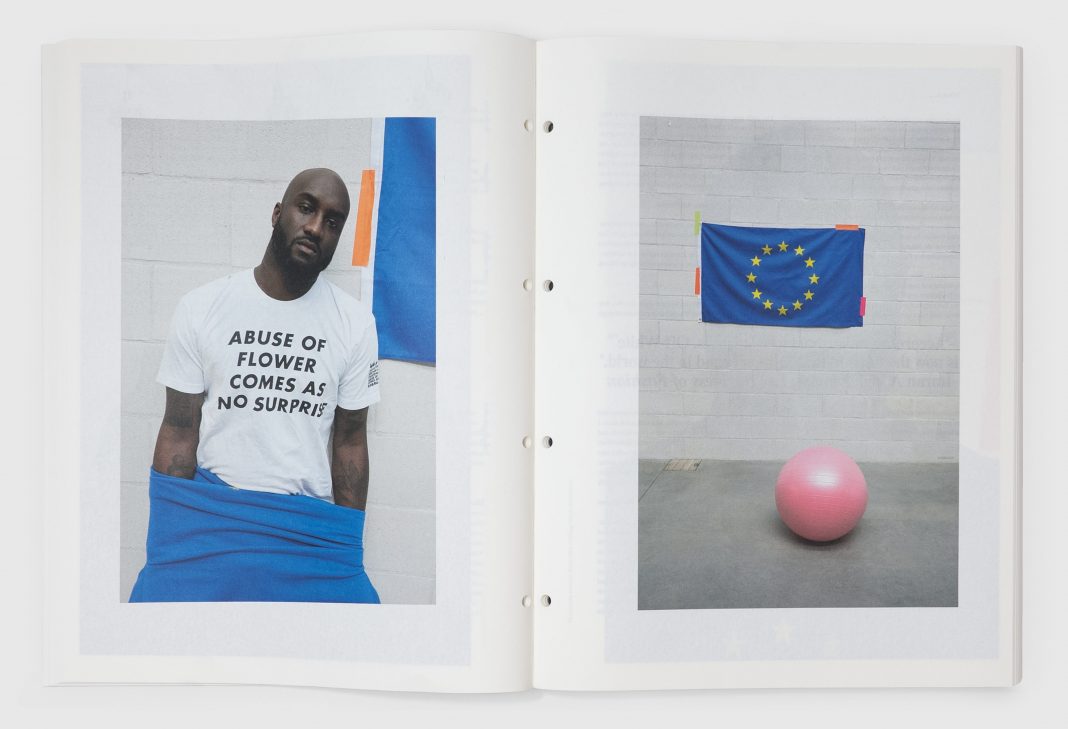

Last year, I had the honor of writing the foreword for The Virgil Abloh Reader: Volume 001, a compendium of the late designer’s interviews, scanned and reprinted in the style of a university course reader. The book was released alongside Abloh’s major career retrospective at the Grand Palais last October and sold out instantaneously.
Today, the braintrust behind Abloh’s estate—they go by many names: Virgil Abloh Securities, Virgil Abloh Foundation, or sometimes simply Architecture—has released a re-edition of the reader alongside a new membership to the Virgil Abloh Archive. In the spirit of Abloh’s anti-gatekeeping, “open source” approach to design, the membership is free and gives anyone curious digital access to Abloh’s massive archive in the Midwest.
Mahfuz Sultan is an art director, director-director, and the proprietor of Architecture Books in Los Angeles. He was also one of Abloh’s closest confidants, and central to the aforementioned braintrust stewarding Abloh’s legacy. It’s a topic that resonates deeply with the thesis behind the new issue of i-D: that in a time of digital fatigue, there’s more power than ever to be found beyond the algorithm in real objects and real stories. Sultan gave me a buzz from his car in Hollywood to discuss what’s in the works at the VAA.
Thom Bettridge: I’m stoked to hear that the first version of the reader did so well. Tell me about the membership you guys are launching with it.
Mahfuz Sultan: The Virgil Abloh Archive is an approximately 20,000 object archive in the Midwest. When Shannon [Abloh] put it together, she didn’t delineate between the works that were made by Virgil and the works that he collected. I think that was very important because obviously archival practice—collecting—was an integral part of Virgil’s creative practice. Whether at Nike or Louis Vuitton, there was always this period of investigation where he wanted to poke around in the archives of whatever brand he was collaborating with. The archive is both a history of his practice, but also a history of a time that’s recent enough that I don’t know that people have totally started to historicize it yet. There are a lot of stories that can be told using the objects in the archive as a device, so the idea behind membership was really a way to share some of those stories. I would liken it to a traditional newsletter, where we don’t have to operate at the scale of a giant exhibition or a giant show to interact with the public. We can reach people that can’t travel to the Midwest.
TB: When Virgil was at the height of his powers, his Instagram almost became this live stream of his creation process. It’s cool to kind of think of the archive not just as an archive, but as a publishing platform.
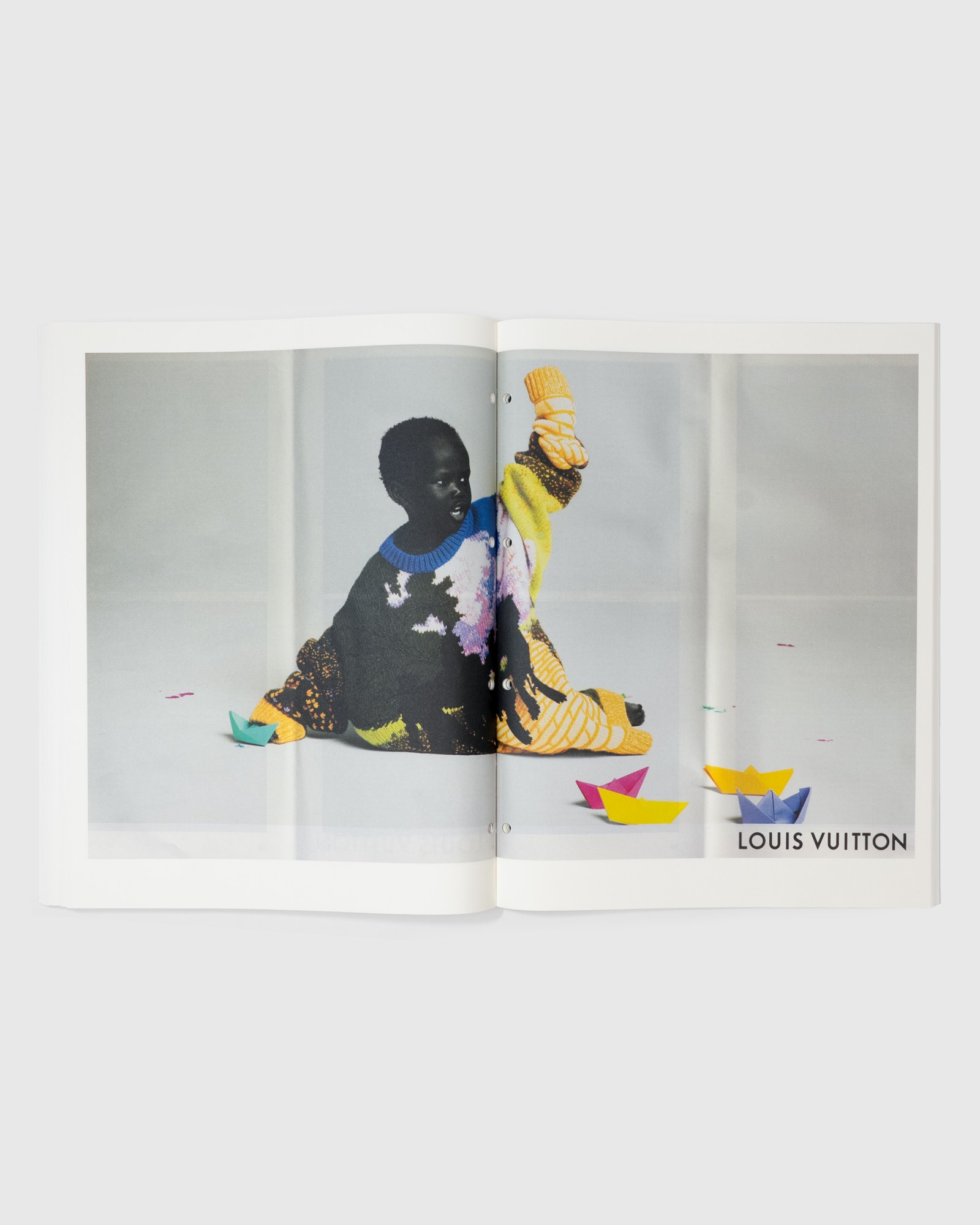
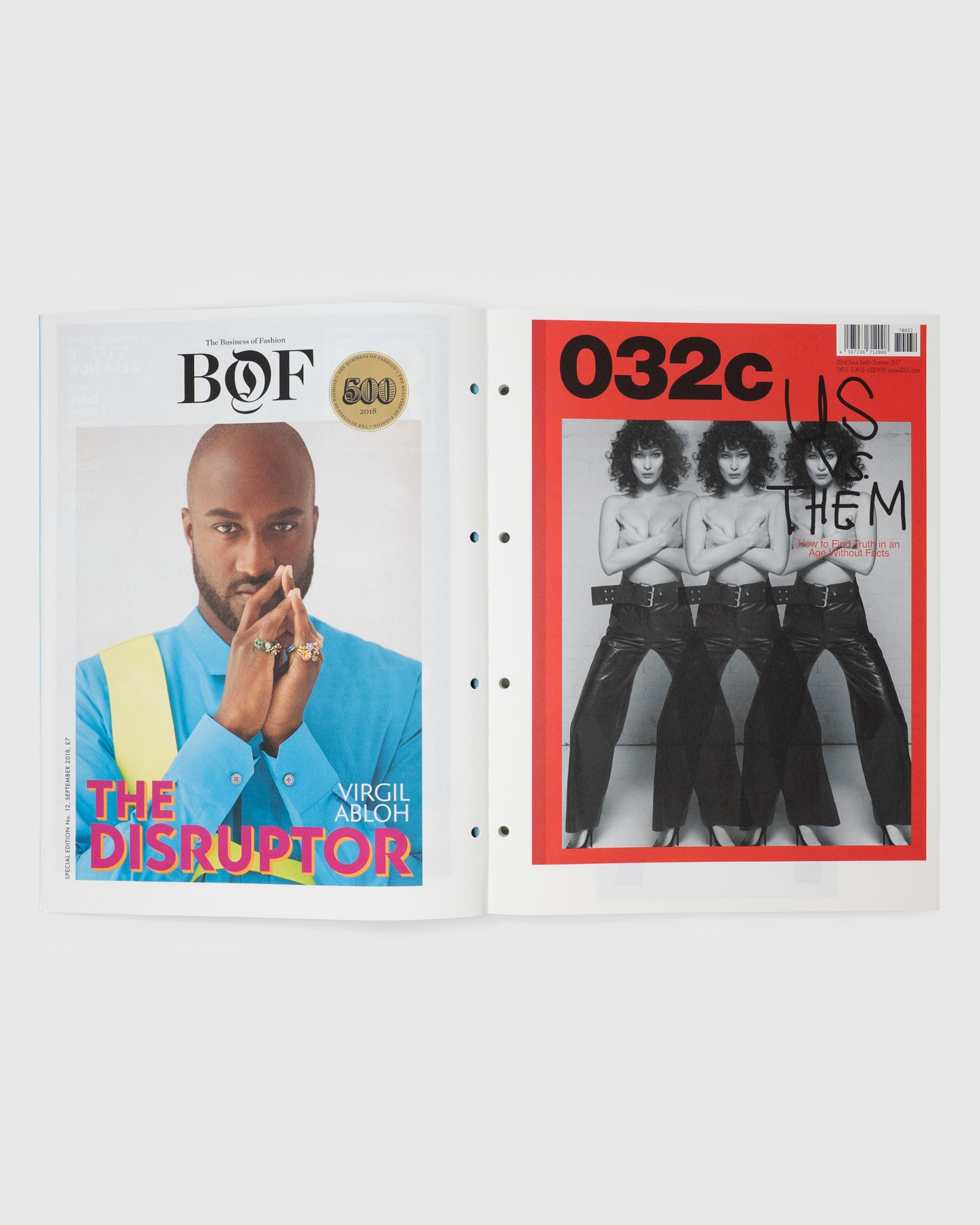
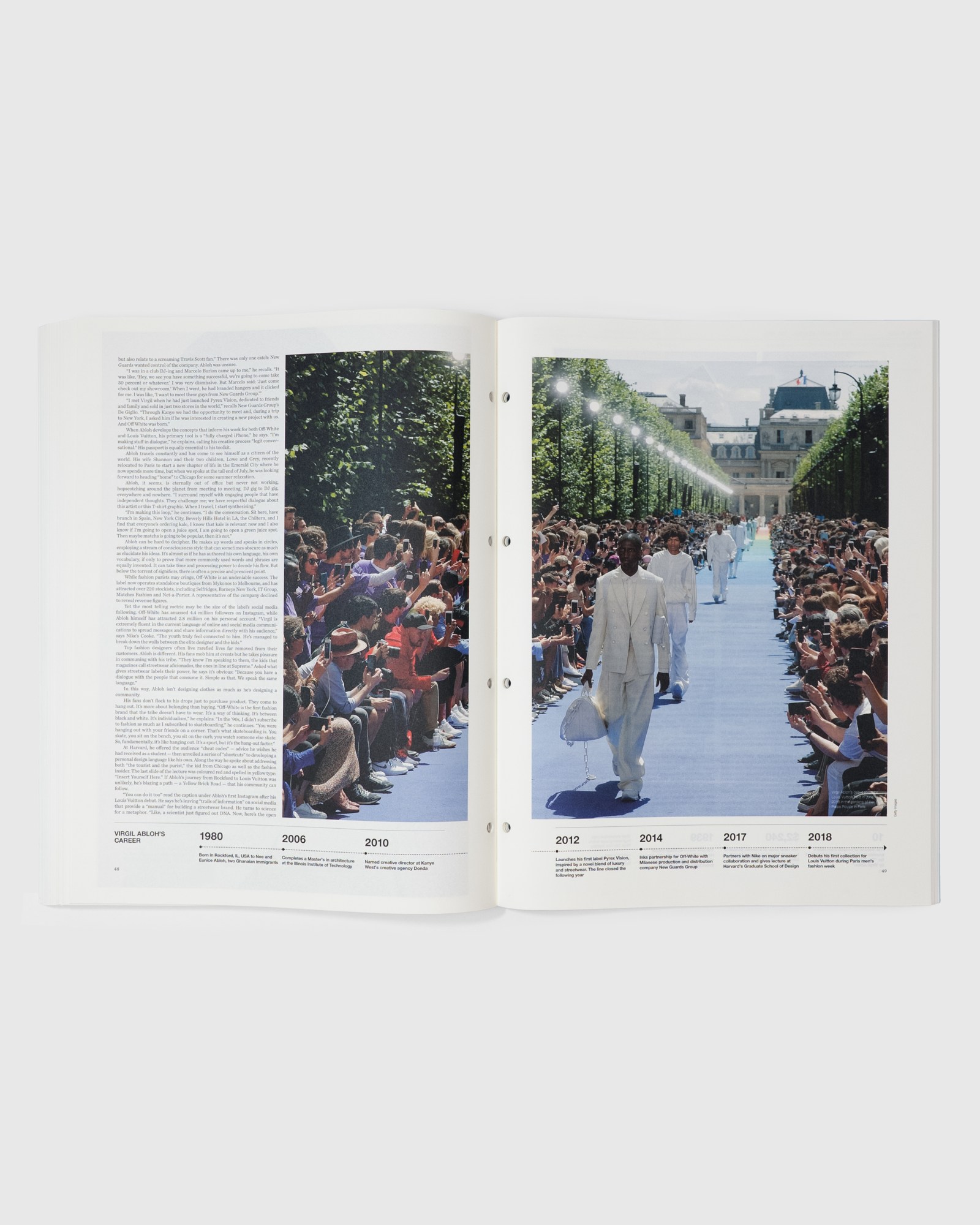
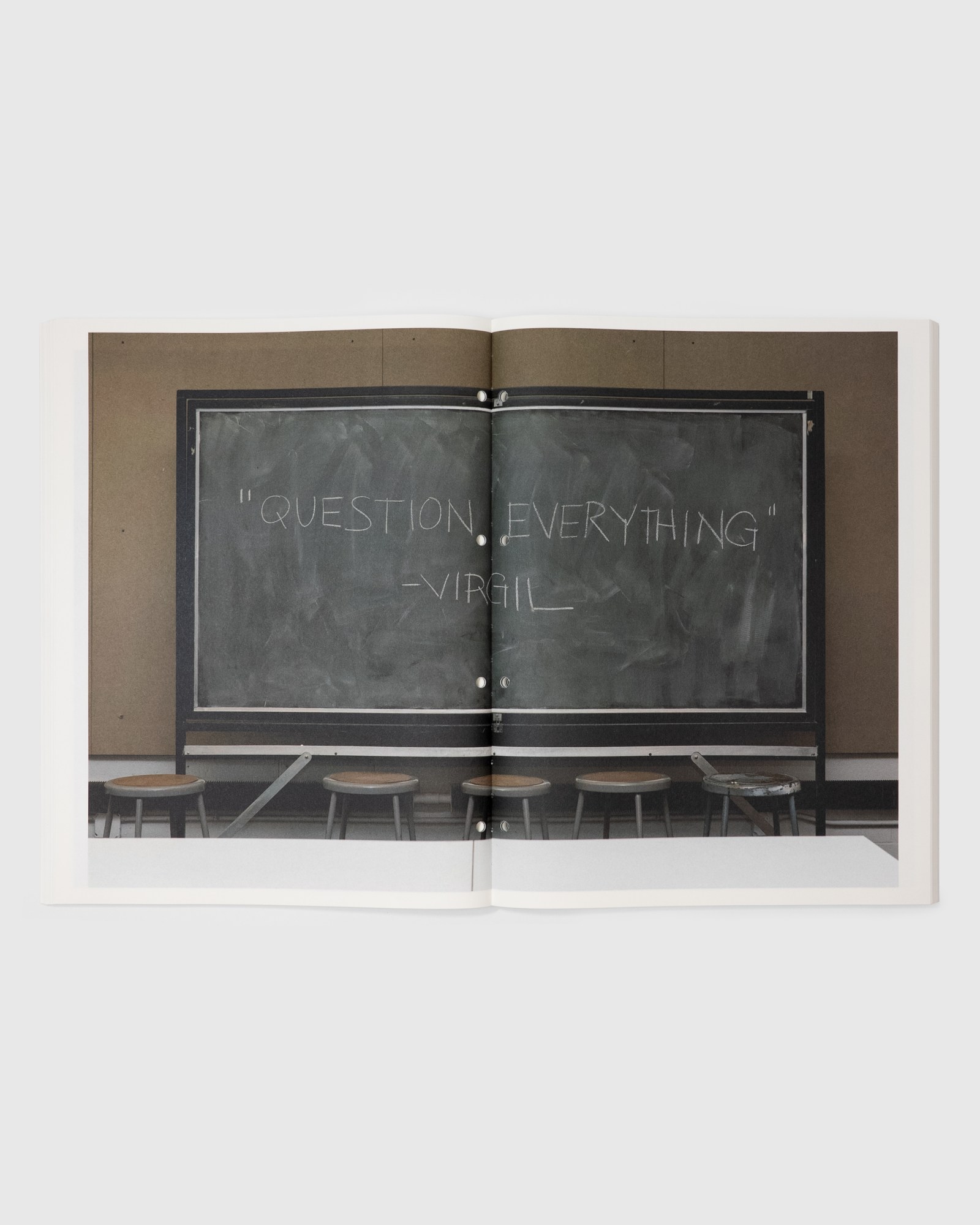
MS: That’s a part of the design of the reader, right? The reader is a compendium of articles that were published in various magazines — System, 032C, Hypebeast, Kaleidoscope, GQ, etc. They’re reprinted with their original layouts and their original typefaces. There’s metadata in the book too: there’s captions, additional information about the articles themselves. Anyway, the first reader is kind of a physical example of what we were just talking about. In a certain sense, it’s as true as any museum monograph. I think Virgil’s work as a conversationalist, as someone that initiated dialogue with people from a wide range of disciplines, was an integral part of his practice. In a lot of these magazine articles, it’s Juergen Teller taking photos, it’s Rem Koolhaas, it’s Arthur Jafa, it’s Richard Anderson. In a certain sense it’s creating intergenerational links.
TB: I want to circle back to this idea of the archive being a time capsule. We’ve talked about the way that culture digests things. I’m also curious from your perspective if you feel like the intervening time, in terms of legacy, has gone differently than you’ve imagined. Has Virgil’s work permeated the culture in unexpected ways?
MS: On one hand, I can see the legacy living on. On the other hand, there’s a lot of work still left to do because he made a lot in his time. It’s about the many people that worked with Virgil, that worked for Virgil, that were in dialogue with Virgil, who have continued working and have continued to make things—I include in this myself, Chloe [Sultan]. The legacy feels very much alive in it. A lot of the younger designers that were a part of his studio have gone on to start their own brands or start their own practices. But also it’s really recent. It’s only been five years since V moved on. I think we’re still several years away from totally being able to assess his impact, you know?
TB: It’s interesting because designers have a different legacy than most people. You look at Christian Dior—a bunch of people have come and done stuff under his name since he died. But after Picasso died, it’s not like someone became the creative director of House of Picasso and kept making paintings.
MS: Of all the artists that I’ve worked with, Virgil was always thinking about legacy, always thinking about the future, particularly because he was a first generation internet kid. He grew up with a rotary phone, and then saw the transition to cellphones, and then saw dial-up, and then ethernet, and so because of that, I think he had this sense that, as use of the internet grew, things would start to feel increasingly ephemeral. I think he often tried his best to leave stories behind so print was important to him. He was always making zines, many of which were never publicized. Of every project he worked on, he’d be like, “we need to make a zine.” When he was doing LV shows and Off-White shows, he would take the show notes very seriously. Some of the show notes are 80-90 pages of information. There was this feeling that — speaking of the Christian Diors and the Saint-Laurents — he was aware of this history in which designers would often be rediscovered 30 years down the line and suddenly become salient again. I think there’s just a lot of stuff in the archive that will be discovered by the kids 20 years from now. There’s this photographer we were working with, Andrew Zuckerman, who was kind of responsible for the visual identity of the classic Jobsian Apple product photography. I’m paraphrasing, but he said that for each product photo, it needed to be the photo that in 300 or 400 years represented that object. It’s not like 30 product shots with tons of zooms. It’s one photo. Virgil tried to think that way about everything he worked on. What does this look like in 200 years, in 300 years, in 400 years?
TB: I was doing a lecture at Parsons at the beginning of this week and I was talking about 2013, because it was the first year that I worked in the fashion industry. I had some slides of things that blew my mind at that time, and one of them was the Yeezus packaging that Virgil designed. At that time I had just finished studying the history of contemporary art in school, and then all of a sudden the biggest album of the summer was an album without an album cover — it’s totally something akin to what a conceptual artist from the 20th century like Michael Asher was doing. So how do you take something that heady, art from 40 years ago that almost no one knows about, and make it pop culture? Part of it is that the importance of physical lore and archival objects is bigger than ever, like you said, in this internet age where so many things feel ephemeral. Talking to the college kids this week I was like, “Don’t source your ideas from Instagram. Everyone has the same Instagram.” We’re so used to this fluid space where we’re all sharing the exact same information, so things that are physical often seem alien in an exciting way.
MS: With books there’s just so much out there that’s not on the internet. Virgil was very much attuned to that, as prolific as he was in storying, posting, and using Instagram. There are so many funny examples of that. For the 20th anniversary of 032c, Joerg [Koch] asked Virgil to do a commemorative issue. So Virgil asked for one of every single issue of 032c.
TB: I sort of remember this — or at least Virgil sending me this gnarly duct-taped thing he was making with it.
MS: He created a supercut of only pages that have Black people in them. So it’s a Black Book. He bound it together, and I think he mailed it back to Joerg. It was in the era where there was a lot of conversation about sharing Black stories and opening up Black histories that had been sidelined, so it was actually cool to see in 032c this entire gradient. I think Joerg still has it — if you’re ever in Berlin you should try and take it from him.
TB: See that’s real lore. We were both so close to the matter, and we don’t even know where this object is or if it even exists. I’m gonna text Joerg about it.MS: I’ll text you the pictures I have. They’re in my message history.