
A Biennial That Reconsiders American Art
The Whitney Biennial 2026 arrives with a familiar question at its center: What shapes contemporary art in the United States, and who does that category include? The answer has shifted over the decades as artists move between regions, languages, and cultural histories. This year’s presentation continues that conversation through a group of artists whose work approaches the idea of American art from many directions.
The New York museum has described its Biennial as an ongoing dialogue about the meaning of American art, an idea that runs through the history of the exhibition itself. The 2026 edition builds on that history by presenting artists whose practices connect land, migration, institutions, and cultural memory. As a whole, the exhibition suggests that American art now functions as a web of relationships which extend across territories and communities.
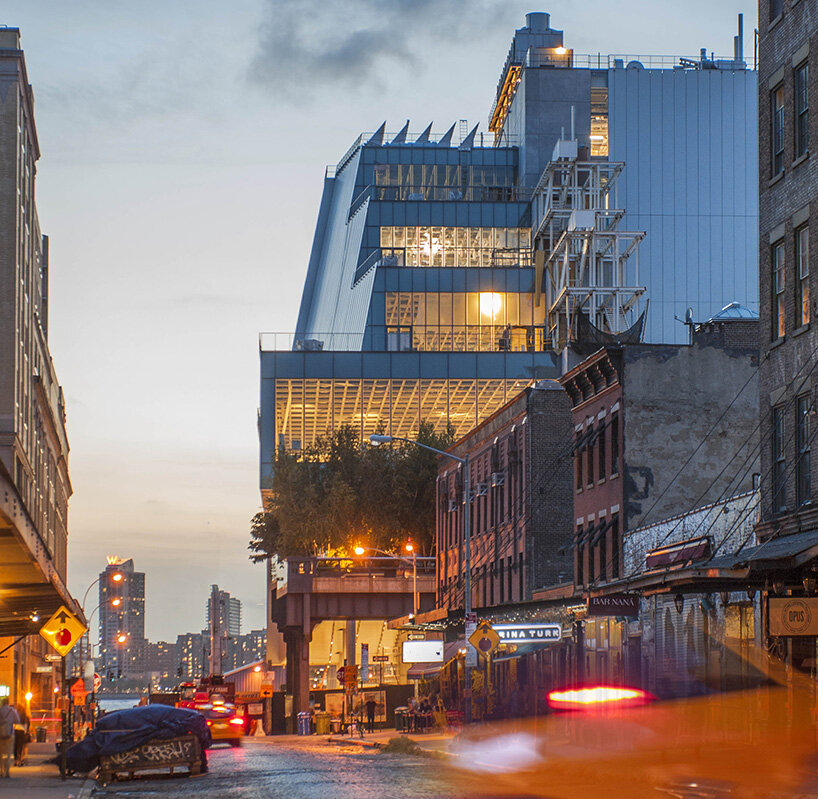
The Whitney Museum of American Art, Renzo Piano Building Workshop, image © Karin Jobst
Indigenous Presence and the Land
Several artists in the Whitney Biennial 2026 place Indigenous histories and relationships to land at the center of their work. Teresa Baker, a Mandan and Hidatsa artist based in Montana, creates tactile compositions that evoke the textures of terrain.
Materials such as fabric, fur, and synthetic surfaces are assembled into layered forms that resemble landscapes seen from above. Her works suggest a sense of movement across plains and river systems, and acknowledge the long histories embedded in those places.
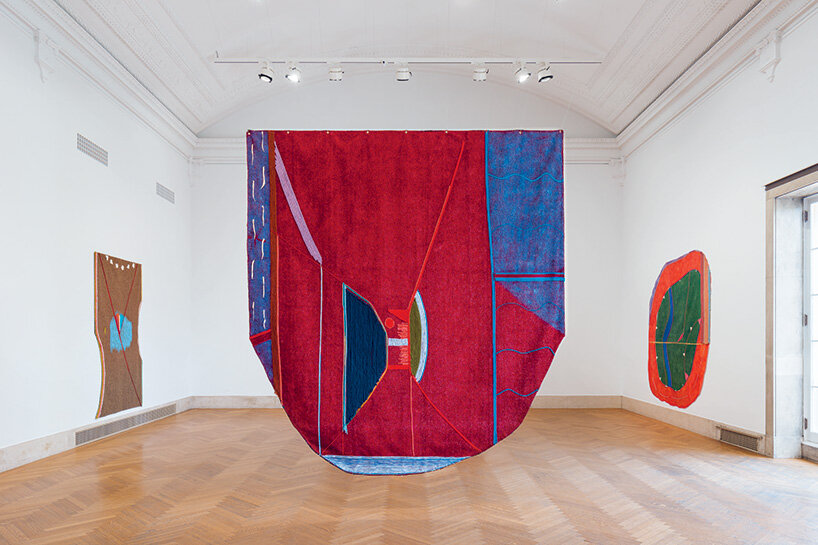
installation view of Teresa Baker: Twenty Minutes to Sunset, American Academy of Arts and Letters, New York, 2025
Anna Tsouhlarakis, whose heritage includes Navajo Nation and Creek ancestry, approaches similar questions through sculpture and installation. Her works frequently draw on symbolic objects, humor, and shifts in scale to explore how Indigenous identity circulates within contemporary culture.
In the context of the Whitney Biennial 2026, Tsouhlarakis contributes a perspective grounded in both personal experience and broader cultural memory, reminding viewers that the story of American art includes histories that extend far beyond the museum.
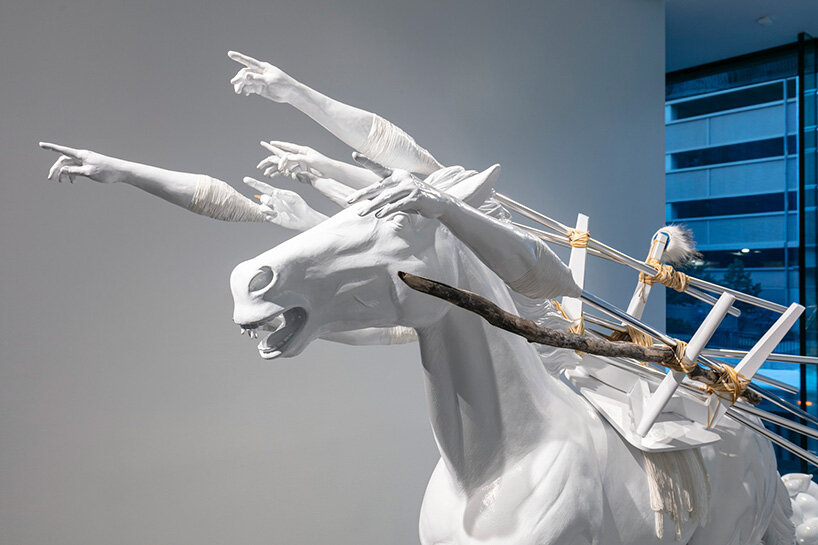
Anna Tsouhlarakis, SHE MUST BE A MATRIARCH, 2023 (detail)
Hawaii and the Geography of American Art
Geography also expands in the work of kekahi wahi, the collaborative practice of Sancia Miala Shiba Nash and Drew K. Broderick. Based across Hawaii, the duo explores the cultural and political landscape of the islands through installations that weave together architecture, ecology, and community knowledge. Their presence in the Whitney Biennial 2026 draws attention to territories that remain central to the story of the United States yet often receive limited attention within mainland art institutions.
Hawaii carries layers of colonial history, military presence, and cultural resilience. kekahi wahi approaches these conditions with projects that connect local histories to broader global systems. Here, their work expands the map of American art across the Pacific, presenting the islands as an important cultural place.
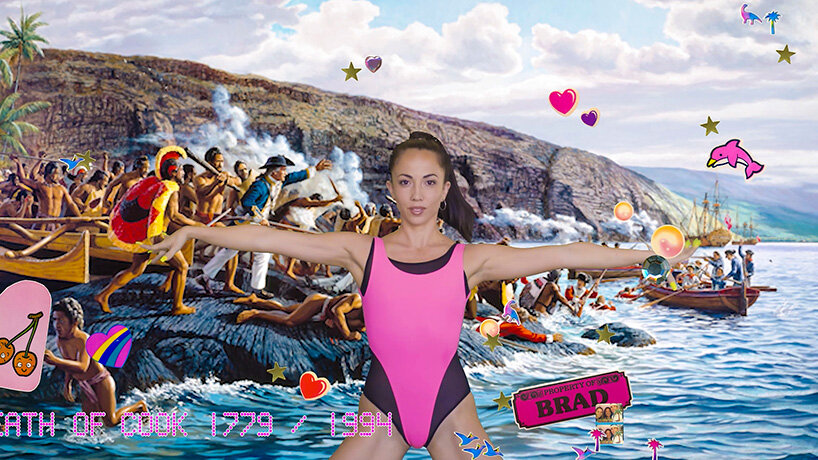
kekahi wahi (Sancia Miala Shiba Nash and Drew K. Broderick) and Bradley Capello, still from 20-minute workout (work in progress), 2023
Diaspora and Transnational Exchange
Several artists in the Whitney Biennial 2026 work across national boundaries, reflecting how American culture circulates through global networks. Ignacio Gatica, born in Santiago and based between Chile and New York, examines the spread of economic and political systems linked to United States influence.
The artist’s installations often combine archival materials, digital imagery, and research into financial networks. Through this lens, Gatica traces connections between cities shaped by similar forces of globalization and economic policy.
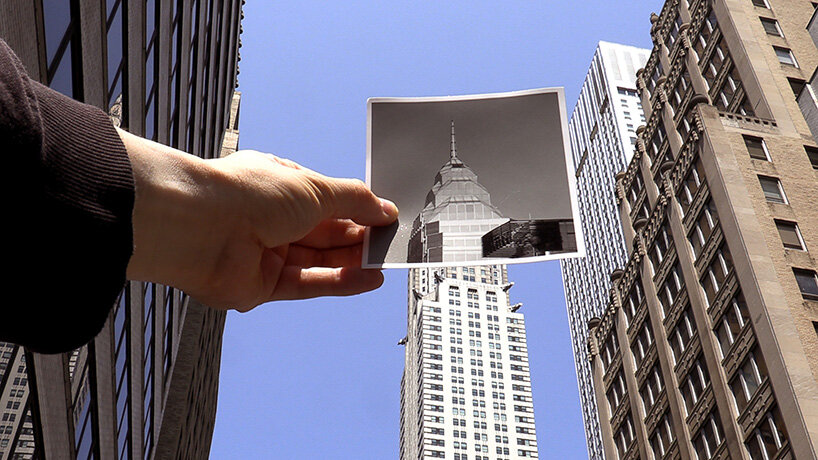
Ignacio Gatica, still from Sanhattan, 2025
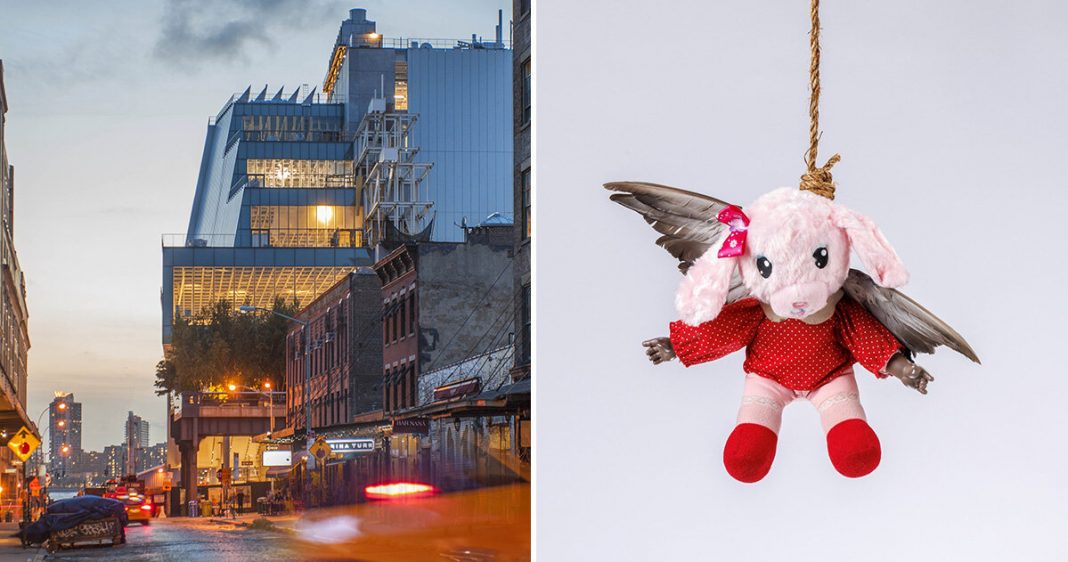
Another artist who approaches performance through myth and symbolism is Precious Okoyomon. Their installation in the Whitney Biennial 2026 gathers sculptural elements that suggest an imaginary ecosystem where animals, toys, and devotional objects coexist. In the catalogue, winged teddy bears appear suspended like small guardians, hovering between innocence and unease.
The installation carries a sense of ritual shaped through playful materials and strange creatures. Within the broader exhibition, Okoyomon’s work contributes a mood of tenderness and unpredictability which suggests that kinship can extend beyond human relationships to include animals, objects, and invented forms of life.
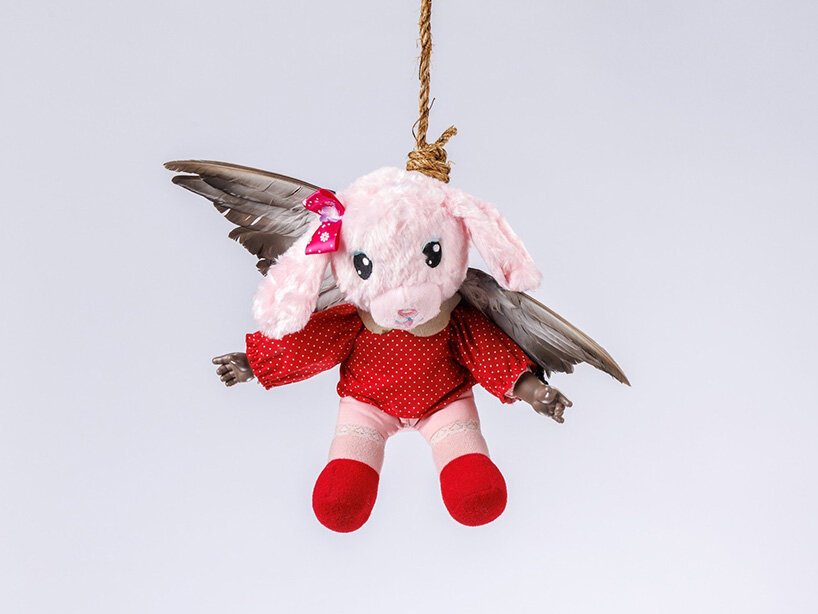
Precious Okoyomon, You have got to sometimes become the medicine you want to take, 2025 (detail)
Nour Mobarak brings another dimension to this international dialogue through sound and performance. Born in Cairo and working between Greece and the United States, Mobarak creates works that treat voice as both material and environment. Her projects explore the physical properties of sound, language, and resonance.
These sonic environments introduce to the Whitney Biennial a sense of movement between cultures and places, suggesting how identity travels through voice and listening.