
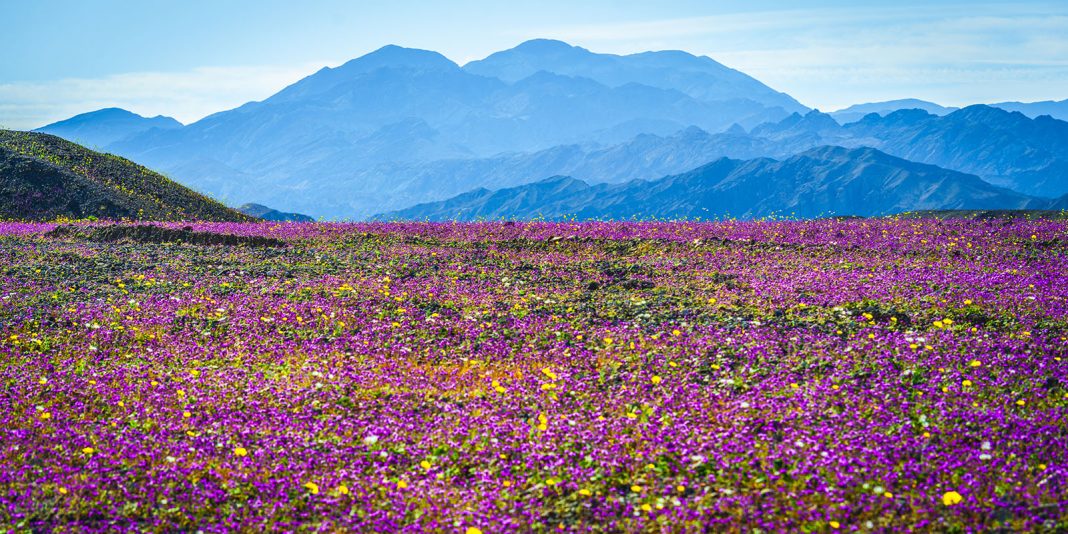

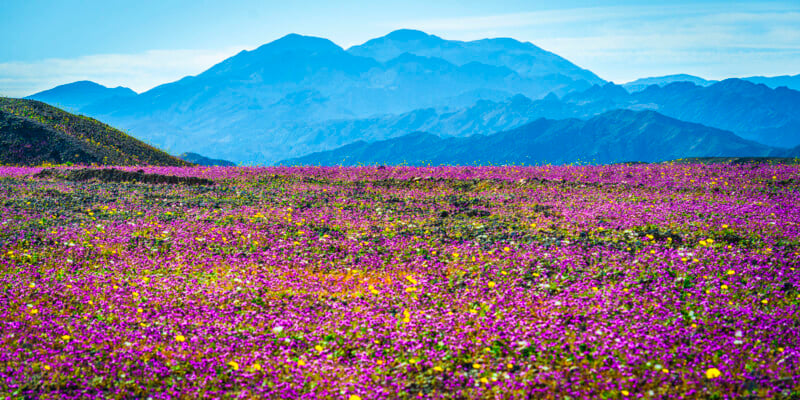
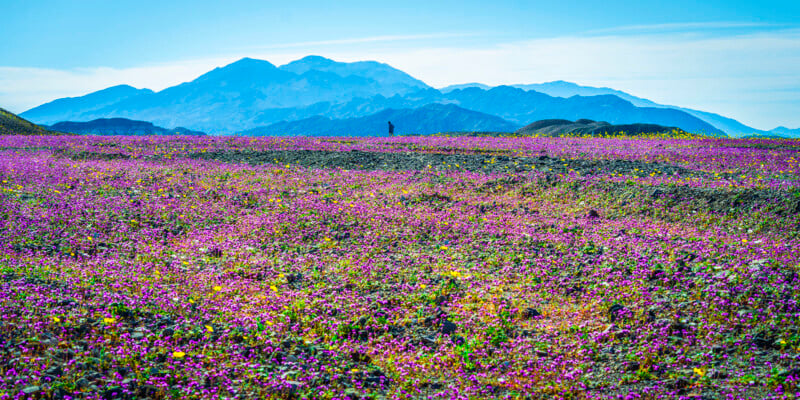
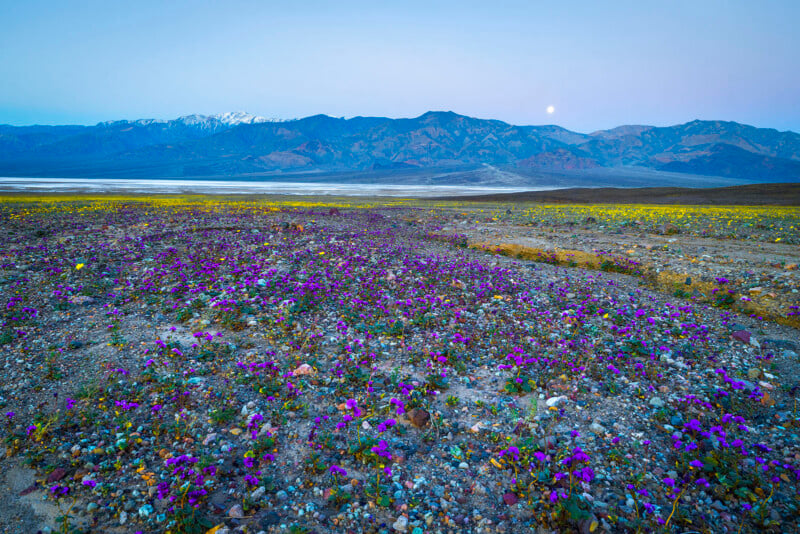
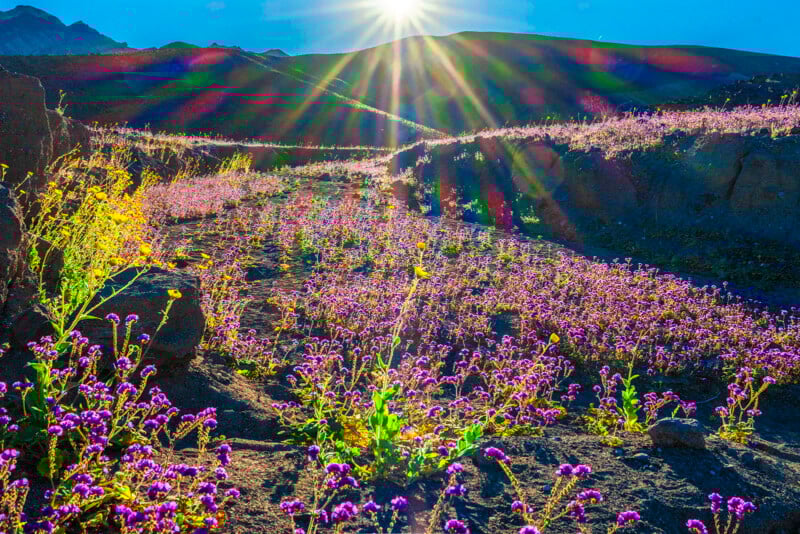
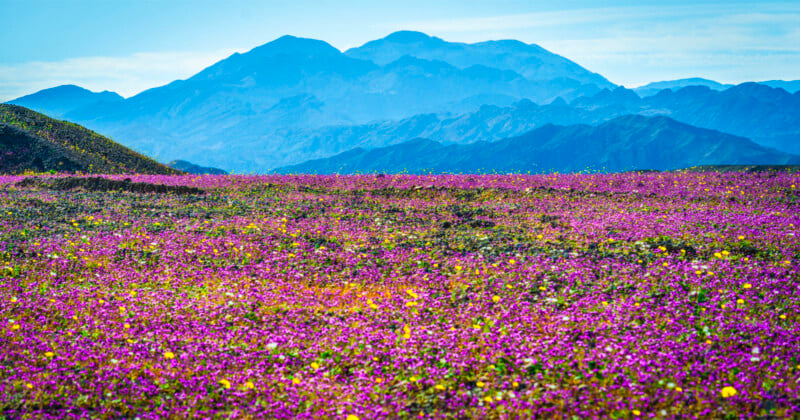
A wildflower superbloom has swept Death Valley for the first time in 10 years and photographer Elliot McGucken made the long drive from Yellowstone to California to see the rare phenomenon.
He swapped the frigid temperatures of Montana, where it was minus 10 degrees Fahrenheit (minus 23 Celsius), and made the 12-hour drive south to Death Valley.
“As Death Valley had experienced record rainfalls over the past few months, I knew that a desert superbloom was likely this year, and so I drove on down,” McGucken tells PetaPixel.
“The desert superblooms often appear earliest in Death Valley, as it is the hottest, driest place not only in California, but on Earth.”
McGucken’s many hours at the wheel were well worth it, as seen below.
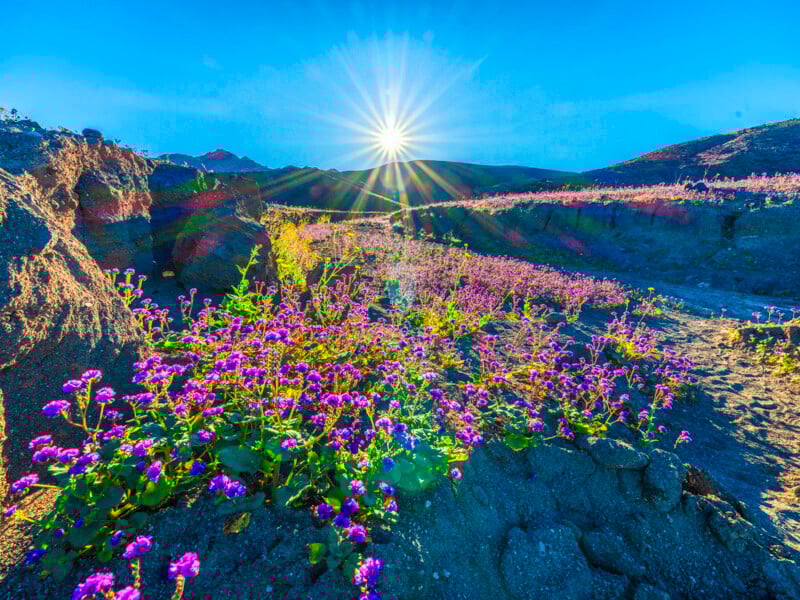
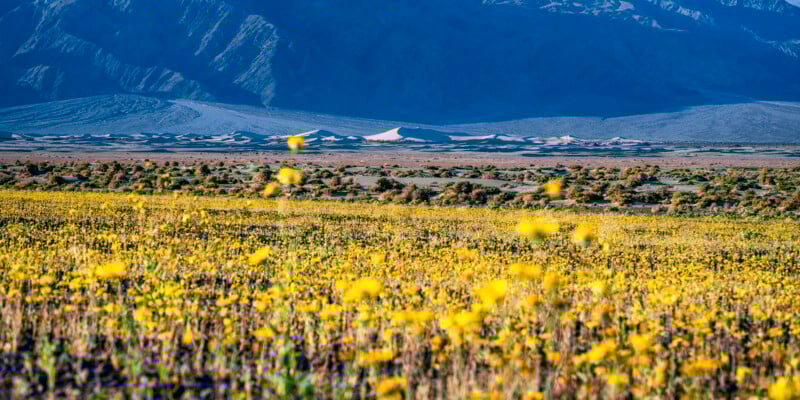
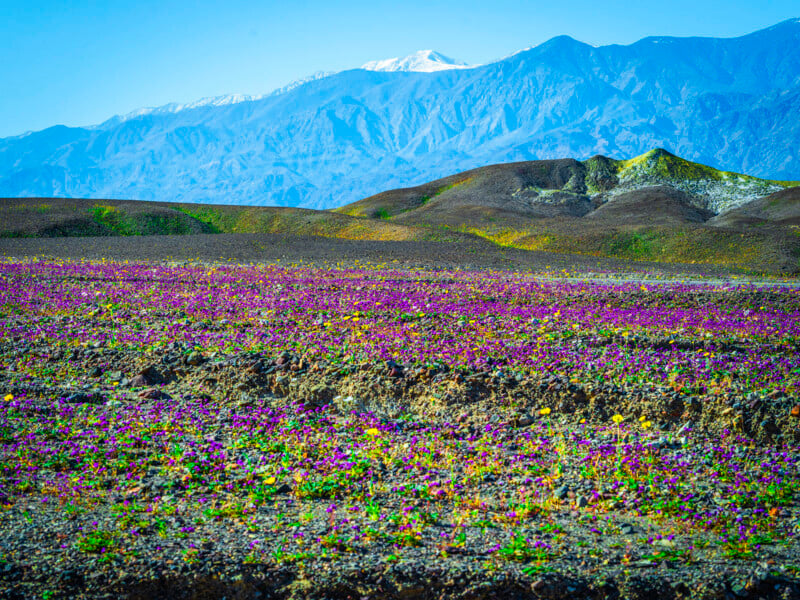
Superblooms are not simply heavy-flowering seasons; they require sustained rainfall that penetrates deep into desert soils, activating seeds that can remain dormant for years or even decades. Moderate temperatures and minimal destructive wind must then follow that moisture. That’s why superblooms in arid landscapes are so rare — the last one was in 2016.
“If the superbloom went off and I missed it, I would forever regret it,” McGucken says. “And so I left Yellowstone. As nature photographers, we’re often waiting for those ‘hell yes’ moments to pack up and move out, and this was a ‘hell yes’ moment!”
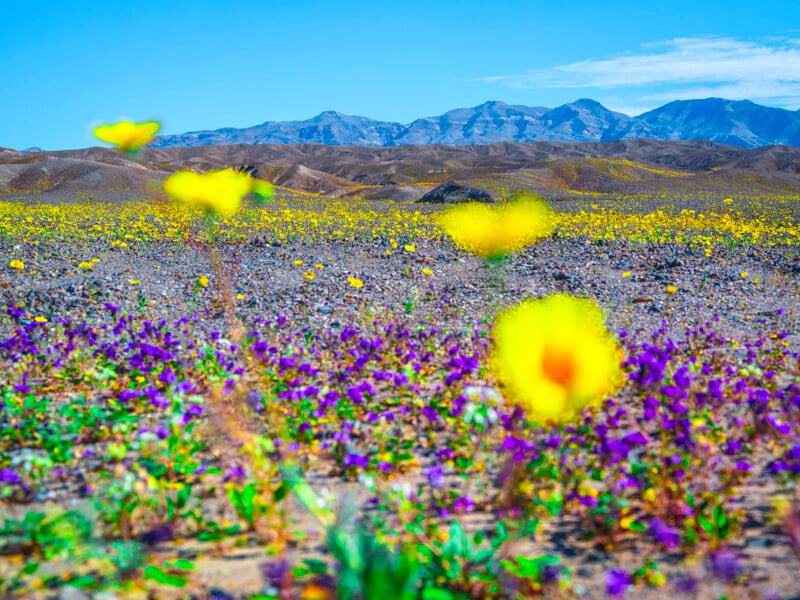
In just a single day, McGucken swapped temperatures of minus 10 to above 90. “The long drive was worth it as the bloom along the usually barren road leading on down to Badwater Basin was already most epic with brilliant displays of Desert Gold, with newer plants and greenery coming on up throughout much of the park.”
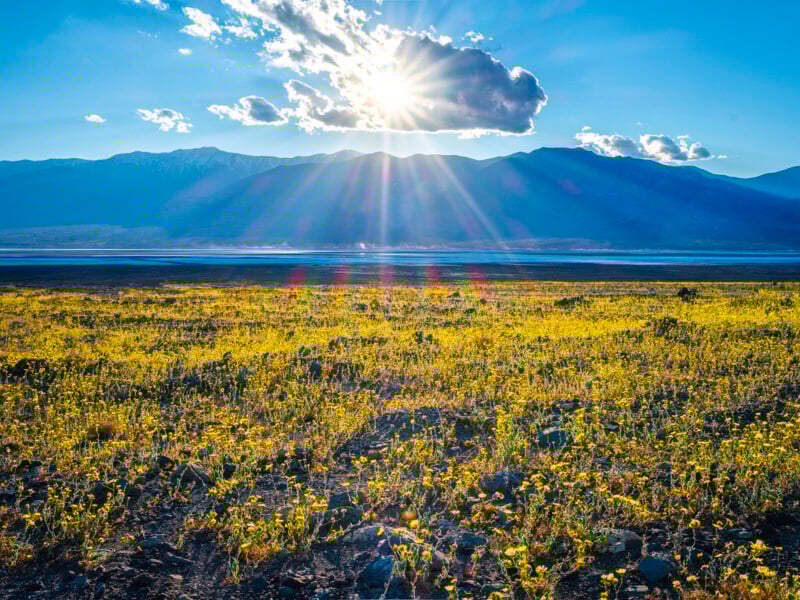
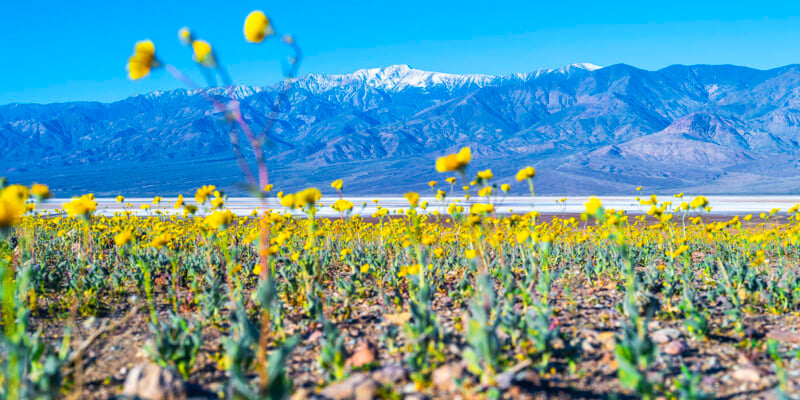
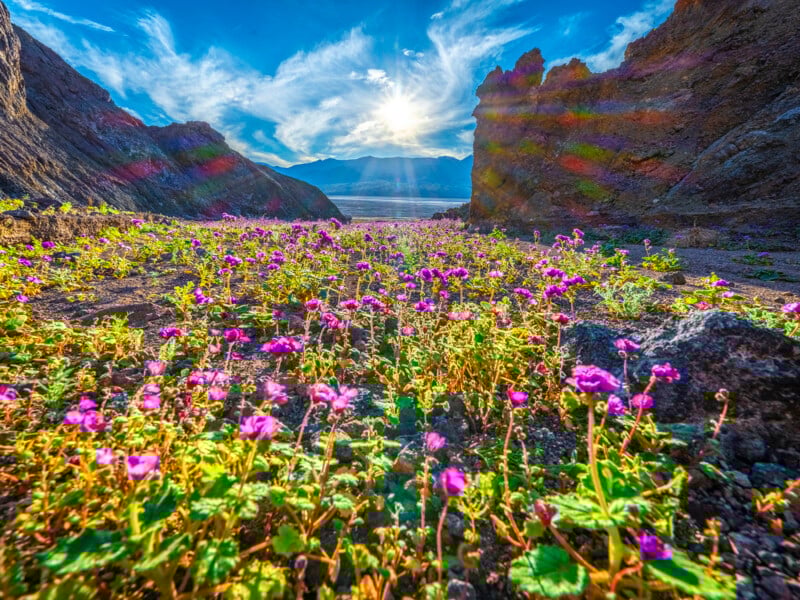
McGucken says he photographed a smaller bloom in the Panamint Valley back in 2024, but never saw as much greenery as right now.
“I have been photographing for the last few days, making the most of the once-in-decade event,” he says.
“After spending the winter in Montana and Yellowstone, it is great to wear shorts again and put away the winter gear and long wildlife lenses, and dust off the wide-angle lenses.”
If you’re thinking of heading to the Western deserts, then check out PetaPixel’s guide to capturing wildflower superblooms. More of McGucken’s work can be found on his website and Instagram.
Image credits: Photographs by Elliot McGucken.