

China has set a 4.5 to 5 percent gross domestic product growth target for 2026, a modest slip from last year’s “around 5 percent.”
The goal was unveiled during Premier Li Qiang‘s Government Work Report that opened this year’s Two Sessions, an annual policy meeting that kicked off this week in Beijing.
Li added that China should “strive for better results in practice.”
Alongside this year’s GDP growth range, Li unveiled a budget deficit target of around 4 percent of GDP, an inflation target of around 2 percent, urban unemployment rate at around 5.5 percent, and lowering emissions by 3.8 percent.
This year’s goal setting points to a more reasonable approach for the year, according to Singaporean bank OCBC’s analysis.
For ING, this year’s target suggests a “degree of restraint.”
“With the new target, there appears to be a tolerance for slower growth, which should give policymakers more flexibility to pursue quality growth, a priority in recent years,” wrote Lynn Song, ING’s chief economist for Greater China.
A stimulus package, which includes a 4.4 trillion renminbi, or $637 billion, special local government bond, and a 1.3 trillion renminbi, or $188 billion, ultra-long-term bond, will be issued this year, a slight uptick from last year. 250 billion renminbi, or $36.2 billion, will be used to support consumer goods’ trade-in programs.
“We believe there is still hope that the impact of fiscal policy could improve this year, with potentially more money available to go into the real economy rather than being used to bring off-balance-sheet debt onto the books,” Song noted.
This year’s Government Work Report also unveiled economic targets tied to the current five-year plan, which runs from 2026 to 2030.
Beijing aims to expand the digital economy’s share to 12.5 percent of GDP, increase research and development expenditure by 7 percent year-over-year, and raise defense spending by 7 percent — the slowest increase since 2021.
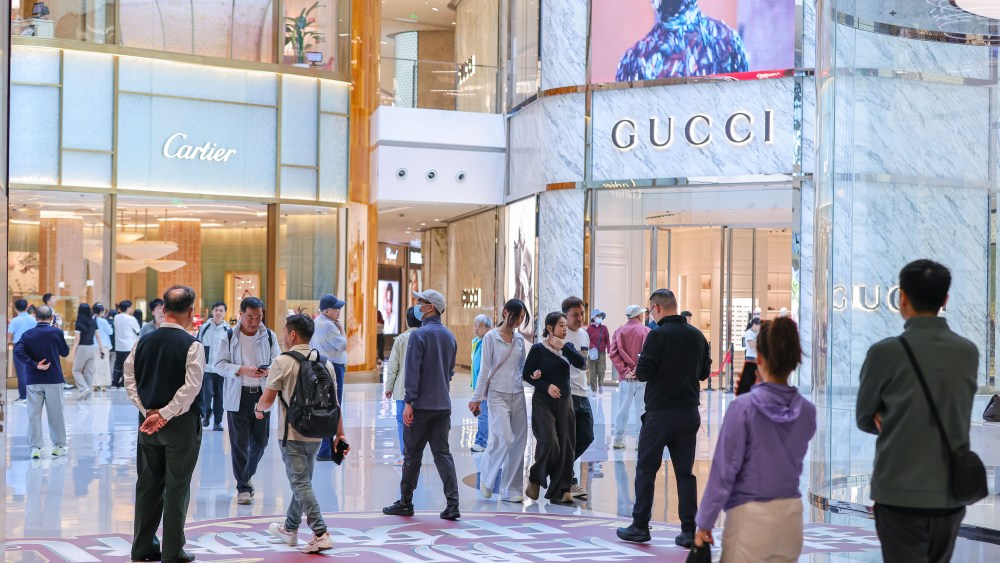
For the retail sector, Beijing’s priorities include stimulating offline consumption, revitalizing retail in lower-tiered cities, and unlocking consumption potential tied to tourism, cultural events, sporting competitions, as well as the health and wellness sectors.
Li also coined a new tag line “Shop in China,” pointing to untapped growth opportunities for inbound tourism.
Early signs suggest the strategy is already gaining traction. During the most recent Chinese New Year holiday, flight bookings to China by foreign visitors surged more than fourfold year-over-year.
According to data from Fliggy, the Alibaba-owned online travel booking site, Beijing, Shanghai, Guangzhou and Chengdu ranked among the most popular first-stop destinations, led by visitors from South Korea, Vietnam and Singapore.