
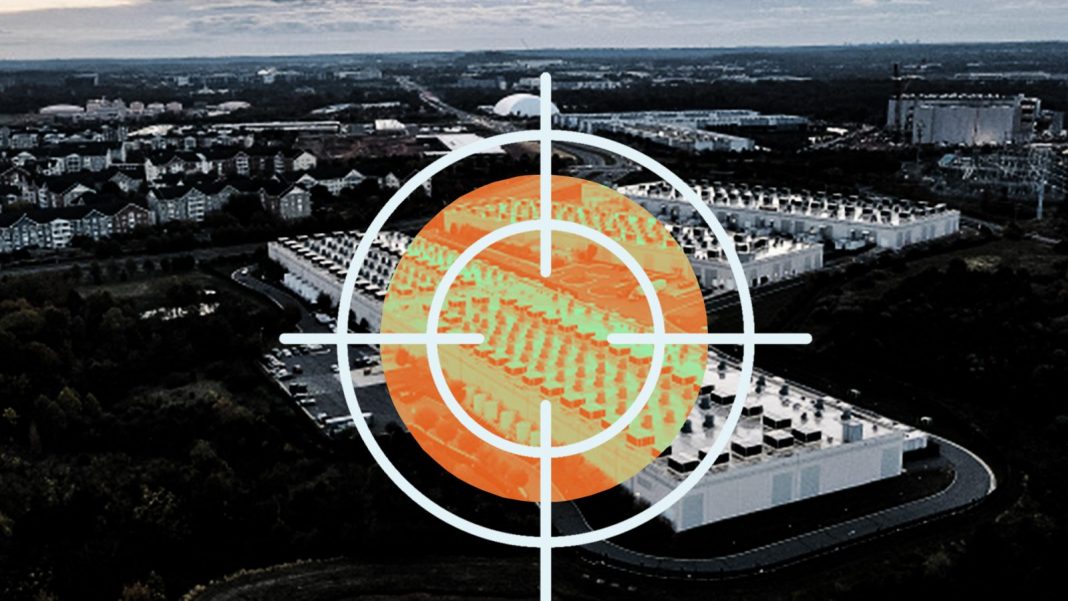

The Iranian drone strikes that hit Amazon Web Services facilities in the Middle East have thrust a new question to the forefront of the tech industry: Should data centers be defended like military assets?
The attacks — the first known military strikes at an American hyperscaler’s infrastructure — damaged two AWS sites in the United Arab Emirates and one in Bahrain, disrupting services across the region and underscoring how critical data infrastructure is emerging as a potential target in modern warfare.
“[Physical attacks] are only going to become more common moving forward as AI becomes more and more significant,” Sam Winter-Levy, a fellow at the Carnegie Endowment for International Peace think tank, told Rest of World.
Now suddenly, protecting data centers is like protecting top-security government offices.”
Winter-Levy warned against building critical compute infrastructure in the Gulf in an opinion piece in The Washington Post in July, citing risks from growing U.S.-Iran tensions. “As more and more parts of the economy rely on these data centers, they correspondingly become increasingly attractive targets,” Winter-Levy said.
The attacks on data centers will lead to more investments on data infrastructure, as companies try to diversify data storage, according to a report by intelligence firm IDC. The AWS damage on Monday created outages for a range of consumer and financial services, including delivery and ride-hailing app Careem and payment service Alaan.
In the Middle East, cloud providers will commit to “multi-AZ” deployments — saving replicas of data in separate data centers, according to IDC. Globally, companies and governments will expect data center providers to have recovery plans and multiple facilities within a country.
The Gulf countries have pledged trillions of dollars to build AI data infrastructure. To attract clients, the governments will have to offer heightened security measures, Ashish Nadkarni, who leads IDC’s global infrastructure research, told Rest of World. “Now suddenly, protecting data centers is like protecting top-security government offices,” Nadkarni said.
Around the world, data storage providers have already built underground data facilities inside Cold War nuclear bunkers and caves to attract clients worried about safety. Bunkers in the U.K. and Sweden now house servers. In China, Tencent has housed important data in caverns in the mountainous Guizhou province.
While tech companies have been preparing data infrastructure against cyberattacks and natural disasters, the threats from physical attacks are still not prioritized enough, Winter-Levy said. Potential defensive measures, such as installing air defense systems and building reinforced concrete, are expensive and do not offer full protection for the sprawling buildings.
As data centers become seen as essential parts of national security, governments and companies will have to pay high costs to offer them military-grade protection.