

Nearly a week into the US-Israeli war with Iran and the skies above the Gulf remain streaked with the crisscrossing contrails of modern air defence. Just after midday on Saturday, deep concussive thuds rolled across Abu Dhabi, Manama, Doha and Dubai (to name just a few targets). Residents and visitors stepped onto balconies and rooftops to watch what has quickly become a familiar spectacle: interceptor missiles climbing steeply into the air before detonating and neutralising incoming Iranian drones and ballistic weapons. The noise is unsettling, though those loud bangs mean that the defences are working. But for how long?
Since the war began, Iran has launched hundreds of missiles and drones across the Gulf in retaliation to US-Israeli strikes. By Wednesday evening, 212 missiles and roughly 1,065 drones had been fired towards the UAE alone. Emirati officials say that about 92 per cent have been intercepted, largely by US-made Thaad systems, Patriot batteries and fighter jets scrambling from bases across the federation.
On paper, the numbers suggest a formidable defensive shield. Yet the arithmetic tells a more complicated story. While most of Iran’s weapons are being destroyed, each interception comes at a price – and that’s part of Tehran’s strategy. Iran’s drones, particularly variants of the Shahed loitering munition, are cheap and plentiful. Some cost as little as $20,000 to $50,000 (€17,000 to €43,000) to produce. The interceptor missiles used to destroy them can cost between $500,000 and $1.5m (€430,000 and €1.3m) each. At this rate the side defending its skies might end up spending 20 times more than the side attacking it.
“The maths clearly favours attrition,” says Kelly Grieco, senior fellow at the US-based Stimson Center think tank. Tehran’s stockpiles of drones and missiles are believed to be significantly larger than the combined interceptor inventories available to the US and its regional partners. This imbalance is not accidental. It’s the strategy.
Modern warfare is increasingly defined by what military planners call a “salvo competition”, a contest over who runs out of weapons first. Iran lacks the air force to challenge Israel or the US directly but possesses thousands of missiles and drones capable of being launched across the region. The aim is simple: overwhelm defences, exhaust interceptor stockpiles and stretch the economic cost of defence beyond what is sustainable. And those stockpiles are already under pressure.
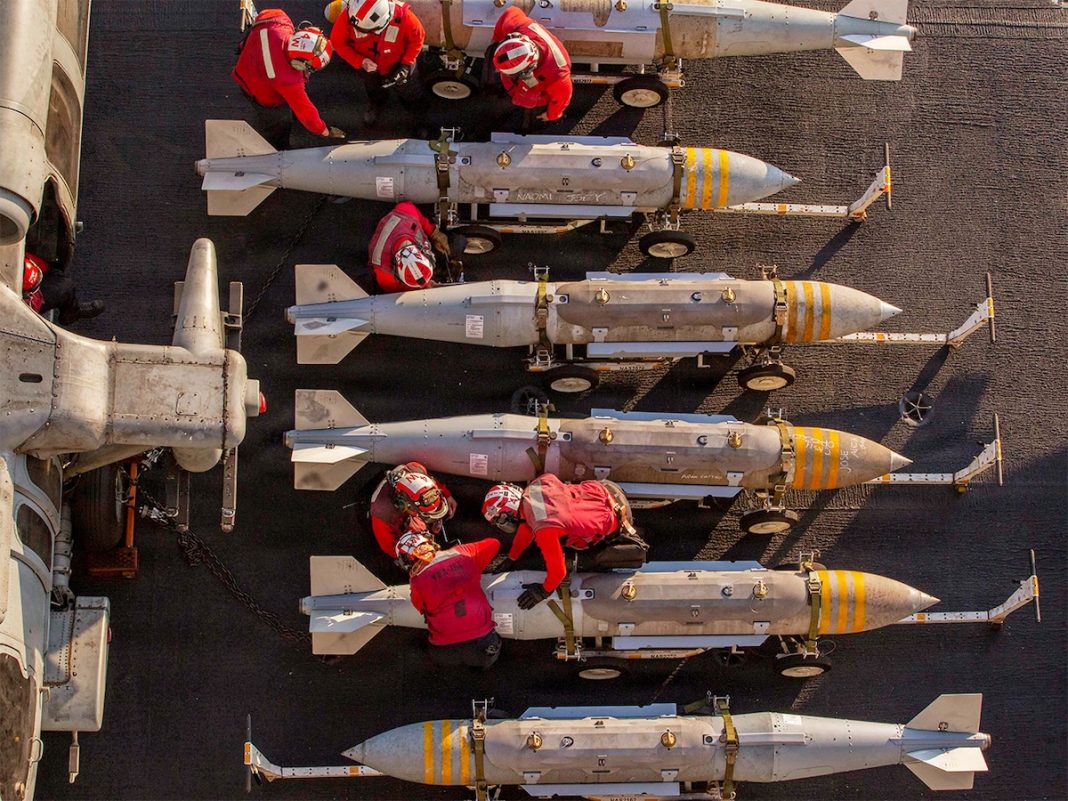
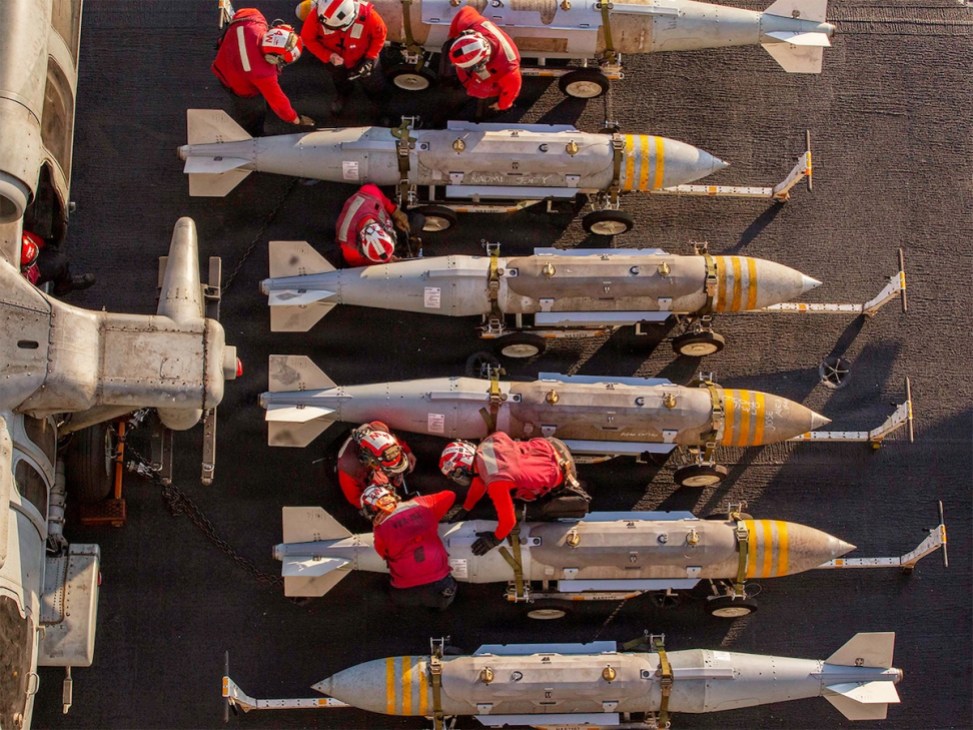
The US and its allies have been burning through advanced interceptors at a rapid rate. High-end systems – used extensively to defend Gulf cities and military bases – are expensive and slow to replenish, raising concerns in Washington about the long-term sustainability of its campaign. According to US and Gulf Co-operation Council (GCC) officials, some Gulf allies are already discussing the need for additional defensive supplies as the pace of Iranian strikes continues. Interceptors are being launched at a rate far faster than they can be produced and replenishing stockpiles could take months or even years.
Officials in Abu Dhabi insist that the country retains strategic reserves capable of defending the federation “for a long time”. But the tempo of the conflict has already triggered urgent collaboration among allies. On Tuesday night a high-level Emirati delegation quietly arrived in Tel Aviv for talks with Israeli and US officials – discussions understood to include defence co-ordination and the sustainability of interceptor supplies.
Meanwhile the battlefield itself continues to evolve. Layered air-defence systems have proven highly effective against ballistic missiles, intercepting them high above the atmosphere before they reach their targets. But slower, low-flying drones can slip through those layers – a vulnerability exposed by several strikes on infrastructure across the Emirates, including airports, oil facilities and shipping ports.
Iran’s drone strategy borrows heavily from tactics first deployed in Ukraine: large numbers of inexpensive, slow-moving aircraft launched simultaneously to saturate radar and interception systems. The result is a conflict defined less by decisive battles than by sustained pressure.
The response from Washington and Tel Aviv is now shifting accordingly. As interceptor stockpiles come under strain, the US and Israel are racing to locate and destroy the factories, storage depots and launch sites responsible for producing Iran’s drones and missiles. “We’re now seeing a race,” says Grieco, “between Israel and the US trying to locate this drone infrastructure and destroy it, and Iran trying to keep it an active threat.”
The UAE government has been unusually open about the threat. In an unprecedented press briefing earlier this week, officials displayed the wreckage of intercepted Iranian drones and missiles – twisted charred metal fragments recovered from the desert and the sea. On a political level, the UAE has sought to maintain a carefully calibrated position. The country is not formally part of the US-Israeli war effort but has nevertheless found itself in Tehran’s crosshairs. More than half of the Iranian strikes directed at Gulf states so far have targeted the Emirates. Kuwait has received the next highest number of attacks, including missiles aimed near the US embassy, followed by Bahrain, where an apartment block was struck and the US Navy was also targeted. The reason might lie in the UAE’s open diplomatic relationship with Israel following the Abraham Accords.
But Anwar Gargash, diplomatic adviser to the UAE president, rejects that explanation. “There is no rational reason,” he says. Iran has targeted multiple Gulf states – including some that have historically acted as intermediaries between Tehran and Washington. In his view, Iran might simply see the Gulf as “the weaker part in the underbelly” of the conflict.
For now, the UAE remains in what Gargash describes as a defensive posture, intercepting attacks while seeking to prevent the war from widening. “Our air defences have been doing a marvelous job of securing people’s lives and property,” he says.
But the strategic question looming over the Gulf is no longer simply about capability – it is about patience and endurance. Destroying Iran’s missile silos, drone depots and launch infrastructure would require sustained strikes across a vast country, a campaign that could take weeks or months. Until those capabilities are neutralised, Tehran retains the ability to keep firing. And every missile launched by Iran forces another calculation in Washington, Tel Aviv and the Gulf capitals. How many interceptors remain in the magazine? In this war, the battle might not be decided in the skies at all. Instead, it could be decided by whichever side shoots its bolt first.