


Russia launched its full-scale invasion of Ukraine four years ago. In the time since, millions of lives have been taken or forever changed, parts of northern Ukraine have been captured and billions in assets have been lost. The effects of the war – including the deep emotional trauma and geopolitical ramifications – are difficult to quantify.
Negotiations between Ukraine and Russia have intensified, yet substantial breakthroughs remain elusive. European allies have found it increasingly difficult to present a united front, while the US administration under Trump has consistently pursued direct negotiations with Russia.
“War changes absolutely everything,” says Julia Jenne, a Monocle writer and researcher from Ukraine. She spoke to Georgina Godwin about the profound impact of the war on her family, the geopolitical effects and where negotiations might go from here.
This interview has been edited for clarity and length. Listen to the full conversation on The Globalist.
Julia, many thanks for coming in today. I know that it’s quite an emotional time for you and your family. I’d like to start on a highly personal note: how has the war in your country affected your life?
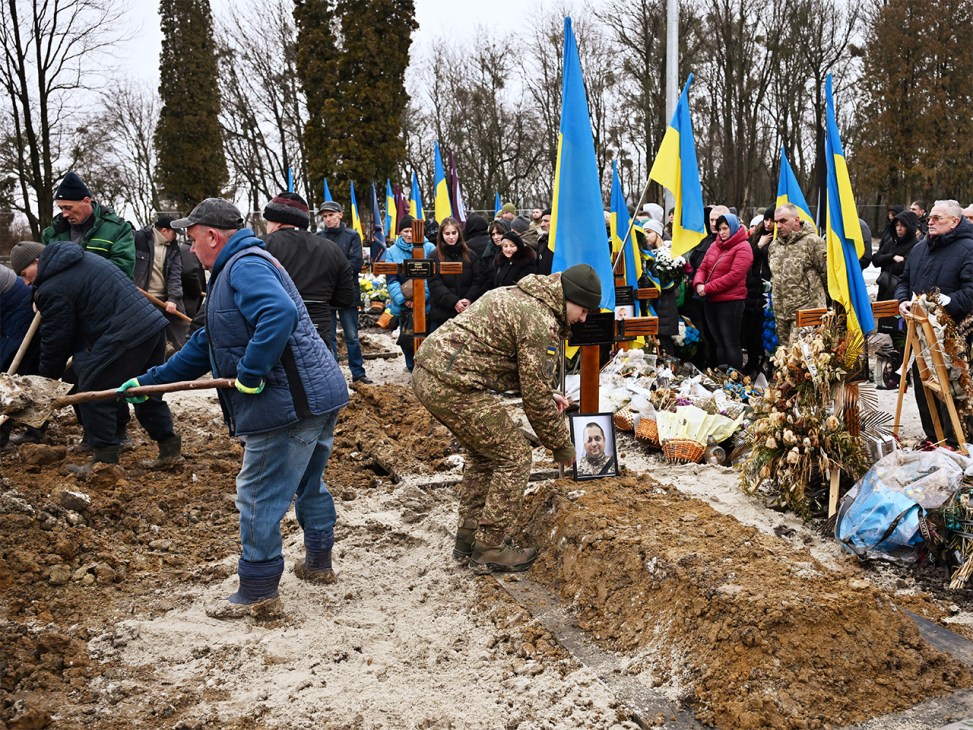
Well, it has exposed me to the ugliness of war. I know what it means to lose someone in quite devastating circumstances. I’ve understood what it means to be under bombardment. You think, ‘Oh, I might die now’ or ‘I might suffer unbelievable damage to my body’ and understand that your body is so fragile. And, of course, my family’s lives [have been] turned upside down.
War changes absolutely everything. I think that there’s a romanticisation of it: we read about it in poetry or in literature or we see it in films but all it does is cripple a life that was blossoming before. [You] suddenly become reliant on other people; you become a refugee. I’ve seen all of this happen to my family. I’ve seen my family members, for example, become part of the military and that’s a step that is very difficult because your life is no longer your own.
Sometimes it’s very difficult to die for the glory of your country. Beyond the personal, the ramifications of this war have spread far beyond Ukraine’s borders. Volodymyr Zelensky said in a media interview a couple of days ago that the Third World War has already started. What did he mean by that?
I think what Zelensky is talking about is the axis of evil. We’ve seen a number of countries stepping behind Russia to enable it to continue this war on Ukraine. The past four years would have been impossible for Russia without China, which has supplied Russia with absolutely critical technological components that are then used to make Russian rockets, drones, missiles and military tech. There’s also Iran, whose development of the Shahed drone is crucial. And we’ve seen North Korea, which has committed actual manpower on the ground. There are some 10,000 North Korean soldiers on Russian soil and [who are] being deployed to Ukraine and they’re gaining this invaluable military experience: how to use a drone or how to create a combat situation where they can successfully deploy. That’s what Zelensky is talking about: all these countries are using the military experience behind Russia to influence other conflicts in the future.
Europe is largely supportive of Kyiv but, of course, there is this huge row about sanctions. Hungary and Slovakia are kicking against all these measures that Europe is trying to implement. Tell us more about that.
This is the €90bn loan that was meant to be given from the EU to Ukraine as a concrete example of European support. Hungary blocked this. Hungary and Slovakia are both very upset about the Druzhba pipeline, which brings energy from Russia through Ukraine to European countries. Slovakia has halted emergency power supplies in the last two days to Ukraine because of this row. Supposedly, Ukraine is preventing energy from moving along that pipeline to Hungary and Slovakia, which have attempted to foster close ties with Russia. Slovakia halting emergency power supplies to Ukraine is particularly [brutal] because this winter has been very difficult and because Russia has been striking power stations. It has struck every single power station in Ukraine in the last couple of months. This has meant that Ukrainians have been without power, not just in their homes but also in hospitals, schools and supermarkets.
As we take stock four years into this war, where are we in terms of negotiations? How much of a possibility is there that this will not reach another anniversary?
I think the honest answer is that we’re not close at all. Of course, in Ukraine, there’s a very clear view on this. But beyond Ukraine, if we look at what analysts are saying across Europe and the US, America is not seen as a neutral host of these negotiations. Russia is on the back foot in many ways as Ukraine has liberated quite significant chunks of its territory in the past few weeks. Russia is now having more men killed on the front line than it is able to recruit.
This is a big strategy of Ukraine’s: to use automated systems and drones to show Russia that it can’t gather enough manpower on the front line as it loses it. There is a sense that if Ukraine is given the tools to fight off Russia’s advances, it can defend itself properly. It just has to be given that chance, that support by its allies. But the US in the past 12 months – really, under Donald Trump’s presidency – has pivoted. Despite all the fluster from Moscow, Trump has been interested in economic ties with the Russians and also, I guess, the flattery that comes with an authoritarian friendship.