
To receive Morning Links in your inbox every weekday, sign up for our Breakfast with ARTnews newsletter.
The Headlines
PAY TO PLAY. As The Art Newspaper points out, Dominican American artist Lucia Hierro’s ambitious recent commission, a 7.5-foot chair installation, illustrates a growing crisis in the US art world: artists are increasingly expected to raise the funds for institutional projects. Fabrication costs for her work far exceeded the commissioning museum’s budget, forcing her to secure funding through a fund for alumni of the Miami-based Fountainhead Arts’s residency program. But Fountainhead had only $125,000 available for its inaugural set of grants, not close to matching the need of 96 applicants who sought a collective $1.8 million. This new reality, according to TAN, reflects a broader structural breakdown: cuts to federal and state arts funding, underfunded DEI initiatives, and rising living costs have shifted the burden of financial risk onto artists. Institutions still want ambitious work, but production gaps are often borne by creators, disproportionately affecting those without gallery representation or generational wealth, including historically marginalized artists. Experts describe this as unprecedented: while artists have long subsidized institutions, the scale and stakes are now extreme, intertwining their material survival with the ability to make art.
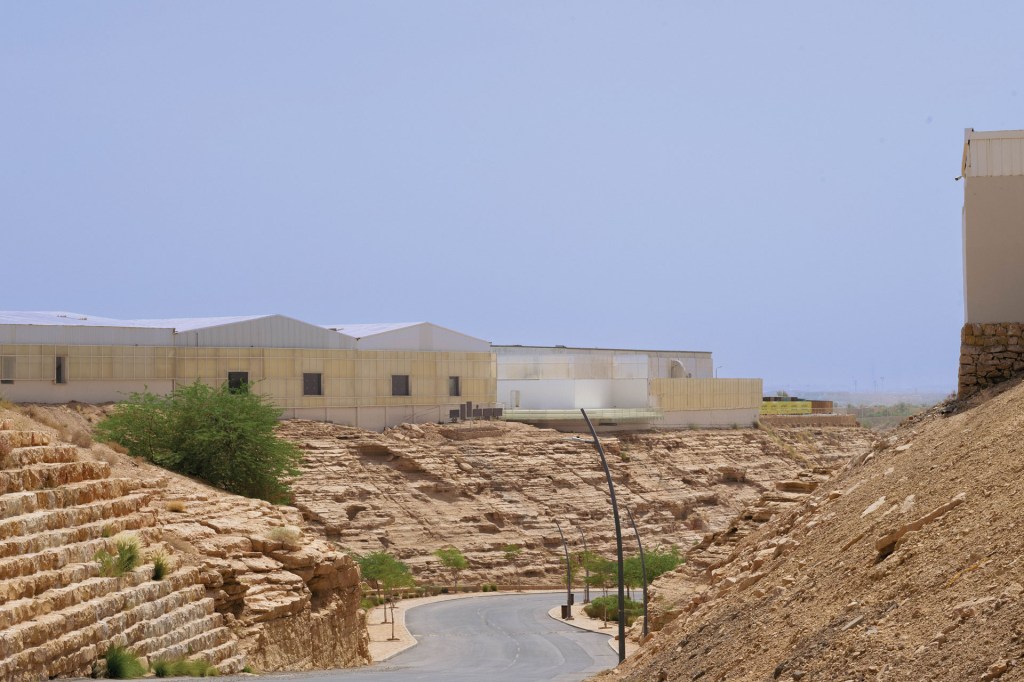
DIRIYAH ARTISTS NAMED. More than 65 artists have been announced for the third edition of the Diriyah Contemporary Art Biennale in Saudi Arabia, Artforum reports. Titled “In Interludes and Transitions,” the exhibition will feature artists like Pacita Abad, Etel Adnan, Dineo Seshee Bopape, Raven Chacon, Guadalupe Maravilla, and Gala Porras-Kim, as well as more than 20 new commissions. Artistic directors Nora Razian and Sabih Ahmed have previously said that their Biennale willexpress a commitment to exploring “how locally rooted histories and knowledges have transmitted and transformed through time.” They emphasized that the biennale aims to “serve as a platform for a multitude of artistic interventions, archives, and participatory models that offer dynamic ways to imagine and enact a world otherwise.”
Related Articles

The Digest
Artist Thomas McKean is getting attention for using cut-up bits of New York City MetroCards, which went the way of the dinosaur on January 1, to create hundreds of sculptures and collages. [NPR]
Kenny Schachter claims that Vincent van Gogh’s Le Zouave sold at a private auction for just above $190 million, “with the art-dealing Nahmad dynasty dropping out at approximately $160 million.” [Artnet News]
An “extraordinary” Iron Age bronze war trumpet, or carnyx, discovered in Norfolk, England, once home to the Celtic tribe led by the warrior Boudicca, may be linked to her revolt against the Romans. [The Guardian]
As part of Design Boom’s “DIY Submissions” series, Chinese architect Chuxin Tuoyuan has dreamed up a new museum on Helsinki’s harbor that investigates the idea of the “Near Figure,” a condition in which architectural form exists between recognizability and abstraction. [Design Boom]
The Kicker
BAD PAINTING. As critic Ben Luke argues in the Art Newspaper, recent art fairs, like Frieze London, suggest that contemporary painting is facing a deluge of uninspired work—bloated, performative, and market-driven, rather than intellectually or aesthetically compelling. Even thoughtful surveys, such as “Painting After Painting” at Ghent’s SMAK museum, reveal a mix of engaging work alongside paintings that felt “thin in subject or wanting in execution.” Luke believes painting today has grown too comfortable; without external pressures or ideological crises, artists are less compelled to innovate or defend the medium. “It seems no accident that the four painters whose shows I have most admired in recent months—[Christopher] Wool at Gagosian, Kerry James Marshall at the Royal Academy of Artsand Peter Doig at the Serpentine, all in London, and Charline von Heyl at Xavier Hufkens in Brussels—forged their painterly languages at moments of fierce debate about the possibilities, and pitfalls, of the discipline,” he writes. “An anything-goes climate is not healthy for painting. Just because we are past the painting-is-dead moment does not mean the fight for its relevance is over.”