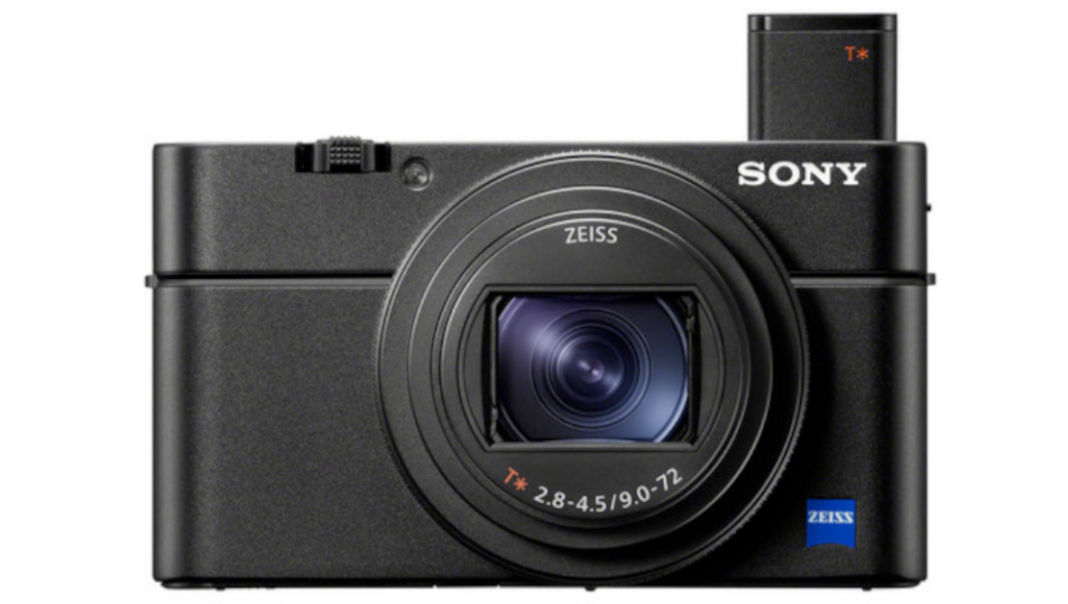

For roughly seven years, the Sony RX100 was the default recommendation for anyone seeking a serious pocket camera. When Sony launched the original RX100 in the summer of 2012, it didn’t just release a camera; it created a category. Here was a genuinely pocketable compact with a one-inch sensor and a fast f/1.8 lens at the wide end, packaged in a metal body that could slide into your jacket pocket. What happened to these amazing cameras?
Time Magazine named the RX100 one of the best inventions of 2012, and photographers who had long dismissed point-and-shoots suddenly had a reason to pay attention. The Mark II added a tilting screen and backlit sensor. Then the Mark III arrived in 2014 with a pop-up EVF and the beloved 24-70mm f/1.8-2.8 lens that would define the series at its peak. The Mark V delivered wildly better autofocus performance with 315 phase-detect points and 0.05-second acquisition that rivaled cameras three times its size. The Mark VII pushed even further with a claimed 0.02-second AF and 357 phase-detect points, proof that Sony was still iterating aggressively on performance. Then something went wrong. It has now been over six years since Sony announced the RX100 VII on July 25, 2019, and the line has been effectively dormant ever since. What happened?
The conventional wisdom is that smartphones killed the compact camera market. There’s truth to that narrative for the average consumer point-and-shoot, but the RX100 was never competing in that space. I owned the original RX100, and I absolutely loved it. The size was perfect, small enough to slip into a jacket pocket without a second thought. The versatility of that zoom meant I could handle everything from wide environmental shots to tighter portraits without swapping gear. The pocketability meant it was always with me, which is the most important feature any camera can have. But most importantly, the image quality genuinely surprised me. This tiny metal rectangle was producing files that held up next to my larger cameras, with real dynamic range and low-light capability that no phone at the time could touch. It felt like a cheat code for travel and everyday shooting.
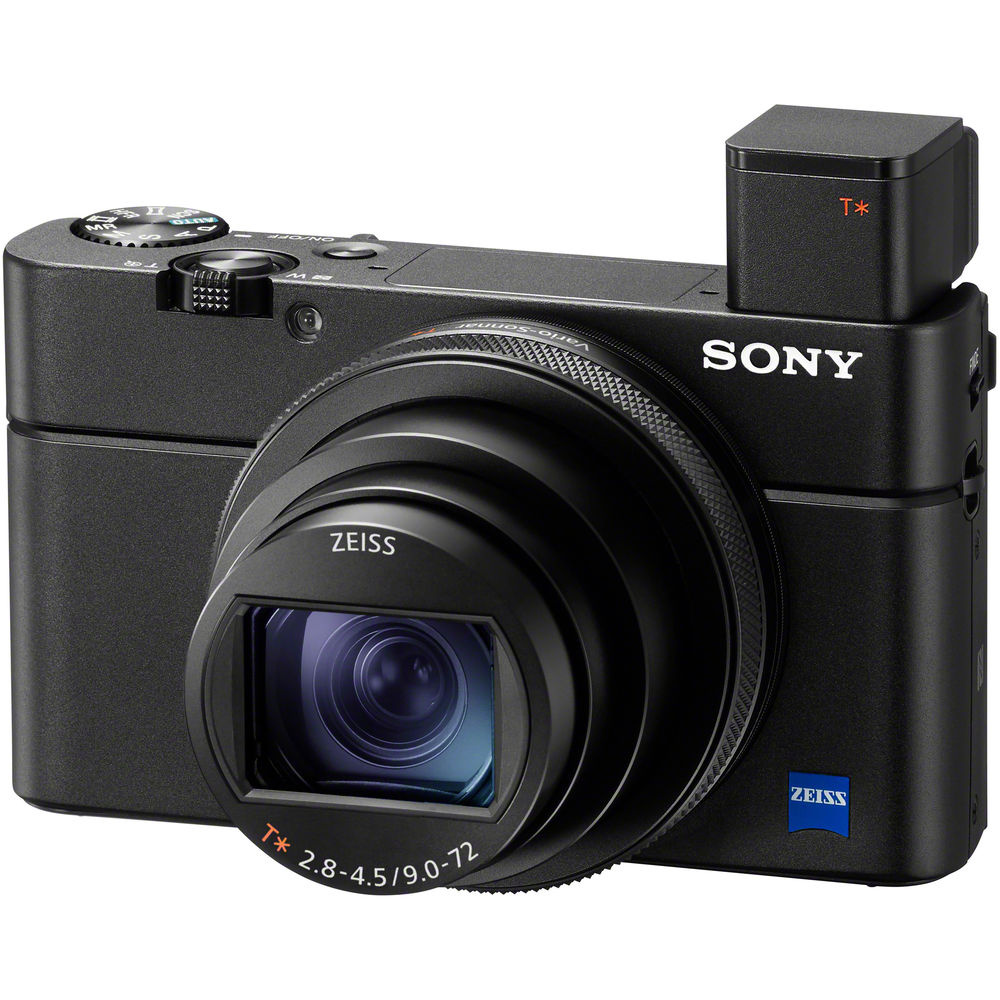 The RX100 was built for enthusiast photographers who valued optical quality over computational convenience, who wanted real zoom range with real glass, and who appreciated manual controls in a portable package. The sensor advantage that once seemed insurmountable has narrowed considerably. Since 2022, some flagship phones have shipped with one-inch-class sensors of their own. But the RX100’s value proposition was never just about sensor size. It was about the complete optical system: a quality lens with a fast aperture, proper ergonomics, a raw workflow, and fewer system constraints during extended shooting. Those photographers still exist, and they’re still buying cameras. The Fujifilm X100VI is often backordered, with lead times that can stretch into months. The Ricoh GR IV has seen strong demand since launch, with preorders and initial supply constrained. The enthusiast compact camera isn’t dead. So why did the RX100 die? The answer involves smartphones and market forces, but also something more specific. Sony made two critical business decisions that hollowed out the camera’s value proposition.
The Golden Era: When the Formula Worked
To understand what went wrong, you need to understand what made the formula so compelling, and when it actually peaked. The RX100’s original value proposition combined a one-inch sensor with a fast aperture lens in a pocketable body. That sensor was roughly four times larger than those in typical compact cameras, offering better light gathering, lower noise at high ISO settings, and the ability to create actual background blur at wide apertures. The original RX100 paired that sensor with a Carl Zeiss 28-100mm equivalent lens that opened to f/1.8 at the wide end, though it slowed considerably to f/4.9 at the telephoto end. The Mark II refined this with a backlit sensor for better low-light performance.
But the true golden era began with the RX100 III in 2014. Sony swapped the original lens for a 24-70mm f/1.8-2.8 Zeiss Vario-Sonnar that maintained a fast aperture throughout the zoom range. This was the critical innovation. At 70mm, you were still shooting at f/2.8, not the f/4.9 of the earlier models. The Mark IV and V kept this lens while adding increasingly sophisticated internals, including a stacked CMOS sensor that enabled burst speeds and video capabilities previously unthinkable in a compact. For three generations, from the III through the V, the RX100 represented a specific promise: genuinely usable low-light performance and real background separation in a camera that fit in your jacket pocket.
Why did this matter? Because it allowed the RX100 to do something smartphones struggled to replicate optically: capture images with real depth and separation. When you photographed a friend in a dim restaurant, you could actually blur the background and isolate their face using optics. When you shot street photography at night, you could keep your ISO at reasonable levels because that f/2.8 aperture at the long end was still gathering meaningful light. The price reflected this positioning. The original RX100 launched at $649 in 2012. The Mark III with its improved lens came in at $799. These were expensive cameras, easily three times what you’d pay for a typical point-and-shoot. But they were justifiable for enthusiast photographers wanting a capable second camera or a high-quality travel companion. The RX100 sat in a comfortable niche: premium enough to signal quality, accessible enough that serious photographers could pull the trigger without excessive deliberation.
Fatal Mistake Number One: The Lens Switch
In June 2018, Sony announced the RX100 VI, and with it came a fundamental change in philosophy. Gone was the 24-70mm f/1.8-2.8 lens that had defined the Mark III, IV, and V. In its place was a new 24-200mm f/2.8-4.5 super-zoom. On paper, this looked like an upgrade. Who wouldn’t want more reach? The 200mm telephoto end meant the RX100 VI could now function as a legitimate travel zoom, capable of capturing wildlife, sports, or distant subjects that the earlier models simply couldn’t reach. Sony had strategic logic here: by 2018, smartphones were becoming genuinely good at the 24-70mm focal range. Portrait modes were improving. Computational photography was making impressive strides. Sony likely believed that optical telephoto was a “moat” where phones couldn’t follow, and pivoted the RX100 to defend that territory.
The problem was what they sacrificed to get there. At the telephoto end, that f/4.5 maximum aperture represented a serious loss of light compared to the f/2.8 of the previous generation. The math is unforgiving: f/4.5 is roughly one and a third stops slower than f/2.8, meaning it gathers only about 40% as much light. In practical terms, your ISO needs to roughly double and then some to maintain the same shutter speed. This penalty compounds in exactly the situations where photographers most often use compact cameras. In dim restaurants, hotel lobbies, evening street scenes, or any moderately challenging lighting, that loss of aperture translated directly into noisier images or motion blur from slower shutter speeds.
The deeper problem was one of use case. At 200mm on a one-inch sensor, you can still achieve meaningful subject isolation when conditions allow. And to be fair, a meaningful subset of photographers genuinely wanted that telephoto reach for travel and wildlife. The miscalculation was pricing and optimizing the VI and VII as if the entire RX100 audience wanted to become travel-zoom shooters. Indoor environments and constrained spaces don’t let you back up enough to use the long end effectively. You end up living at shorter focal lengths where the aperture has already ramped down from the f/2.8 wide-end maximum. The camera’s low-light rendering and bokeh capabilities degraded precisely in the situations where most RX100 owners actually shot. Sony had built a camera optimized for bright outdoor telephoto work and asked street photographers and travel enthusiasts to pay the price. The timing made this particularly damaging. By 2018, Apple’s Portrait Mode and Google’s Night Sight were becoming genuinely impressive. Smartphones were learning to fake shallow depth of field and synthesize multiple exposures into clean low-light images. For the RX100 to compete, it needed to lean into its optical advantages, not surrender them for zoom range that addressed a different use case entirely.
Fatal Mistake Number Two: The Price Creep
If the lens switch was a strategic pivot, the pricing reflected deeper structural issues. The RX100 VI launched at $1,199. The RX100 VII, released the following year with essentially the same lens and improved autofocus, came in at $1,198. To understand how we got here, you need to look back to the Mark IV.
The RX100 IV introduced Sony’s stacked Exmor RS sensor, a genuinely impressive piece of technology that enabled burst speeds, anti-distortion electronic shutter, and high-frame-rate video capabilities previously reserved for professional bodies. This sensor is expensive to manufacture. The Mark IV jumped to around $950, up from $800 for the Mark III, not because of lens changes but because Sony had essentially put a professional sports-camera engine into a point-and-shoot. The Mark V continued this trajectory with even faster autofocus. By the time the Mark VI arrived with its complex new zoom mechanism on top of the stacked sensor, Sony had cornered themselves into a camera that effectively required a $1,200-class MSRP to sustain margins, packed with capabilities like 20 fps blackout-free shooting that most street photographers never needed.
To Sony’s credit, they didn’t completely abandon the original concept. They continued selling the RX100 VA, which retained the fast 24-70mm f/1.8-2.8 lens with updated internals, for $998. This was an implicit acknowledgment that two audiences existed: photographers who wanted the fast-lens identity, and travelers who wanted telephoto reach. The problem was that this segmentation pleased neither group particularly well. The VA felt like a holdover product rather than a flagship, while the VI and VII asked a premium price for capabilities their core audience hadn’t requested.
At $1,200, the value proposition collapsed regardless of which audience you belonged to. Consider what else a photographer could buy for that money in 2019. The Canon EOS RP, a full frame mirrorless camera, launched in March 2019 at $1,299. The Sony a7 II was readily available for under $1,000. For roughly the same money as an RX100 VII, you could enter full frame photography with a sensor roughly seven times larger. Yes, you’d need lenses, and no, those cameras wouldn’t fit in your pocket. But for a photographer trying to decide where to spend $1,200, the compact form factor was competing against a massive sensor advantage. The enthusiast compact market was also being squeezed from below. Smartphones had improved enough that many buyers either stayed with their phones or jumped straight to APS-C or full frame systems for a “real” upgrade. The middle ground where the RX100 lived was hollowing out, and Sony’s pricing did nothing to defend it.
The Aftermath: The ZV-1 Cannibalized Its Sibling
The RX100 didn’t just fade away. It was actively cannibalized. In May 2020, Sony announced the ZV-1 for $799, marketed as a vlogging camera but sharing much of the RX100 V/VA imaging DNA. It used the same one-inch sensor class. It used the same 24-70mm f/1.8-2.8 lens concept. It added vlogger-friendly features like a fully articulating screen and improved directional microphones while stripping out things photographers valued, like the pop-up EVF, traditional mode dial, and built-in flash.
The ZV-1 wasn’t just proof that Sony could still manufacture the fast-lens compact for under $800. It was evidence that Sony had made a calculated decision about which audience to serve. While the market for “pocket still cameras” was shrinking, the market for content creation tools was exploding. TikTok and YouTube had created demand for compact video-first cameras that the traditional photography market couldn’t match. Sony took manufacturing capacity that could have refreshed the RX100 and redirected it toward the ZV series. The “death” of the RX100 was a reallocation of resources toward a demographic Sony judged more profitable.
For photographers, the implication was uncomfortable. They were being asked to pay a $400 premium for an EVF and 130mm of zoom range they may not have wanted, while vloggers got the lens that actually made the one-inch sensor sing. The “budget” creator camera was, for many use cases, the better photography camera. Its lens was faster. Its low-light performance was superior. Its bokeh was more pleasing. The only things it lacked were the viewfinder and the traditional controls that enthusiast photographers expected, plus that really useful pop-up flash. Sony had looked at two audiences, decided one was growing and one was shrinking, and placed its bet accordingly.
The Verdict: Death by Strategic Drift
The RX100 line is effectively dormant, at least in any form its original audience would recognize. But the story is more complicated than “Sony forgot what made the camera great.” Sony made a series of decisions that each had internal logic: the stacked sensor enabled impressive capabilities, the telephoto pivot addressed perceived smartphone competition, the segmentation into VA and VI/VII theoretically served different audiences, and the ZV pivot chased a growing market. None of these decisions were irrational. They were simply wrong for the audience that had made the RX100 a legend.
The photographers who bought RX100s from Mark III through V were not travel photographers desperate for reach. They were enthusiasts who valued image quality and low-light performance in a pocketable body. They wanted a camera that could do things their phones could not do optically: create real bokeh and shoot clean images when the light got challenging. The 24-70mm f/1.8-2.8 lens was the heart of that promise. Sony’s competitors understood this. The Ricoh GR IV has a fixed 28mm-equivalent f/2.8 lens. The Fujifilm X100 series has a fixed 35mm equivalent. Neither offers any zoom at all. Both have become nearly impossible to keep in stock because they do one thing brilliantly rather than many things adequately. These cameras don’t try to be travel zooms or video-first creators’ tools. They commit fully to optical excellence in a compact form, and photographers have responded by buying them faster than manufacturers can build them.
The RX100’s original formula could have evolved in this direction. Imagine a Mark VIII that returned to the 24-70mm f/1.8-2.8 lens, kept the stacked sensor for its genuine benefits, priced aggressively at $899 to reclaim the “premium but accessible” positioning, and marketed itself explicitly as the anti-smartphone: a camera for photographers who care about optical quality over computational tricks. Whether Sony has the institutional will or the business incentive to make that camera remains an open question. The company has clearly decided that content creators represent a more dynamic market than traditional photographers, and the ZV series reflects that bet. But somewhere, there’s presumably still a product manager who remembers what the RX100 III represented and wonders what might have been. For now, it has lost its crown. The market it once dominated has fractured into premium primes, creator tools, and smartphones. The middle ground the RX100 occupied has largely collapsed. If it ever returns, it will need to remember the lesson its own history teaches: photographers wanted a pocketable f/1.8 powerhouse, not a $1,200 travel zoom. Sony gave them the latter and lost them to competitors who understood what “pocket camera for enthusiasts” actually meant.